The best 12V DC to 220V AC power inverters provide clean, reliable energy when you’re off the main grid or away from household outlets. This guide highlights five top options suited for RVs, camping, work sites, and emergency backup. Each product is evaluated for who it’s best for, its key strengths, and a practical limitation to consider. The table below summarizes core details to help you compare at a glance.
| Product | Best For | Continuous Power | Key Benefit | Limitation |
|---|---|---|---|---|
| 5000 Watt Power Inverter (12V → 220V) | Heavy-duty setups, RVs, and workshops | 5000W | Pure sine wave with dual outlets and robust cooling | Heavier and higher price |
| 4000W DC to 110/220V Power Inverter | Vehicles needing dual voltage options | 4000W | LED display, dual USB ports | Not the smallest footprint |
| 4000W DC to 110/220V With QC3.0 | Road trips and camping with fast charging needs | 4000W | QC3.0, multiple ports, independent switch | Complex feature set may be overkill for basics |
| 1800W Pure Sine Wave Inverter | Home backup and small appliances | 1800W | Pure sine wave with GFCI protection | Lower power ceiling for larger tools |
| 3000W Inverter with USB and Multi-Protection | Travel and camping with basic needs | 3000W | Multiple protections, USB charging | Moderate wattage for heavy tools |
5000 Watt Power Inverter 12V DC to 220V AC Converter
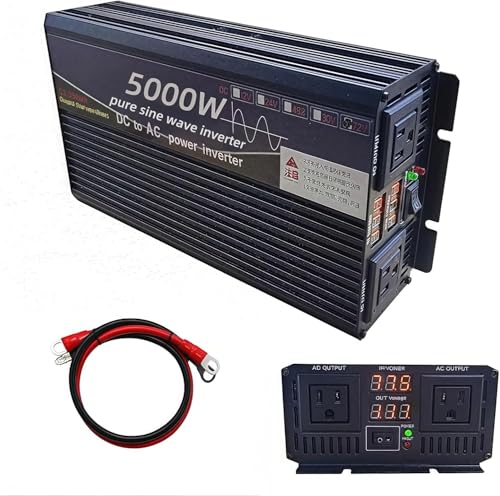
This unit delivers 5000W of continuous power and 220V AC output from 12V DC. It uses a pure sine wave to support sensitive electronics with stable, steady power. Dual 220V outlets and two cooling fans help manage heat during high-load periods, making it suitable for RVs, emergency power, and workshop use. Best for users who run high-wattage tools or appliances and need reliable performance. Limitations include its size, weight, and higher initial cost compared with smaller inverters.
High-Power Peak 4000W DC to AC Power Inverter

This 4000W inverter converts 12V DC to 110V/220V AC and includes dual USB ports plus an LED display for monitoring voltage, wattage, and battery level. It’s well-suited for vehicles, RVs, and off-grid backup where a strong power supply is needed for appliances and tools. Best for users who want a balance of high output and on-device monitoring. A potential limitation is that shorter peak surge may be less ideal for very sudden high-start loads.
High Power Car Inverter With Quick Charge And USB

This inverter supports 12V DC input and 220V AC output with two USB ports and a QC 3.0 fast-charging port. It adds independent switches and a full-color LED display, enabling flexible use in cars, trucks, and camping. Best for travelers who need quick charging and reliable outlet access in transit. Limitation: higher feature density may complicate usage for casual users, and it focuses on convenience more than maximum continuous power.
High Power 4000W DC to 220V Inverter
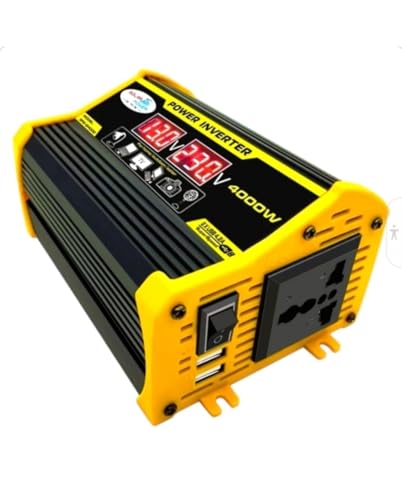
This 4000W inverter converts 12V DC to 220V AC with dual USB ports and a bright LED display for easy monitoring. It’s designed for cars, trucks, RVs, and boats, making it a solid all-around option for mid-size power needs. Choose this if you want a strong balance of power, visibility, and USB charging. Limitation: may be overkill for light-duty devices or occasional use.
200W Car Power Inverter With 4 USB Ports
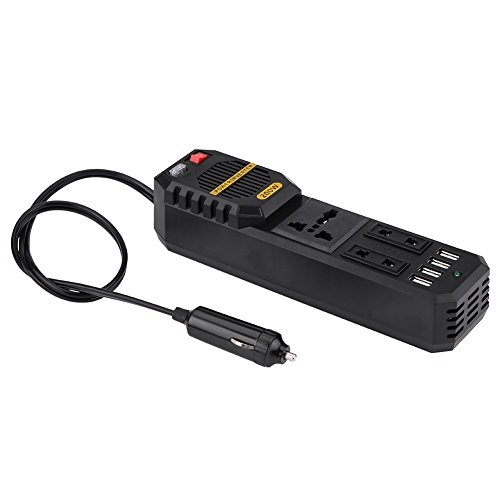
This compact 200W inverter provides 12V to 220V conversion with four USB ports for mobile charging. Best for small devices and basic travel needs where space and noise are concerns. Limitation: insufficient for high-wattage appliances; it’s best used for charging phones, tablets, and small electronics.
Surakey 3000W DC 12V to 220V Inverter

This 3000W inverter offers USB ports and multiple protections to support laptops, tablets, and other devices during camping or road trips. Best for travelers who need reliable power with safety protections. Limitation: not as high output as some 4000–5000W models, so avoid heavy-duty tools or appliances that require sustained high wattage.
Pro Chaser 400W Inverter With Dual USB Ports
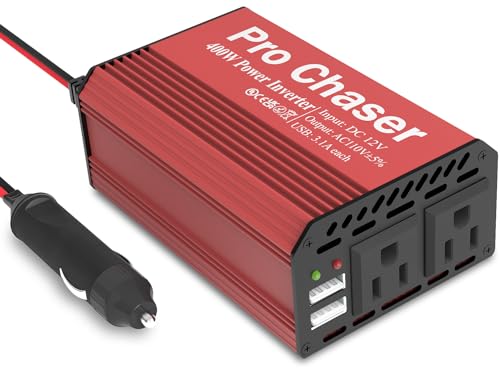
This compact inverter provides a steady 400W with dual 110V AC sockets and two USB ports. Best for family travel and light electronics on the go. It’s portable and flexible, featuring a 30-inch cord for extra reach. Limitation: limited to moderate power needs; not ideal for heavy appliances or power tools.
Buying Guide: Key Considerations For 12V To 220V Inverters
- Power needs: Assess continuous and surge wattage to match tools, appliances, and electronics. Higher-watt models handle more devices simultaneously but require more battery capacity and space.
- Pure sine wave vs modified sine wave: Pure sine wave inverters are safer for sensitive electronics and motors; modified sine wave models are usually cheaper but may cause noise or performance issues with some devices.
- Output configuration: Consider the number of outlets and USB ports. Dual outlets are beneficial for simultaneous usage, while USB-C/USB-A ports are essential for charging mobile devices quickly.
- Protection features: Look for overvoltage, undervoltage, overload, short-circuit, overheating, and thermal protection. A cooling fan helps maintain performance during extended use.
- Install environment: If used in mobile environments (vehicles, RVs), ensure vibration resistance, solid casing, and adequate heat dissipation.
- Portability vs capacity: Balance the inverter’s weight and size with required power capacity. Heavier units may fit better in fixed setups, while lighter units suit travel.
- Safety and grounding: Ensure proper grounding and compliance with local electrical standards. Built-in ground fault protection is a plus for mixed indoor/outdoor use.
- Expansion potential: If you anticipate growing power needs, consider models with higher peak ratings or easier scalability.
FAQ
- What wattage should I choose for a basic RV setup?
– For light appliances, a 1000–2000W inverter with pure sine wave is typically sufficient. For larger loads like air compressors or microwaves, look at 3000–5000W with robust cooling. - Do I need pure sine wave for charging laptops?
– Yes. Laptops and many electronics prefer pure sine wave to avoid adapter heating and efficiency losses. - Can I run multiple devices at the same time?
– Yes, if the combined wattage stays within the inverter’s continuous power rating. Dual outlets and USB ports help distribute the load. - Is the higher price of larger inverters justified?
– If you need to power high-wattage tools or multiple devices reliably, the investment is justified by performance and longevity. - Are USB ports necessary on an inverter?
– USB ports are highly practical for charging phones, tablets, and accessories without needing a separate adapter. - What maintenance is required?
– Keep the unit clean, ensure cooling vents aren’t blocked, and inspect connections for corrosion or looseness periodically.