Looking for a reliable 500-watt power inverter to run small electronics from a vehicle or off-grid setup? This guide highlights five well-rounded models, explaining who each is best for, and where they excel or fall short. Each product is suitable for users who need steady, clean power for laptops, cameras, routers, and other USB- or AC-powered devices. The top picks balance price, protection features, and ease of use for travelers, hobbyists, and emergency kits.
Summary table of selected products:
| Product | Best For | Notable Feature |
|---|---|---|
| BESTEK 500W Pure Sine Wave Power Inverter | Users with sensitive electronics | Pure sine wave, dual USB ports, built-in fan |
| MOVFFGGRM 500W Inverter | Multi-device setups | Three AC outlets, four USB ports, solid heat management |
| TWING 500W Inverter | Compact car charging bundles | 2 AC outlets, 2 USB ports, smart display |
| JARXIOKE 500W Pure Sine Wave Inverter | Home/ RV off-grid use | Pure sine wave, LCD-style display features |
| POTEK 500W Inverter | Budget-friendly basic use | Simple protections, two USB ports |
Best Overall Pure Sine Wave Inverter — BESTEK 500W
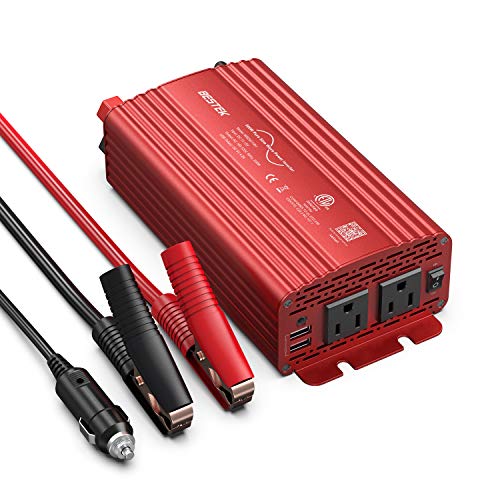
Best for sensitive electronics and off-grid setups, this BESTEK model delivers a true sine wave that mirrors mains electricity, reducing THD and minimizing wear on inductive loads. It powers devices via two 110V outlets and two USB ports with auto-detection for fast charging up to 2.4A per port (4.2A total). It can draw power from a cigarette lighter or directly from the battery with alligator clips. The unit includes a protective design and a built-in fan to manage heat, making it a solid choice for prolonged use in vehicles or RVs. Suitable for travelers who need clean power for laptops, radios, and precision equipment. Caution: the inverter relies on adequate cooling; use in ventilated spaces to prevent overheating, especially under heavy loads.
Versatile Inverter With Multiple Outlets — MOVFFGGRM 500W
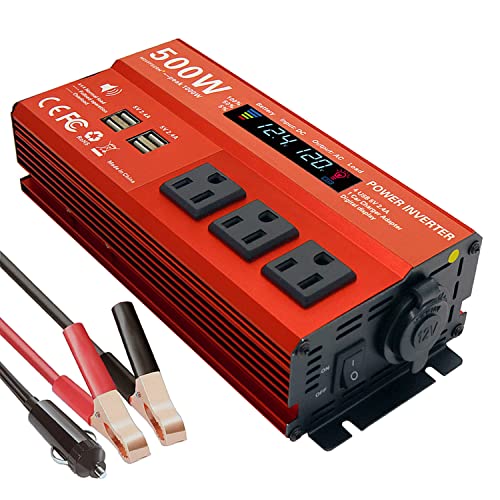
This model provides a robust setup with 3 AC outlets and 4 USB ports, making it ideal for users who need to run several devices at once. It’s designed for 500W continuous power and up to 1000W peak, with a heat-dissipating aluminum body and a silent fan. It targets on-the-go households, road trips, or work-from-vehicle scenarios where multiple devices—laptops, game consoles, cameras, and small appliances—must be charged. Best for: users who require multiple USB ports and more AC outlets in a single unit. Limitation: some devices with high startup surges may momentarily exceed the inverter’s peak if all outlets are used simultaneously.
Compact Car-Ready Power Inverter — TWING 500W

Designed for straightforward car use, this unit provides 500W continuous power with two AC outlets and two USB ports for quick charging. The upgraded smart digital display shows input voltage, USB voltage, current, and temperature, helping users monitor performance in real time. Best for: drivers who want a simple, easily monitored inverter for laptops or small devices. Caution: ensure the car’s electrical system can handle sustained loads, and avoid high-draw devices when the vehicle’s engine is off to prevent battery drain.
High-Efficiency Pure Sine Wave — JARXIOKE 500W

The JARXIOKE unit emphasizes true 500W continuous power with a 1000W peak and true sine wave output for efficient energy use and compatibility with many devices. It supports car socket use for lighter loads and requires battery connection via alligator clips for higher-power appliances. It offers basic protections including over/under voltage and overheat protection with an auto restart function. Best for: RVs or off-grid setups where a pure sine wave is preferred for sensitive electronics. Limitation: for occasional low-power uses, relying solely on the cigarette lighter may limit performance; connect directly to the battery for heavier devices.
Budget-Friendly 500W Inverter With USB Ports — POTEK
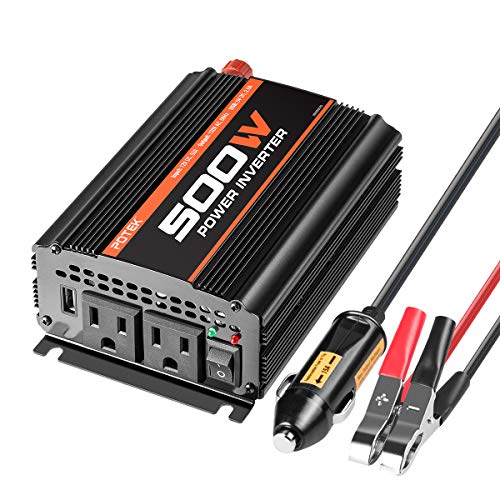
POTEK offers a straightforward 500W continuous inverter with 1000W surge, plus dual USB ports for charging phones, tablets, and small accessories. It converts 12V DC from your vehicle to standard 115V AC, making it a practical entry-level option for commuters and casual travelers. Best for: daily commuters needing a simple, affordable inverter for light devices. Caution: this model provides fewer advanced protections than higher-end units; avoid high-load devices without verifying total draw.
Buying Guide: Key Considerations For Choosing A 500W Inverter
- Power needs: Match continuous power (W) and surge power (W) to the devices you plan to run. A small laptop or router typically fits in the 500W range, but a brief surge can occur with motors or charging—ensure your total load stays within limits.
- Waveform type: Pure sine wave inverters are preferred for sensitive electronics (laptops, medical devices, audio gear) because they mimic utility power and reduce noise and device wear. Modified sine wave units may suffice for simple devices but can cause performance issues with some electronics.
- Outlets and ports: Consider the number of AC outlets and USB ports. If you travel with multiple devices, models like MOVFFGGRM with several USB ports and multiple outlets may be advantageous.
- Protection features: Look for over/under voltage protection, short-circuit protection, overheat protection, and auto restart. A built-in cooling fan helps extend inverter life during extended use.
- Installation method: Inverters can run from a vehicle cigarette lighter or a direct battery connection. Direct battery connections are generally better for higher loads but require more setup and caution with wiring.
- Physical build and cooling: Aluminum casings and efficient heat dissipation reduce the risk of overheating. A loud fan or hot exterior can indicate higher operating temperatures under load.
- Portability vs. capacity: If you need to power devices on the go, balancing size, weight, and power output is essential. A compact unit is easier to mount in vehicles, while larger units offer more outlets and better cooling.
Frequently Asked Questions
- What can a 500W inverter power in a car?
It can run small electronics such as laptops, routers, cameras, and some TV boxes, typically within the 500W continuous range. Always check the device’s startup surge wattage. - Is pure sine wave worth it for all devices?
For sensitive electronics like laptops, medical devices, or audio gear, pure sine wave improves performance and safety. For simple devices like chargers, a modified sine wave may be acceptable but not ideal. - Should I connect an inverter directly to a car battery or via the cigarette lighter?
Direct battery connections are better for higher loads or longer use times, while cigarette lighter connection is convenient for lighter-duty, short-term needs. - How do I prevent my inverter from overheating?
Ensure adequate ventilation, use models with built-in cooling fans, and avoid mounting in enclosed spaces with little airflow. Reduce load or take breaks if the unit becomes hot. - What safety features are essential?
Overload, short-circuit, overvoltage, and thermal protections are essential. Look for automatic shutoff at critical temperatures or voltages to protect devices and the inverter.