Looking for a reliable 12V to 240V inverter that can power home-style loads from a vehicle, RV, or off-grid system? This guide highlights five proven options, each selected for a specific use case—from camping and road trips to home backup and off-grid solar setups. Read on to find the best fit for your power needs, whether you prioritize pure sine wave quality, high surge capacity, or multiple outlets for devices and USBs.
The following table summarizes the five selected inverters, including best use case, key strengths, and any notable trade-offs.
| Product | Best For | Key Strengths | Limitations |
|---|---|---|---|
| AIMS 3000 Watt 12V to 120/240V | Residential-style loads in off-grid or large vehicles | True split phase output, high surge, clean pure sine wave | Higher power requires more space and appropriate wiring |
| HENGJINGTR 5000W Split Phase Inverter | Heavy-duty off-grid or solar systems | 5000W continuous, 95% efficiency, 230V/120V options | Bulkier unit, more complex setup |
| Cantonape 3000W Power Inverter | Vehicle, boat, or RV with multiple outlets | LCD display, remote control, four AC outlets + USB | Modified sine wave (not a true sine wave) |
| Upgraded 10000W Pure Sine Wave Inverter (Lbxlhr) | High-demand home backups and solar systems | Pure sine wave, LCD display, wide DC input options | Very large unit; requires robust installation |
| BELTTT 2000W Pure Sine Wave Inverter | Small to mid-size loads in RVs or solar setups | Pure sine wave, dual USB, LCD readout | Lower continuous power compared to larger units |
AIMS 3000 Watt 12V to 120/240V Low Frequency Pure Sine Inverter ETL
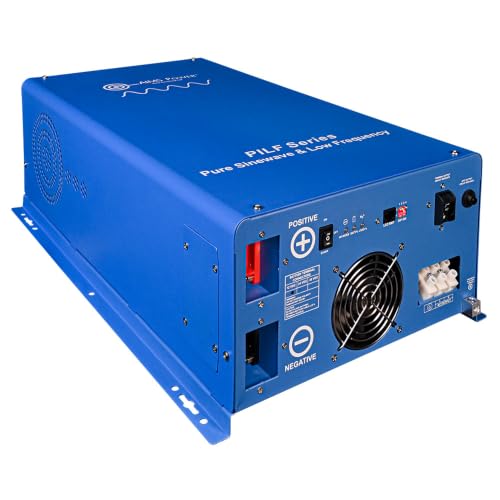
Best for residential-style loads in off-grid or large-vehicle applications. This inverter provides 120/240 V AC split phase output with a true neutral, delivering utility-grade electricity for home-like devices. It offers a high surge capacity of up to 9000W for up to 20 seconds, which helps start motors, compressors, and other high-startup equipment. The pure sine wave output reduces distortion, making it suitable for sensitive electronics, tools, and communication gear.
Who it’s best for: buyers needing reliable, house-like power from a 12V source, such as campers with air conditioners, refrigerators, or power tools. Caution: installation should follow proper wiring and grounding guidelines for split-phase systems; ensure your vehicle or system can handle the surge and current draw.
HENGJINGTR 5000W Split Phase Inverter Pure Sine Wave

Best for large off-grid solar setups or heavy-duty vehicle power. This 5000W continuous inverter converts DC from 12V/24V/48V/60V/72V inputs to 110–120V and 230–240V AC outputs. It emphasizes high efficiency (up to about 95%) and broad input compatibility, which supports a wide range of devices with minimal EMI. It’s ideal for RVs, campers, and field work where reliable, high-capacity AC power is needed. Caution: bulkier and requires careful wiring and appropriate overcurrent protection due to high output.
Cantonape 3000W Power Inverter 12V to 110/120V

Best for vehicles, boats, or RVs needing multiple outlets and USB charging. This unit provides 3000W continuous power with 6000W surge, four AC outlets, and four USB ports. It features an intelligent LCD display showing input/output voltage, battery status, load, and fault codes for troubleshooting. Remote control adds convenience for siting the inverter away from the user. Caution: it uses a modified sine wave, which may be less ideal for some sensitive electronics compared to pure sine wave models.
BELTTT 2000W Pure Sine Wave Inverter

Best for solar or small backup systems requiring clean AC power. This inverter delivers 2000W continuous power with up to 4000W surge, generating a true sine wave suitable for sensitive loads like TVs and home electronics. It includes an intelligent LCD to display real-time voltages and status and has a remote controller option. Caution: ensure the inverter’s continuous rating meets your average load to avoid overheating during extended use.
Buying Guide
What to consider when choosing a 12V to 240V inverter:
- Power needs: Match continuous (rated) power and surge capability to your typical load and startup spikes. Higher-surge models handle motors and compressors better.
- Sine wave type: Pure sine wave is best for sensitive electronics; modified sine wave can suffice for tools or appliances with forgiving power needs but may cause hum or inefficiency.
- Output configuration: Split-phase (120/240V) is useful for residential-style appliances; consider the number of AC outlets and USB ports for device charging.
- Efficiency and heat: Higher efficiency reduces battery drain and heat; ensure proper cooling, especially for high-wattage units.
- Input voltage range and compatibility: Ensure the inverter accepts your battery bank voltage (12V, 24V, 48V, etc.) and matches your system’s voltage.
- Protection features: Look for low/high voltage protection, overtemperature shutdown, short-circuit protection, and remote monitoring if needed.
- Installation and safety: Proper wiring, fusing, grounding, and ventilation are essential. Follow manufacturer guidelines or consult a professional for large systems.
Frequently Asked Questions
- What is a true sine wave inverter? A true sine wave inverter outputs a clean, smooth AC signal similar to utility power, suitable for all electronics and motors.
- Do I need a pure sine wave for my refrigerator? Refrigerators generally run well on pure sine wave; using a modified sine wave may cause inefficiency or startup issues in some models.
- Can I run a household AC on a car inverter? Yes, but ensure the inverter’s continuous power rating exceeds the running load and that the vehicle’s electrical system can handle the draw.
- What is surge power? Surge power is a brief higher-power capability used to start devices with high startup currents, such as motors or compressors.
- How should I size my inverter with a solar setup? Size for continuous load with some headroom for startup surges; pair with a compatible battery bank and charge controller for reliable performance.
- Is installation tricky for high-wattage inverters? Large inverters require appropriate gauges, long cable runs, fusing, and potentially professional installation to ensure safety and efficiency.