Answering the common buyer question “which portable wind turbine generator should I choose?” this guide highlights five practical options for America-based users ranging from small RV setups to home and farm use. Each choice is evaluated on start-up wind speed, output, durability, and suitability for different environments. This overview helps you compare devices that generate power from wind, with clear guidance on who benefits most from each model.
| Product | Power | Best For | Starter Wind | Notes |
|---|---|---|---|---|
| VEVOR 500W Wind Turbine Kit | 500W | Homes, small farms, RVs | 2.5 m/s | MPPT controller included |
| lizponaza 500W Wind Turbine | 500W | Low-wind settings, quiet operation | Noted low-wind design | 2 blades |
| VEVOR 800W Wind Turbine Generator | 800W | Mid-size off-grid, boats, cabins | 2.5 m/s | MPPT controller, tower pole excluded |
| VEVOR 12V-500W Wind Turbine Kit | 500W | Home, RVs, boats, farms | 2.5 m/s | Three-phase PMG, MPPT |
| 3000W Vertical Axis Wind Turbine Kit | 3000W | Higher-energy setups, larger off-grid | 2 m/s | Three-phase PMG, aerodynamic blades |
VEVOR 500W Wind Turbine Generator Kit

The VEVOR 500W unit uses a 12V three-phase AC permanent magnet generator and an MPPT controller to optimize energy capture. It starts at a low wind speed of 2.5 m/s and operates up to 25 m/s, making it a strong option for rural homes or small off-grid setups. The turbine is designed for quiet operation (about 55dB) and extended lifespan, with stability in varied wind conditions. This model is best for home or RV users who want a compact yet capable wind-powered upgrade.
Who it’s best for: homeowners and small farms seeking a reliable, MPPT-controlled wind turbine without large towers. Why selected: strong balance of start speed, efficiency, and durability in a compact form. Caution: tower pole not included; installation requires mounting hardware and a mast suitable for your site.
VEVOR 12V-500W Wind Turbine Kit

This VEVOR kit emphasizes high-efficiency output with a 12V synchronous generator and MPPT controller. It operates quietly at around 55dB and is designed to match diverse electrical loads through automatic current and voltage adjustments. It’s well-suited for homes, RVs, boats, or farms that want consistent energy capture in moderate wind. Best for: incremental off-grid builds or backup power, where 12V systems are already in use. Caution: ensure your installation site provides accessible wind exposure and proper mounting.
VEVOR 800W Wind Turbine Generator

The 800W model provides higher output for larger off-grid needs, including farm operations, RVs with heavy electrical demand, or small boats with storage charging needs. It features an MPPT controller for efficient energy tracking and a 12V three-phase generator designed for quiet operation (about 58dB). Best for: users who need more power without dramatically larger systems. Caution: tower pole not included; plan for a secure mounting solution suitable for your site conditions.
lizponaza 500W Vertical Axis Wind Turbine Kit

The lizponaza kit uses a two-blade vertical axis design with a permanent magnet generator. It’s optimized for low wind speed operation, low noise (under 62dB), and easy installation. This option is best for scenarios with modest wind where low-noise and easy mounting matter. It’s popular for home and hybrid solar-wind setups. Caution: lower overall power output at high wind may limit peak energy production compared with larger horizontal models.
3000W Vertical Axis Wind Turbine Kit
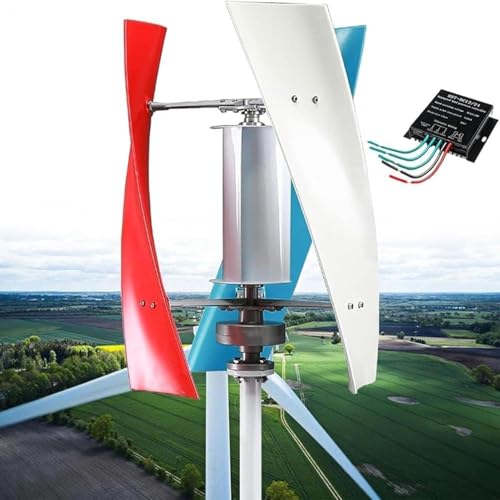
This high-capacity vertical axis turbine is designed for larger off-grid installations. It features a coreless PMG and a three-blade configuration intended to maximize energy capture across a broad wind range. The kit emphasizes robust performance with automatic wind tracking and low-torque startup. Best for: users building a more substantial home, farm, or cabin energy system where space permits a larger turbine. Caution: installation complexity and footprint are greater, and this unit is heavier to transport and mount.
Buying Guide: Key Purchase Considerations
- Wind site assessment: Check average wind speeds and gust patterns at your location. Start-up wind speed matters for low-wind areas, while higher rated speeds indicate better performance in breezy sites.
- Power needs: Estimate daily energy consumption in watt-hours and match with turbine output and system voltage (12V vs higher). Consider MPPT controllers for efficient energy transfer.
- Mounting and installation: Some models exclude tower poles or mounting hardware. Plan for sturdy mounting, weatherproof connections, and potential professional installation in taller setups.
- Noise and vibration: Look for low dB operation and bearing designs that minimize vibration, important for residential or RV use.
- Durability and weather resistance: Ensure blades, housings, and electrical enclosures withstand local weather, temperature ranges, and corrosion risks.
- Maintenance: Consider blade material, bearing design, and accessibility for routine checks and cleaning.
- System compatibility: Verify voltage, charge controllers, and battery banks align with your existing off-grid system or planned configuration.
Frequently Asked Questions
- What is considered a good start-up wind speed for home wind turbines? Start-up wind speeds around 2.0–2.5 m/s are common for compact units, enabling earlier power generation in light winds.
- Why is an MPPT controller important? MPPT controllers optimize the electrical current to maximize energy harvest across varying wind speeds, improving overall efficiency.
- Are vertical-axis turbines suitable for all homes? They can be suitable where space is limited or noise is a concern, but they may deliver lower peak power compared to larger horizontal models.
- Do I need a tower for these turbines? Most models require a mounting solution; some listings note that the tower is not included. Ensure proper installation hardware and safety considerations.
- What should I consider when combining wind turbines with solar? A hybrid system can provide more consistent energy, but verify compatibility of controllers, batteries, and warranties across both sources.
- How do I determine the right turbine size? Consider your daily energy needs, available wind, and space. Larger turbines provide more power but require more robust mounting and safety measures.