Answering the search intent for reliable portable power stations, this guide highlights five options that balance capacity, portability, and practical features for outdoor trips, home backup, and on-the-go use. Each pick targets specific buyer needs—from ultralight hiking to home emergency readiness. The table below summarizes key specs to help compare quickly.
| Product | Capacity (Wh) | Weight | Best For |
|---|---|---|---|
| MARBERO Portable Power Station 88Wh | 88 | 3.2 lbs | Lightweight campers and casual travelers |
| Jackery Explorer 300 | 292 | 7.5 lbs | Longer camping stays and laptop users |
| BLUETTI Elite 30 V2 | 288 | 9.4 lbs | Backup power with UPS features |
| DaranEner Portable Power Station 192Wh | 192 | ~5 lbs | Compact off-grid setups and versatile charging |
| LIBRIDS Portable Power Station C600 | 640 | ~15 lbs | Home backup and multi-device power |
MARBERO 88Wh Portable Power Station
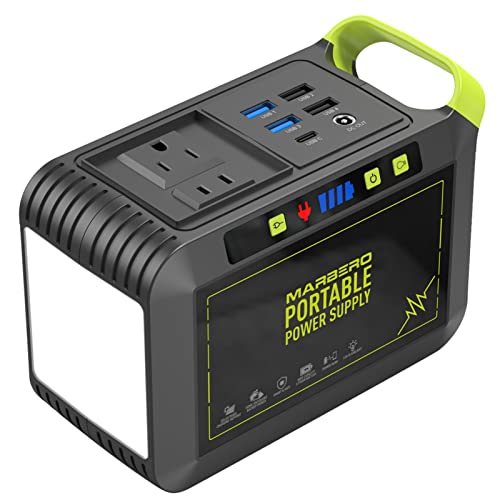
Capacity and portability define this MARBERO model. With 88Wh of capacity and eight simultaneous output ports, it supports USB, USB-C PD, DC, and two AC outlets. The built-in BMS enhances stability, while a compact form factor (about the size of a DSLR) and a 3.2-pound weight make it ideal for light outdoor adventures, camping trips, and quick home backups. Best for minimalists who need reliable power for phones, small tablets, cameras, and occasionally a fan or small light.
Who it’s best for: hikers, solo campers, and emergency kits where weight matters. Why selected: compact design, multiple output options, and efficient charging from MARBERO’s solar panel options. Caution: not designed for high-wattage appliances like full-size kettles or hairdryers; plan around low-power devices.
Jackery Explorer 300, 292Wh

Jackery Explorer 300 brings a solid 292Wh LiFePO4 battery with a lightweight build. It supports 2 AC outlets, a 100W USB-C PD port, USB-A, and a 120W car port, delivering robust power for laptops and cameras while remaining portable. Its LiFePO4 chemistry promises longer cycle life and dependable performance for extended adventures. Best for: campers and travelers needing a durable backbone for laptops, cameras, and essential devices during off-grid trips. Why selected: strong overall power, multiple ports, and long-term battery durability. Caution: higher weight relative to ultra-compact models; may be overkill for ultra-light packing needs.
BLUETTI Elite 30 V2 Portable Power Station

BLUETTI Elite 30 V2 emphasizes a balance of capacity and power delivery. With 288Wh of LiFePO4 storage, it weighs about 9.4 pounds and offers 600W continuous power, up to 1500W surge in Power Lifting Mode. It includes a 50% reduction in power consumption thanks to UltraCell tech and smart cooling. Best for: users needing reliable daytime and storm-ready backup that can run higher-draw devices and essential appliances. Why selected: higher surge capacity, efficient design, and UPS-like capability. Caution: for frequent off-grid use, consider ventilation and heat management in hot environments.
DaranEner Portable Power Station, 192Wh

DaranEner pairs a 192Wh LiFePO4 battery with 300W continuous output (600W surge). It provides USB-C PD up to 60W and multiple USB-A ports for a versatile mix of devices. An MPPT-based solar charging option optimizes efficiency, while the LiFePO4 chemistry supports longer life cycles. Best for: small-scale off-grid setups, weekend camping, and home backup where a compact, safe battery is desired. Why selected: reliable fast charging through multiple ports; tread carefully with high-power appliances. Caution: not suitable for devices over 300W running simultaneously.
LIBRIDS Portable Power Station C600

LIBRIDS C600 offers a large 640Wh capacity with 600W continuous output, plus a 1200W surge. It is designed for more demanding backup needs and includes a 10ms UPS feature to keep essential devices running during outages. Weighing more than the compact models, it’s better suited for home backup, workshops, and longer off-grid stays. Best for: households needing a dependable, higher-capacity power source for multiple devices. Why selected: strong continuous power, fast charging, and UPS capability. Caution: heavier and bulkier, less ideal for ultra-portable outdoor use.
Buying Guide
What should you ask before buying a portable power station?
- What is my primary use case? Outdoor camping, home backup, or travel?
- What capacity and wattage do I need for essential devices?
- How portable must the unit be? Consider weight and form factor.
- Are there fast-charging options and multiple ports to support a mix of devices?
- Is there UPS or surge support for critical equipment?
Key Considerations by Scenario
- Lightweight trips: Choose MARBERO 88Wh or MARBERO 200W variants for compactness and essential device charging.
- Extended camping or laptop-heavy use: Jackery Explorer 300 provides more capacity and versatile ports.
- Home backup or storm readiness: LIBRIDS C600 or BLUETTI Elite 30 V2 offer higher capacity and UPS features.
- Budget-friendly multi-device power: DaranEner 192Wh presents a balanced option with solid charging support.
Usage Scenarios and Practical Tips
- Plan device load: List devices and total wattage to ensure the power station can handle simultaneous use.
- Consider solar compatibility: If you’ll frequently recharge off-grid, prioritize models with MPPT or efficient solar input.
- Check port variety: A mix of USB-C PD, USB-A, DC, and AC outlets reduces the need for adapters.
- Factor in weight for travel: Heavier units are sturdier but harder to carry; balance needs accordingly.
FAQ
- What is the typical life span of these power stations? Answer: Many use LiFePO4 chemistry for longer cycle life, often rated for thousands of cycles, depending on usage and charging conditions.
- Can they power a CPAP machine? Answer: Some models with sufficient continuous output (around 100W+) and proper voltage can power a CPAP, but verify device requirements and surge needs before use.
- Is solar charging always included? Answer: Not always; some models offer solar panel compatibility as an option or accessory, so check whether solar input is supported and at what wattage.
- Are UPS features common in portable power stations? Answer: Higher-end models like LIBRIDS C600 offer UPS-style switching to battery power during outages, which is beneficial for routers and essential devices.
- Which model is best for travel by air? Answer: For air travel, prefer smaller capacities within airline limits (often around 100Wh to 200Wh); the 99.9Wh Tenlike option is a reference point to avoid airline restrictions, although it is outside the top five here.