Looking for a reliable portable power station that fits your camping, home backup, or road-tripping needs? This guide highlights five solid options tailored to different uses, from ultra-compact models for light travel to larger packs that can run essential household devices. Each product section explains who it’s best for, why it was chosen, and a practical caveat to consider. Use this overview to compare form factor, output, and charging options side-by-side and pick the right power companion for your next outing or emergency kit.
| Product | Best For | |
|---|---|---|
| DARAN Portable Power Station 89.6Wh | Compact travelers and quick-charging needs | Fast charging, multiple ports |
| MARBERO 88Wh | Outdoor campers and light road trips | Ultra-slim with eight outputs |
| Jackery Explorer 300 | Moderate power for longer excursions | LiFePO4, long cycle life |
| HOWEASY 88Wh | Emergency prep and basic outdoor use | Three charging methods, multiple outputs |
| DARAN 288Wh | Home backup and hurricane ready | Higher capacity, faster charging |
DARAN 89.6Wh Portable Power Station Review

Best For: travelers who need a pocketable power solution for laptops, phones, and essential devices. Why selected: The 89.6Wh LiFePO4 battery delivers 7 ports, including two AC outlets and multiple USB-C/USB-A options, with a notably fast 1.5-hour charge to 80%. It is designed for portability and practical backcountry or home-use scenarios. Caution: The solar panel is not included, so off-grid charging depends on other sources.
MARBERO 88Wh Portable Power Station
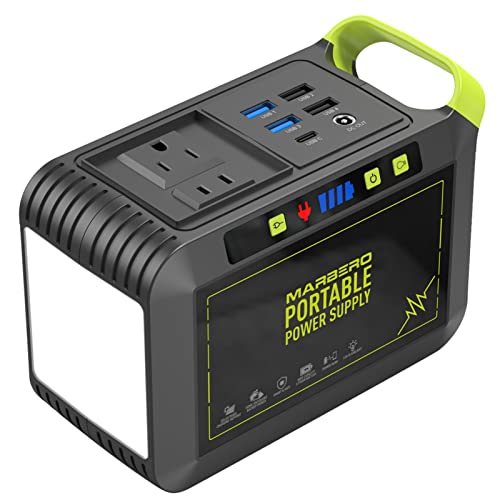
Best For: outdoor campers and light-grid trips where compact size matters. Why selected: It weighs about 3.2 pounds with eight simultaneous outputs and an ergonomic handle. Fast enough charging from 0 to 80% in a couple of hours with the included adapter, and it pairs with MARBERO solar panels for off-grid power. Caution: Solar panel not included; solar charging requires compatible panels.
Jackery Explorer 300 Portable Power Station

Best For: campers and photographers who need robust off-grid capability with long-term reliability. Why selected: A 292Wh LiFePO4 battery with 600W peak supports laptops, drones, cameras, and CPAP, plus a lightweight, durable design at ~7.5 lbs. It’s built to endure thousands of charge cycles. Caution: Higher capacity units may be bulkier than ultra-compact models.
HOWEASY 88Wh Portable Power Station

Best For: emergency kits and backcountry trips needing easy charging on the go. Why selected: Eight output ports including two AC sockets and USB-C/USB-A combos, plus three charging methods (AC, car, solar). The compact 6.6 x 4 x 3 inches form factor and 2.3-pound weight enhance portability. Caution: Solar charging depends on sun exposure and panel availability.
DARAN 288Wh Portable Power Station
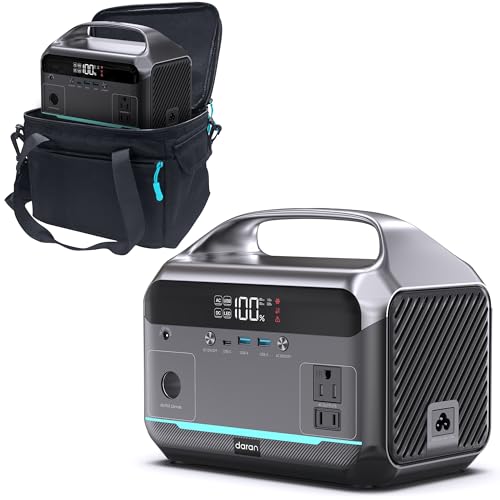
Best For: home backup and multi-device power on the go, including hurricane readiness. Why selected: A 288Wh LiFePO4 battery with 350W rated power, two AC outlets, and a 600W surge, enabling running essential appliances and devices during outages. The 2.1-hour rapid charging helps shorten downtime. Caution: Designed for devices up to 350W; higher-wattage appliances require a larger unit.
Buying Guide: Key Considerations For Choosing A Portable Power Station
What capacity do you need? If you plan light use for phones and small devices, a sub-100Wh unit may suffice and be ultra-portable. For camping or RV use with laptops and mini-fridges, look for 200–500Wh and at least 600W peak to handle startup surges. How will you charge? Consider models with multiple input options—AC, USB-C PD, car, and solar charging—to stay powered off-grid or during outages. Battery chemistry matters: LiFePO4 cells offer longer cycle life and stability in heat, a plus for outdoor use. How many ports do you need? Assess the mix of AC outlets, USB-C PD, USB-A, and DC ports to support the devices you own. Usability notes: a bright LED display helps monitor input, output, and remaining capacity. For travel, weight and compact dimensions improve portability; for home backup, higher capacity and surge capability deliver reliability.
Frequently Asked Questions
-
What is a portable power station?
A portable power station is a compact energy storage device that provides AC, DC, and USB outputs from a built-in battery, useful for charging devices or running small appliances away from mains power.
-
Which battery type is best?
LiFePO4 batteries are favored for longer life and stability, offering thousands of cycles with solid safety margins compared to some other lithium chemistries.
-
Can these units be charged with solar panels?
Yes, most models support solar charging when paired with a compatible solar panel; panels are often sold separately.
-
How do I choose by capacity?
Estimate daily device energy use and multiply by hours; select a capacity that covers that total plus a safety margin for outages or heavy loads.
-
Do portable power stations power home appliances?
Many models can run small to mid-size appliances, but always check continuous and peak watt ratings to ensure compatibility with your devices.
-
What is UPS in power stations?
UPS (uninterruptible power supply) mode quickly switches to battery power during outages to keep devices running without interruption for a brief period.