Answering the search intent for portable power that can run a laptop: these five models balance compact design, multiple outputs, and practical capacity. They’re best for digital nomads, students, campers, and emergency-prepared households who need reliable, on‑the‑go laptop charging. The list below highlights practical strengths, best-use cases, and simple trade‑offs to help you compare at a glance.
Quick comparison table
| Product | Approx. Capacity | Best For | Key Limitation |
|---|---|---|---|
| MARBERO 200W Portable Power Station | ~146Wh | High‑output needs, CPAP, multiple USB/AC devices | Lower total capacity for long trips |
| DaranEner 89.6Wh Portable Power Station | ~89.6Wh | Ultra-compact travel, TSA-friendly | Limited total AC power |
| Jackery Explorer 300 | 292Wh | Balanced power and weight for outdoors | Higher price point |
| Tenlike 99.9Wh Power Station | 99.9Wh | Lightweight, Type‑C and multiple ports | Lower total wattage for heavy devices |
| SINKEU 86.58Wh Portable Charger | 86.58Wh | Compact, quick recharging, versatile ports | Limited sustained output |
MARBERO 200W Portable Power Station 148Wh — Outdoor Backup Power

This MARBERO model offers a higher‑output 200W inverter with a compact 7.5 x 5.3 x 3.6 inch form and about 148Wh capacity. It supports AC, DC, USB QC3.0, and PD USB‑C, making it suitable for laptops, CPAP machines, phones, tablets, and small camping tools. Its passthrough charging enables power while charging, useful during an outage or in an RV. Best for users who need more wattage than entry‑level packs but still require portable size.
Who it’s best for: travelers and campers who run laptops and a few accessories at once, or home users who want a robust backup for short power interruptions. Better for users prioritizing higher AC output over ultra‑lightweight design.
Caution: the unit’s capacity is limited for long multi‑day trips with heavy power draws; plan devices accordingly and monitor usage to avoid overdischarge.
2026 Portable Power Station — 89.6Wh LiFePO4, TSA‑Friendly

This DaranEner unit emphasizes portability with a 89.6Wh LiFePO4 battery. It provides dual USB‑C and USB‑A fast charging, plus two 100W AC outlets for small appliances. Its light footprint and quick recharging options (AC/DC/PD/solar) help keep laptops powered during short trips or in-office backups. It’s a strong pick when you need a compact, efficient pack for quick work sessions off the grid.
Who it’s best for: professionals seeking a lightweight solution for everyday errands, meetings on the road, or minimal camping, where a full-size generator would be impractical. Better for weekend trips than long expeditions with heavy devices.
Limitation: the total AC wattage is constrained; avoid powering high‑demand appliances concurrently if you plan long sessions off‑grid.
Jackery Portable Power Station Explorer 300 — Rugged Outdoors Companion

The Explorer 300 packs a robust 292Wh LiFePO4 battery into a portable chassis with a balanced output suite. It includes two AC outlets, a 100W USB‑C PD port, USB‑A ports, and a 12V car port, delivering reliable power for laptops, cameras, drones, and small appliances. Its design focuses on durability and lifecycle longevity, offering thousands of charge cycles. Best for hikers and campers who need longer run times with steady, dependable power.
Who it’s best for: users needing a dependable all‑around generator for longer trips, serious work sessions away from outlets, or as a home backup with a sturdy battery. Choose this if you want LiFePO4 chemistry for longevity and more cycles.
Caution: heavier than the slim models; plan carry and setup accordingly on extended excursions.
Tenlike 99.9Wh Portable Power Station — Compact and Capable

This Tenlike unit delivers 99.9Wh with 6 output ports, including 2/3‑prong AC outlets and Type‑C PD charging. It supports 60W PD on Type‑C and provides multiple USB outputs for phones, tablets, laptops, and small devices. The compact size and TSA‑friendly rating make it appealing for air travel and everyday carry. Best for casual travelers who want straightforward, reliable charging for a laptop and a few devices.
Who it’s best for: students or professionals who travel light and need a versatile charger with several ports, without carrying a larger generator. Better for short trips or daily commuting with multiple small devices.
Limitation: its total wattage is modest; avoid running power‑hungry laptops for long periods at high load.
SinKeu 86.58Wh Portable Laptop Charger — Small But Practical
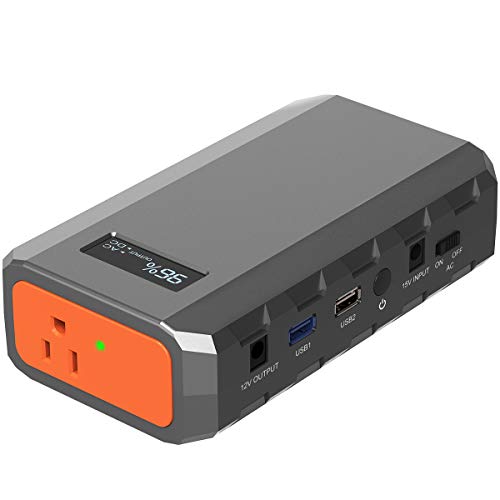
The SinKeu unit emphasizes ultra‑compact form with an 86.58Wh capacity and a 120V/65W AC outlet. It includes QC3.0 USB outputs and a DC output, enabling simultaneous charging of a laptop and mobile devices. It’s well suited for business trips, short flights, and incidental outages. Best for minimalists who prioritize size and weight without sacrificing essential ports.
Who it’s best for: frequent travelers and remote workers who need a tiny, flexible charging station for light laptop use and mobile devices. A good backup option for commuting or short workdays away from outlets.
Limitation: smaller battery means shorter run times for power‑hungry laptops; consider pairing with solar or a larger unit for longer outages.
Buying Guide: How To Choose The Right Portable Power Station For Your Laptop
- Capacity vs. weight: If you primarily need to charge a laptop, a 150–300Wh pack often balances run time and portability. For long trips with multiple devices, higher capacity helps, but increases weight.
- Output options: Ensure the unit has at least one AC outlet for laptops, plus USB‑C PD for fast charging. Multiple ports (USB‑A, USB‑C, DC, and car ports) offer flexibility for cameras, phones, and accessories.
- Battery chemistry and lifecycle: LiFePO4 cells offer longer cycle life and better thermal stability, suitable for frequent use over years. Some lithium‑ion packs are lighter but may have shorter lifespans.
- Recharging methods: Look for wall charging, car charging, and solar compatibility. Some models support fast recharge from mains or PD chargers, and solar panels can extend off‑grid use.
- Portability features: Size, weight, grip handles, and rugged design affect outdoor use. Slim, light units fit in backpacks, while larger packs suit car camping or home backup.
- Safety and management: Built‑in BMS (battery management system) and protection features (overcharge, short circuit, thermal) help prevent device damage and improve reliability.
- Travel considerations: If you fly, verify airline restrictions on Watt‑hour (Wh) ratings. Most under 100Wh are allowed without special approval; higher capacities may require airline notification.
Frequently Asked Questions
- What size portable power station do I need for a laptop? Answer: A unit in the 100–300Wh range generally covers one laptop and essential accessories for several hours, depending on the laptop’s power draw.
- Can I use these with a CPAP machine? Answer: Yes, many models include AC outlets or DC ports suitable for CPAP devices, but check wattage and peak requirements for your specific model.
- Are LiFePO4 batteries better than standard lithium for travel? Answer: LiFePO4 offers longer cycle life and improved safety under heat, making them favorable for frequent use and longer lifespans.
- Is passthrough charging safe? Answer: When supported by the device, passthrough charging allows charging while powering devices, but monitor temperatures and avoid charging high‑power appliances simultaneously.
- Can I recharge these with solar panels? Answer: Many models support solar charging; verify compatible solar wattage, panel voltage, and charge rates to optimize performance.
- Do these units require maintenance? Answer: Generally minimal maintenance beyond occasional battery calibration (per manufacturer guidance) and keeping ports clean and dry.