Looking for reliable portable power while camping or during emergencies? This guide highlights five compact, battery-powered inverters and power stations that convert DC battery power to usable AC, USB, and Type-C outputs. Each option is best for different camping styles—whether you rely on DeWalt 20V batteries, Milwaukee 18V, or compact LiFePO4 units. Use this comparison to pick a model that matches your gear, battery ecosystem, and power needs.
| Product | Battery Type Supported | Output Ports | Best For |
|---|---|---|---|
| Ecarke 220W Portable Power Inverter | DeWALT 20V | 1 AC, 2 USB-A, 1 Type-C | Tailgating, light-duty laptops, camping lights |
| Azocek 220W Power Inverter (DeWalt 20V) | DeWalt 20V | 1 AC, 2 USB (QC), 1 Type-C | Multi-device charging on the go |
| MARBERO 88Wh Portable Power Station | Rechargeable battery (built-in) | AC outlets, USB/USB-C, car DC | Compact backup for campers and RV setups |
| Jackery Explorer 300 | LiFePO4 battery (built-in) | 2 AC, USB-C PD, USB-A, car port | Longer off-grid trips, solar pairing |
| LIVOWALNY 200W-250W Inverter | DeWALT 20V | AC, 2 USB, 1 Type-C | Simple DeWALT battery-based power |
Ecarke 220W Portable Power Inverter (DeWALT 20V)
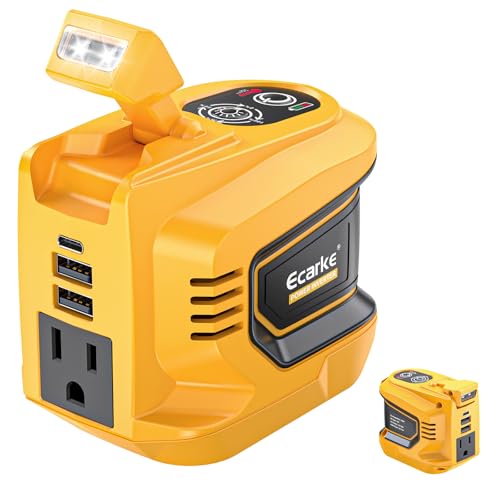
This compact inverter works with DeWALT 20V batteries and delivers 220W continuous power with a 250W peak. It provides 110-120V AC power alongside two USB-A ports and a Type-C port, plus a bright adjustable LED light. This model is best for campers who already own DeWALT 20V tools and need quick AC power for small devices like laptops, phones, or LED lighting. Do not include the battery or charger in the kit.
Best for: Campers with a DeWALT 20V ecosystem needing a pocketable power source for devices and lighting. Caution: The unit relies on an external DeWALT battery and charger, which are not included.
Azocek 220W Inverter With DeWALT 20V Power

Designed to run from De-Walt 18V/20V batteries, this inverter converts 20V DC to 110-120V AC and includes one AC outlet along with two USB ports (QC) and a PD Type-C port. It’s ideal for charging phones, tablets, and small electronics while camping or in emergencies. Battery not included.
Best for: Users who want a multi-port charging setup directly from a DeWALT battery. Caution: Requires compatible DeWALT battery; no battery in the package.
Azocek 220W Inverter (Milwaukee 18V)
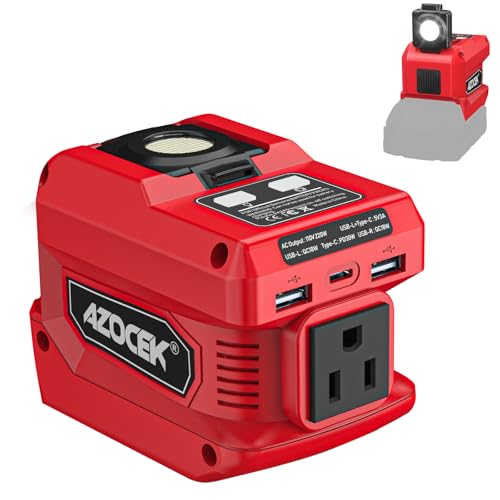
Specifically built for Milwaukee 18V batteries, this inverter delivers 220W DC to AC with one AC outlet, two USB QC ports, and a PD Type-C port for fast charging. Suitable for Milwaukee tool owners seeking portable power to charge phones, tablets, and small devices on outdoor trips or during outages. Battery not included.
Best for: Milwaukee 18V ecosystem users needing a compact, multi-port charger. Caution: Requires Milwaukee battery, which is not included.
MARBERO 88Wh Portable Power Station
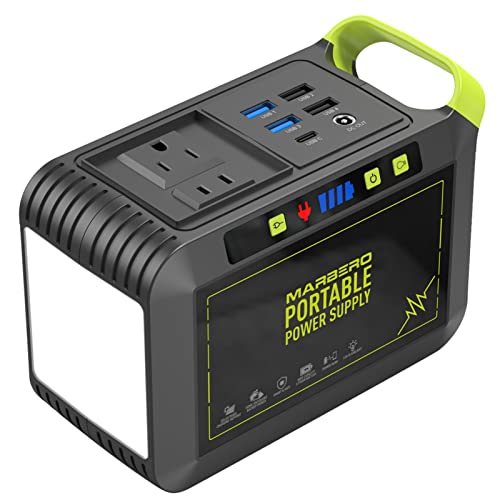
This compact LiFePO4-based power station provides up to 88Wh of energy with multiple outputs, including two AC outlets, USB ports, and a car DC charger. It’s designed for small household devices, camping lights, fans, and mobile charging. It can be charged via included adapter, optional solar panel, or car socket. The built-in Battery Management System adds safety for outdoor use.
Best for: Campers who want a lightweight, all-around backup for essential devices. Caution: 88Wh limits power for high-wattage appliances; plan for smaller devices or staged charging.
Jackery Explorer 300

The Explorer 300 uses a LiFePO4 battery with 292Wh capacity, delivering 300W continuous output and up to 600W surge. It features two AC outlets, a 100W USB-C PD port, two USB-A ports, and a car port. Its robust build and long cycle life (LiFePO4) support extended off-grid stays. Solar panel compatibility adds versatility for remote trips.
Best for: Outdoor enthusiasts needing a durable, higher-capacity power station with solar expansion. Caution: Heavier than ultra-compact options; balance weight with trip length.
LIVOWALNY 200W-250W Inverter

This DeWALT-friendly inverter supports 20V batteries and provides 200W continuous (250W peak) with 1 AC outlet and USB/Type-C ports for charging essential devices. It also includes an adjustable LED work light for night use. Ideal for minimalist setups where you rely on a single battery type.
Best for: DeWALT 20V users seeking a straightforward, battery-to-AC solution for small items. Caution: Battery not included; only as powerful as your battery supply.
Buying Guide: How To Choose The Right Portable Power Inverter
What to consider when shopping for camping power inverters and power stations?
- Battery compatibility: Are you tied to DeWALT 20V, Milwaukee 18V, or do you want a built-in LiFePO4 pack? Choose the option that fits your battery ecosystem or your need for independent power.
- Output needs: List devices you plan to run. If you only need phones and lights, a smaller unit is fine. For laptops or CPAP machines, prioritize higher continuous watts and surge capacity.
- Port selection: Look for a mix of AC outlets and fast-charging USB-C/USB-A ports. Type-C PD is helpful for laptops and newer devices.
- Weight and transport: Pocket-sized models are ultra-portable, but built-in stations like Jackery are heavier yet offer larger capacity and multiple outputs.
- Charging options: Consider whether you want solar compatibility, car charging, or wall charging. Solar-ready units are better for extended off-grid trips.
- Safety features: Fire-retardant housing, over/under voltage protection, temperature cutoffs, and short-circuit protection improve reliability in field use.
Which setup fits your camping style?
- Minimal gear and battery-integrated systems: Choose LIVOWALNY or Ecarke for compact, battery-first setups with essential outputs.
- Battery ecosystem ownership: If you already own DeWALT or Milwaukee batteries, select the corresponding inverter in that family for seamless swapping.
- Extended trips or RV use: A larger power station such as Jackery Explorer 300 provides more capacity and solar expansion.
How to use safely in outdoor environments
Follow manufacturer instructions for battery connections, avoid exposure to moisture, and ensure adequate ventilation in enclosed spaces. Do not exceed listed wattage ratings, especially with multiple devices running simultaneously. Always disconnect batteries before servicing.
FAQs
- What is the difference between a power inverter and a portable power station?
Inverters convert DC battery power to AC, while power stations typically include a built-in battery and multiple outputs. - Do I need solar panels for these devices?
Solar panels are optional for many models but enable off-grid charging during outdoor trips. - Can I run a laptop from these units?
Yes, most models with 100W+ USB-C PD or AC outlets can power laptops, depending on wattage requirements. - Is it safe to use these with DeWALT 20V batteries?
Yes, when using the modules designed for DeWALT 20V and following safety guidelines. - How long will a battery last on a campout?
Runtime depends on load; plan for multiple smaller devices or have a backup battery ready. - Can these units power a fridge in a tent?
Some higher-wattage power stations can, but verify continuous wattage and surge ratings before use.