Discover reliable mobile power solutions for camping, emergencies, RV trips, and off‑grid adventures. The following versatile models offer varying capacities, fast recharging, and multiple outlets to run devices from phones to small appliances. This guide highlights five top picks, with a quick glance at each option’s strengths to help you choose what best fits your needs and lifestyle.
| Product | Brand | Key Power Specs | Weight |
|---|---|---|---|
| Explorer 300 | Jackery Store | 293Wh, 300W continuous | 7.1 lb |
| SOLIX C1000 Gen 2 | Anker Store | 2,000W output, 1,024Wh | ~24 lb |
| Explorer 1000 v2 | Jackery Store | 1,070Wh, 1,500W | ~23.8 lb |
| Elite 30 V2 | BLUETTI Store | 288Wh, 600W / 1,500W surge | ~9.4 lb |
| Progeny 300W | Progeny (no brand listed) | 299Wh, 300W | ~7 lb |
Jackery Explorer 300 Portable Power Station

The Explorer 300 provides a compact, lightweight solution with a 293Wh lithium-ion battery and two Pure Sine Wave AC outlets for stable power up to 300W. It weighs about 7.1 pounds, making it highly portable for camping or travel. Fast recharge options include 60W USB‑C PD input and wall AC recharging, enabling an 80% recharge in roughly two hours. It supports multiple charging paths, including car outlets and compatibility with solar panels for off‑grid use. Its versatile ports accommodate drones, laptops, cameras, and other essential devices, while its compact form fits in small vehicle cabins or backpacks.
Anker SOLIX C1000 Gen 2 Portable Power Station
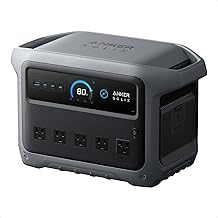
The SOLIX C1000 Gen 2 delivers high-output capability with 2,000W continuous power and a peak of 3,000W, backed by a 1,024Wh LiFePO4 battery. It enables fast charging via HyperFlash technology, reaching a full recharge quickly and supporting 1,600W input. This model supports up to 10 devices simultaneously, making it suitable for emergency backups, remote work setups, and larger outdoor gatherings. Its compact size and improved portability help transition power from indoors to off‑grid environments with ease.
Jackery Explorer 1000 v2 Portable Power Station

The Explorer 1000 v2 offers robust capacity with 1,070Wh and a 1,500W continuous output, plus a 3,000W surge peak. It weighs approximately 23.8 pounds, featuring a foldable handle for easier transport. Fast charging can bring the unit from 0% to 100% in about an hour with emergency charging and Jackery’s ChargeShield 2.0 for safer, smarter charging. The unit’s robust build and long lifespan are designed for extensive outdoor use and long-term off‑grid living.
BLUETTI Elite 30 V2 Portable Power Station

The Elite 30 V2 offers a versatile balance of power and portability with 288Wh, a 600W continuous output, and a 1,500W surge rating. It weighs only about 9.4 pounds, making it easy to carry on hikes or road trips. UltraCell technology and a smart cooling system reduce power consumption by up to 50%, increasing efficiency and runtime. Optional solar compatibility expands off‑grid capabilities for camping or emergency prep, while 50% lower standby and operating power helps extend device usage in longer outages.
PROGENY 300W Portable Power Station

The Progeny 300W model is a compact solar generator at about 299Wh with a lightweight design around 7 pounds. It provides a pure sine wave 110V AC outlet (300W rated, 600W peak), a car port, and built‑in USB/USB‑C outputs with fast charging capability. All ports support pass‑through charging, and the unit emphasizes a regulated 12V output to reduce device shutdown risk as the battery discharges—beneficial for CPAP machines and portable refrigerators during camping or emergencies.
Buying Guide: Key Purchase Considerations
- Capacity and runtime: Choose a model with enough watt‑hour capacity for your essential devices. Larger capacities support longer runs but add weight.
- Power output and surge: Match continuous and surge ratings to your heaviest device—CPAP machines, mini-fridges, or power tools may require higher peaks.
- Charge speed and method: Look for fast recharging via wall, USB‑C PD, car charge, and solar input compatibility. Solar readiness can reduce or eliminate grid dependence.
- Portability vs. endurance: Weigh the trade‑offs between weight, size, and battery life. Lighter units are easier to move but may offer less runtime.
- Battery chemistry: LiFePO4 batteries tend to last longer and tolerate more cycles than standard lithium‑ion, though they may add weight.
- Durability and safety: Consider build quality, protection features, and thermal management for reliable operation in varied environments.
- Interoperability: Ensure the unit has the required outlets (AC, USB‑C, USB‑A, DC car port) for your devices and that any solar panels are compatible.
- Expansion options: Some models allow pairing with additional packs or solar panels to scale capacity over time.
- Warranty and support: A solid warranty and responsive customer service can be important for long‑term use.
- Use case alignment: For frequent camping, prioritize weight and portability; for home backup, focus on higher capacity and higher surge capability.