When you’re out on the water, dependable power is essential for lighting, electronics, refrigeration, and small appliances. The following portable generators are designed for boats, offering quiet operation, clean power, and RV-ready or off‑grid capabilities. This guide highlights five options with varied wattage, run time, and fuel options to match cabin comfort, electronics safety, and marine use. Below is a quick summary table of the chosen products to help you compare at a glance.
| Product | Brand | Key Benefit |
|---|---|---|
| 2500W Inverter Generator | AMERISUN Store | Lightweight, ultraclean power for sensitive devices |
| 4400 Watts Inverter Generator | Oxseryn Store | High output with long runtime and ECO mode |
| 4600W RV-Ready Inverter | A-iPower Store | High power, CO sensor, portable open frame |
| 6800-Watt Dual Fuel Inverter | WEN Store | Gas/Propane flexibility, EV charging capable |
| 1200W Compact Generator | Aceup Energy Store | Ultralight, EPA & CARB compliant, easy backup power |
2500W Inverter Generator For Boats

The AMERISUN 2500W portable inverter generator delivers 2,500 peak watts and 1,900 running watts with low THD, making it suitable for sensitive marine electronics. Weighing about 39 pounds, it offers easy transport and storage for dockside or boat cabin use. It operates quietly at around 59 dBA, reducing boat cabin noise disruption while maintaining essential power. The fuel-efficient design provides up to 5.5 hours at 50% load, which supports daytime boating activities and overnight trips without frequent refueling. This unit is RV-ready and can be paralleled for higher power needs when required.
4400 Watts Inverter Generator With ECO Mode

The Oxseryn 4400W inverter generator provides ample power for RVs or boats requiring higher load. With 3400 running watts and ECO mode, it balances performance with fuel efficiency. It offers multiple outlets including 120V AC, 12V DC, and an RV port, enabling charging for marine electronics and appliances. A long runtime—up to 14 hours at 25% load—helps cover a full day of boating or overnight camping. The open-frame design supports easier maintenance and quick access for marine scenarios while remaining portable for on-deck use.
A‑iPower 4600W RV-Ready Portable Inverter
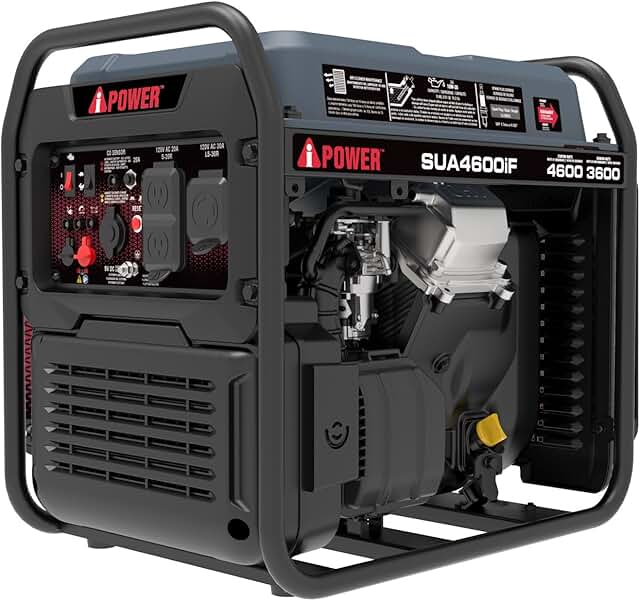
The A-iPower 4600W model delivers 4600 starting watts and 3600 running watts for robust marine use, including air conditioning units and multiple electronics aboard. At 56 pounds, it remains portable for boat deck handling and shore power connections. It features clean inverter power with 3% THD, ensuring sensitive devices—laptops, phones, and monitors—remain safe from power surges on the water. The unit is designed for easy transport and quick startup, useful for unpredictable ocean conditions or camping alongside a marina.
WEN 6800-Watt Dual Fuel Inverter

The WEN DF680iX offers a dual-fuel capability with 6800 surge watts (5100 rated) on gasoline and 6000 surge watts (4500 rated) on propane. It includes a bonded-neutral 240V configuration for Level 2 charging compatible with certain EVs and hybrids. The CO watchdog sensor automatically shuts down the unit if carbon monoxide is detected, adding a critical safety layer for marine environments. This model suits boats that require strong backing power while maintaining safety and compatibility with shore electrical systems when available.
Aceup 1,200W Small Portable Generator
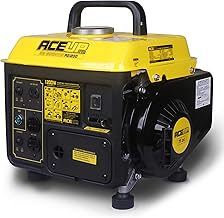
The Aceup 1,200W gas-powered generator provides 1,200 peak watts and 900 running watts, a compact 35.3-pound design, and a 71cc two-cycle engine. It includes essential outlets such as a 120V duplex socket and safety protections to manage minor loads on deck or in a boat cabin. Its lightweight form factor makes it easy to move around a boat or store in marine compartments. For fishermen or weekend boaters needing a lightweight backup power source, this unit offers straightforward operation and portability.
Buying Guide: Key Purchase Considerations For Marine Use
- Power needs: Assess your essential devices (refrigeration, lighting, communication gear) and estimate total watts. Choose a generator with a comfortable power margin to handle startup surges.
- Power quality: Inverter generators with low total harmonic distortion (THD) provide cleaner, safer power for sensitive electronics like navigational gear, laptops, and chargers.
- Portability and weight: For boats, a manageable weight (roughly 40–60 pounds for portable models) plus a compact form factor supports easy deck handling and storage in cabins or lockers.
- Noise level: Marine environments benefit from quiet operation (generally under 60 dBA at typical load) to avoid disturbing the crew and guests aboard.
- Fuel flexibility: Gas or dual-fuel options add reliability when a particular fuel source runs short. Propane can be a stable alternative where gasoline quality varies on the water.
- Run time and fuel tank: Longer runtimes at moderate loads reduce refueling interruptions during trips. Consider models with larger fuel capacities or efficient ECO modes.
- Safety features: Look for CO detectors or watchdog sensors that automatically shut off the generator if carbon monoxide is detected, especially on enclosed boats.
- Portability vs. power balance: Heavier open-frame designs provide higher power but less portability. Balanced models offer both decent power and easier handling for boats with limited storage.
- Maintenance access: An open-frame design or straightforward service points helps with on-site marine maintenance, especially in saltwater conditions.
- Warranty and support: Choose models backed by solid warranties and marine-friendly customer support to address coastal conditions and salt exposure.
Marine electrical planning should prioritize clean, stable output, safety, and ease of use in a compact, damp environment. The selected generators cover a range of watts, fuels, and safety features to match different boat sizes and cruising styles. Always follow manufacturer guidelines for safe operation around water and consider professional installation for complex electrical systems aboard larger vessels.