Answering the search intent directly: this guide highlights top solar panel kits that pair well with pop up campers, helping off-grid adventures stay powered. These kits suit different buyers—from casual weekend campers to full-time van lifers—by balancing portability, efficiency, and ease of setup. The table below compares five solid options to fit various space, weight, and power needs.
| Product | Best For | Output (approx.) | Notes |
|---|---|---|---|
| ECO-WORTHY 200W Kit | RVs, Campers needing higher daily output | ~800Wh/day under ideal sun | Durable frame; IP65 junction box |
| DOKIO 200W Portable Foldable | Lightweight, flexible setups | 200W system with separate controller | 9.7 lb; extended cable for sun/shade safety |
| Renogy Adventurer 200W Kit | Compact RV or camper interiors | ~800Wh/day (4h sun) | 30A LCD PWM controller; sturdy build |
| Renogy 200W Portable Panel | Limited space, easy storage | Up to 25% efficiency | Foldable, lightweight; multiple ports |
| Renogy 100W Portable Panel | Starter setup or secondary charging | ~500Wh/day (5h sun) | 25% efficiency; suitcase fold |
ECO-WORTHY 200W Kit for RVs and Campers
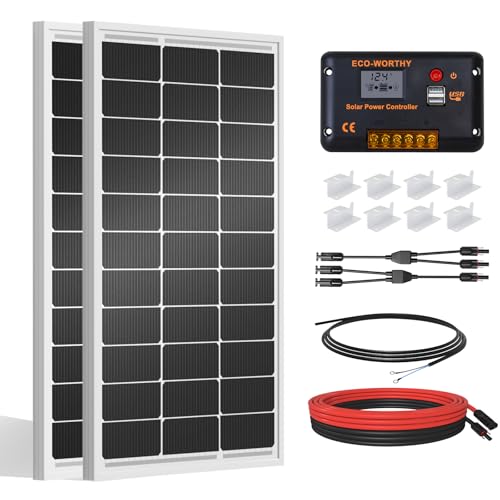
Best for high daily power needs in RVs and campers with ample roof or surface area. This kit uses high-efficiency monocrystalline cells, delivering up to 21.5% improved performance under good sun. The system includes a 30A PWM charge controller and a corrosion-resistant aluminum frame designed to withstand wind and snow. It is a strong choice for hands-off, low-maintenance off-grid power in longer trips. Use this if you regularly camp in sunny locations and need steady 12V charging for lights, fans, and small appliances.
Best for: campers who want robust daily output and long-term durability. Limitations: installation space and mounting hardware must suit a larger panel footprint; ensure roof strength and clearance.
DOKIO 200W Portable Foldable Kit

Best for light travel with high portability. This 200W panel folds slim and weighs about 9.7 pounds, and includes a separate PWM controller for safe charging. A 3-meter cable lets you place the panel in direct sun while keeping the controller shaded near the camper or power station. Choose this if you need a compact, easy-to-move kit for weekend trips or small campers with limited roof space.
Caution: ensure the foldable joints and cable connections are kept dry and protected during storage and transport.
Renogy Adventurer 200W Kit
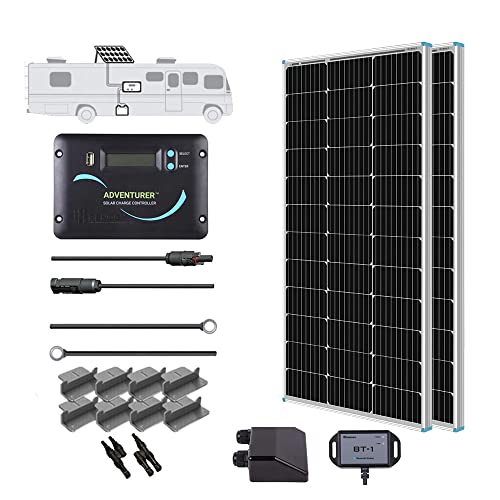
Best for a compact RV or camper interior with a clean install. It features a 30A PWM controller and corrosion-resistant frame, designed to withstand outdoor conditions including high winds and snow. The kit provides multi-protection against overcharging, overload, and reverse polarity, making it a reliable choice for off-grid living. It’s selected for those who want a balanced, all-around system with strong service support and straightforward setup.
Limitation: the integrated controller may limit expansion if you plan a larger system in the future.
Renogy 200W Portable Panel

Best for space-constrained layouts and rapid deployment. This panel delivers up to 25% efficiency with advanced N-Type cells and folds to a compact size for easy transport. It includes a built-in, high-quality connector set for quick hookup to power stations or 12V systems. It’s a strong pick for campers who want high energy output from a portable, rugged design.
Tip: although portable and efficient, it is best used with compatible Renogy controllers and mounting accessories to maximize performance.
Renogy 100W Portable Panel
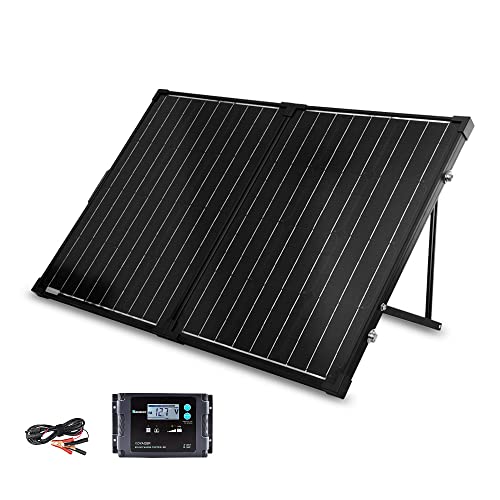
Best for starter setups or secondary charging needs. The 100W panel uses high-efficiency N-Type cells for improved performance and folds into a suitcase-sized case. It’s lightweight at around 7.9 kg and includes a pre-installed PWM charger, ready for quick plug-and-play with 12V batteries or portable power stations. Choose this if you want an affordable, easy-entry option or to supplement a larger system.
Limitation: lower daily output compared with higher-wattage kits, so plan for sunnier days or longer sun exposure to meet power goals.
Buying Guide: Key Considerations for Pop Up Campers
- Output needs vs. space: Determine your typical daily power needs (lights, fridge, fans) and match with panel wattage and number of panels you can safely mount on a pop up camper roof or stored onboard.
- Portability vs. permanence: Portable panels (folding designs) are great for limited roof space and flexible use, while fixed rooftop kits reduce clutter and simplify charging routines.
- Controller type: PWM controllers are common and affordable; MPPT controllers can extract more energy in varying sunlight but add cost and complexity. Ensure compatibility with your battery type (12V, Li-ion, lead-acid).
- Durability and weather resistance: Look for corrosion-resistant frames, IP ratings, and wind/snow load tolerances to withstand camping environments.
- Expansion potential: Consider whether you might add more panels later. Some kits allow straightforward expansions or easy integration with power stations.
- Mounting and storage: Check mounting brackets, kickstands, and the foldability of panels to ensure they fit your camper’s storage footprint when not in use.
Frequently Asked Questions
- Q: Do these solar kits work with all RV batteries?
A: Most 12V lead-acid and many lithium battery systems are compatible, but always verify the controller’s input ratings and battery compatibility before purchasing. - Q: Can I install a solar kit myself on a pop up camper?
A: Yes, many kits are designed for DIY mounting with basic tools. Follow the manufacturer’s wiring diagrams and ensure waterproof sealing for roof mounts. - Q: How much sun do I need for daily use?
A: Real-world results vary, but 4–5 hours of direct sun can support typical RV daily loads; higher wattage panels deliver more usable energy in the same sun window. - Q: Is PWM better than MPPT for camping?
A: PWM is simpler and cost-effective for basic setups; MPPT can improve efficiency in partial shade or cooler days but at higher upfront cost. - Q: Can these panels withstand camping conditions?
A: Most kits feature rugged frames and weather ratings (IP65+), but avoid prolonged exposure to extreme weather and secure panels during travel. - Q: Should I buy a kit with an integrated controller?
A: Integrated controllers simplify setup and reduce wiring complexity, which is beneficial for beginners or where space is limited.