When choosing a personal generator for home use, you want reliable power, safety, and suitability for your space. This guide focuses on five practical options that cover portable inverter generators and compact power stations as well as a robust dual‑fuel standby style. It helps you decide who benefits most from each type—whether you’re powering a fridge during outages, running essential devices on the road, or supporting off‑grid camping needs. The summary table below highlights the selected products and their core strengths for quick comparison.
| Product | Type | Best For | Key Benefit |
|---|---|---|---|
| Oxseryn Power Equipment 4400 Watts Inverter Generator | Inverter Generator | Home backup, RVs | Durable, long runtime with ECO mode |
| MARBERO Portable Power Station 88Wh | Portable Power Station | Lightweight backup, camping | Fast charging, compact design |
| ALLWEI Portable Power Station 300W | Portable Power Station | Home emergency, travel | Multiple outputs, long life LiFePO4 |
| Arkpax Portable Power Station 300W | Portable Power Station | Camping, emergency backups | Fast recharge, 192Wh total |
| Westinghouse 12500 Watt Dual Fuel | Dual‑Fuel Portable Generator | Homes, larger outages | High wattage, transfer‑switch ready |
Oxseryn Power Equipment 4400W Inverter Generator

Best for: Home backup and RV use. This inverter generator delivers 4400 peak watts and 3400 running watts, with two 120V outlets, a 12V DC port, and an RV connection. It runs up to 14 hours at 25% load in ECO mode and has a two‑gallon tank with a fuel gauge for quick checks. The unit’s inverter technology helps protect sensitive electronics. Choose this if you need quiet operation and substantial portable power for weekends or emergencies.
Caution: While the unit offers long runtime at light loads, high‑demand appliances may exceed its continuous rating, so plan loads accordingly and monitor fuel levels during extended outages.
MARBERO Portable Power Station 88Wh
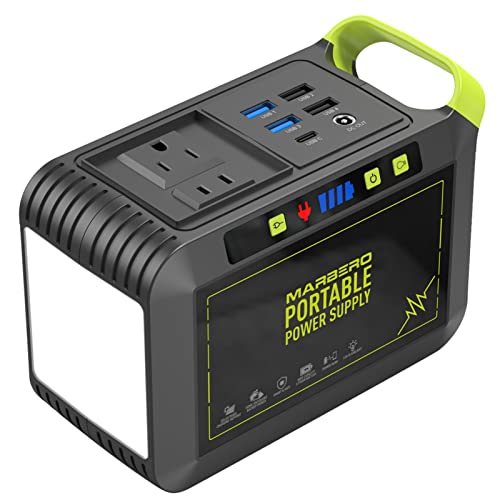
Best for: Lightweight, on‑the‑go backup. The MARBERO 88Wh unit supports fast charging, multiple outputs, and optional solar panel charging. It’s compact—about the size of a DSLR body—and can power phones, small laptops, USB devices, and some essential household gear. The built‑in BMS offers protection, and the car DC charger helps with in‑vehicle emergencies. Choose this if portability and quiet operation are top priorities.
Caution: With only 88Wh capacity, it will run small devices for a limited time; it’s not a full home backup solution for high‑demand appliances.
ALLWEI Portable Power Station 300W
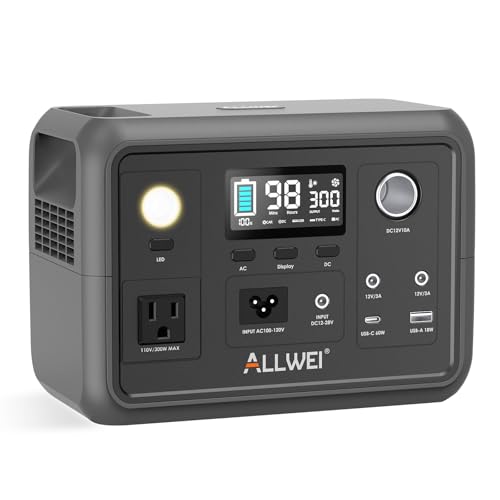
Best for: Reliable home emergency power. The ALLWEI 256Wh unit provides 300W continuous power and 600W peak with a pure sine wave output. It features eight ports, including AC outlets, USB ports, and a car‑charger socket, plus a multi‑layer BMS for protection and long cycle life. This model is well suited for powering laptops, small fridges, CPAP machines, and essential electronics during outages. Choose this if you want to run multiple devices at once with stable output.
Caution: Like many portable stations, it won’t sustain high‑wattage appliances for long periods; manage loads to avoid overdraw.
Arkpax Portable Power Station 300W

Best for: Camping and travel backups. Arkpax offers 192Wh capacity with two AC outlets, USB‑C PD, USB‑A ports, and a car outlet. It supports fast charging via the included 180W AC adapter and can be charged on the road or with solar panels (not included). This unit serves as a compact power source for light appliances and electronics, ideal for weekend trips or small home emergencies. Choose this if you need versatile recharging options and a compact footprint.
Caution: Not suitable for high‑wattage devices like hair dryers or coffee makers for extended periods; plan to run smaller loads.
Westinghouse 12500 Watt Dual Fuel

Best for: Higher‑demand home backup. This dual‑fuel generator runs on gasoline or propane, delivering up to 12500 peak watts (gas) and 11200 peak watts (propane) with 8500 running watts (propane) and a 6.6‑gallon tank. It features remote start, transfer switch readiness, and multiple outlets including L14‑30R and RV connections. Ideal for whole‑house backup or larger outages where more power is required. Choose this if you need substantial wattage for essential circuits and compatibility with a transfer switch.
Caution: This is a larger, heavier unit designed for stationary use or frequent transport with adequate space and a suitable fuel supply; ensure proper ventilation and installation requirements are met.
Buying Guide
What type should you choose for a home backup?
Inverter generators and portable power stations provide clean power ideal for sensitive electronics and daily use. They’re typically quieter and lighter, but with lower overall wattage. For whole‑home backup during extended outages, a dual‑fuel or larger generator with a transfer switch can be more suitable.
How to compare power output and runtime?
- Running watts indicate continuous power; peak watts show the surge capability for starting loads.
- Runtime depends on fuel capacity and load; plan for at least a few hours at essential load for outages.
- Consider whether you need pure sine wave for sensitive devices (laptops, TVs) or if modified sine wave is acceptable.
Portability vs. capacity
Portable power stations prioritize compact design and USB outputs for mobile devices, while larger generators deliver more watts and outlets for home essentials. Choose based on whether you value mobility (camping, road trips) or steadier power for a home setup during outages.
Safety and maintenance considerations
- Look for overload protection, low oil shutdown, and EPA compliance for cleaner operation.
- Ensure appropriate ventilation and space around the unit during operation.
- Regular fuel and battery maintenance extend lifespan and reliability.
Recommended pairing and usage tips
- Use separate circuits for high‑demand appliances when possible to avoid tripping or overloading.
- Store fuel in approved containers and follow local safety rules for storage and venting.
- For RV or camping use, check outlet types and RV compatibility before pairing with gear.
FAQ
- Do inverter generators protect sensitive electronics? Yes, they provide cleaner power with stable voltage, reducing risk to devices.
- What can a 88Wh or 192Wh power station run? They commonly power phones, tablets, small laptops, LED lights, and some USB‑C devices for limited periods.
- Is dual‑fuel better for home backup? Dual‑fuel units offer flexibility with available fuel sources and can provide higher wattage for essential loads.
- Should I choose a portable power station or a traditional gas generator for home backup? For mobility and quiet operation, a portable power station is preferable; for whole‑home protection, a larger gas or dual‑fuel generator with transfer switch is more suitable.
- What is the importance of a transfer switch? It safely isolates the home from the grid and directs power to essential circuits during an outage.
- Can these devices be used indoors? No, most portable generators require outdoor use due to exhaust and ventilation concerns.