Choosing a permanent magnet generator (PMG) for wind energy projects requires balancing efficiency, reliability, and compatibility with your system. This guide highlights five prominent PMG options suitable for small to medium wind setups, covering performance ranges, build quality, and ease of integration. Whether you’re powering a shed, a rural outpost, or a hybrid wind-solar system, these selections offer varied strengths to match different wind profiles and installation constraints.
The table below provides a quick snapshot of the featured products, including brand, key strengths, and typical use cases.
| Product | Brand | Key Strengths | Typical Use |
|---|---|---|---|
| Magerial N42H Arc Segment Magnets | Magerial | Diametrically magnetized, Ni+Cu+Ni coating, high-temperature tolerance | Wind turbine rotor magnet clusters |
| Permanent Magnet Generator 1200W 12V | Mahugde | Aluminum-copper construction, high wattage, AC compatibility | Wind-powered DC/AC conversion, agricultural vehicles |
| Small Wind Turbine Generator 36W/40W | BUBUQD | Low power, compact, low noise, multi-use applications | Small wind power projects, educational kits |
| 3-Phase Permanent Magnet Generator (48V) | Generic | High performance and durable die-cast housing, gearless design | Wind and water turbine setups |
| NATGAI 24V 350W Brushed PM Generator | NATGAI | Reversible operation, robust aluminum housing | Wind, e-bike, and scooter integration |
Below are five detailed product sections, each describing its specific PMG attributes, suitability, and setup considerations. The information is intended to help you compare performance, installation ease, and long-term reliability.
Magerial N42H NdFeB Arc Segment Magnets For Generators

The Magerial N42H arc segment magnets combine radial symmetry with diametric magnetization, offering balanced magnetic fields for rotor assemblies. The 8-pack configuration helps with symmetrical rotor construction, and the Ni+Cu+Ni triple-layer coating provides corrosion resistance and a sleek finish suitable for outdoor wind installations. With a maximum working temperature around 120°C, this set is viable for higher-temperature environments encountered in some turbine installations. These magnets are designed for durability under fluctuating wind loads, contributing to consistent generator performance.
Key considerations:
– Magnetic polarity distribution (S/N) across the outer curves supports stable rotor fields.
– Triple-layer coating enhances wear and weather resistance.
– High-temperature tolerance aids in hot, exposed locations, but overall performance remains tied to rotor design and cooling.
Permanent Magnet Generator 1200W 12V Low RPM PMA

This PMA presents a robust build designed for low-RPM wind energy harvesting, delivering up to 1200W at about 4500 RPM as a reference point. The combination of premium aluminum and copper components offers durability and corrosion resistance, making it well-suited for long-term outdoor use. It can charge 12V lead-acid systems or feed into 12–80V circuits for lighting and small-load applications. Easy wiring and integrated design minimize setup complexity, helping reduce installation time in field projects.
Key considerations:
– High homogeneity in copper windings supports stable output at low RPM.
– Aluminum housing offers heat dissipation and weather resilience.
– Wiring configuration matters for stable operation and efficient energy transfer.
Small Wind Turbine Generator 36W/40W
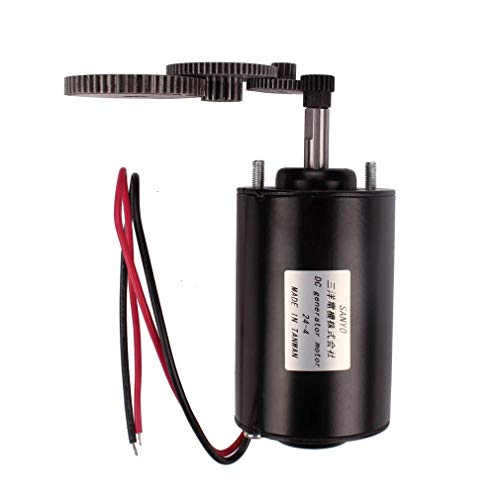
This compact wind turbine generator is designed for small-scale power needs with low power consumption and high torque capabilities. Its low-noise operation and light footprint make it suitable for residential or telecommunication installations, educational kits, and simple off-grid setups. While the 36–40W rating places it on the lower end of PMG outputs, its multi-use design supports a wide range of auxiliary devices and light loads, ensuring versatile applicability in constrained spaces.
Key considerations:
– Suitable for DIY projects and low-load systems.
– Reduced footprint helps in rooftops, balconies, or small towers.
– Torque handling at peak wind speeds should be matched with appropriate controllers and storage.
3-Phase Permanent Magnet Generator (48V)

This 3-phase, gearless PMG is designed for wind and water turbine applications, emphasizing stable performance and efficient energy conversion. A die-cast aluminum cover enhances durability and corrosion resistance, supporting reliable operation in tough environments. The absence of gears reduces maintenance requirements, while the high-quality NdFeB magnets and copper windings provide efficient energy transfer across varying wind speeds. This model is well-suited for more demanding turbine configurations requiring direct-drive capability.
Key considerations:
– Gearless design reduces mechanical complexity and maintenance.
– Die-cast housing improves weather resistance and lifespan.
– Direct-drive suitability depends on turbine design and controller compatibility.
MYFULLY 24V 350W Brushed PM Motor Generator

The MYFULLY unit is a brushed PM motor-generator rated at 24V DC and 350W, with a 2800 RPM nominal speed. Its aluminum body and copper windings emphasize durability and thermal performance, while the included sprocket and shaft dimensions facilitate straightforward integration with mechanical drives and battery charging systems. The reversible operation feature allows switching rotation direction, adding installation flexibility in complex setups such as hybrid wind-solar arrangements or multi-turbine configurations.
Key considerations:
– Brushed design offers straightforward control and wiring.
– Reversibility adds installation adaptability.
– A 350W output suits medium-scale, low-to-mid wind resources.
Marsrock 600W PM Generator for Wind Turbines

Marsrock’s 600W PM generator is designed for gearless, high-efficiency operation in wind systems, featuring a direct-drive rotor and low-starting-resistance design. The hardware emphasizes NdFeB magnets and high-purity copper windings to deliver stable power with good startup performance in moderate winds. It suits mid-sized residential or off-grid installations where robust performance and straightforward maintenance are important. The gearless approach reduces mechanical complexity, contributing to longer service life with proper cooling.
Key considerations:
– High-quality magnets and windings for efficiency.
– Direct-drive design minimizes mechanical losses.
– Adequate cooling is essential at higher wind speeds to sustain performance.
Buying Guide: Key Purchase Considerations and Comparisons
- Voltage and compatibility: Match the PMG output voltage with your battery bank, controller, and load requirements. Some units are designed for 12V systems, others for 24V, 48V, or higher. Consider future expansion when selecting a model.
- RPM range and wind profile: Low-RPM generators perform better in areas with steady, modest winds, while higher-RPM designs suit regions with stronger gusts. Gearless designs reduce maintenance but require precise aerodynamic integration.
- Construction and durability: Look for aluminum housings, corrosion-resistant coatings, and robust windings. Outdoor installations demand weather-resistant components and reliable thermal management to prevent overheating.
- Maintenance and operation: Brushed PMs are simpler to wire but may require more frequent maintenance than brushless designs. Gearless configurations generally offer fewer moving parts, reducing maintenance needs.
- Sizing for demand: Balance generator capacity with storage and load expectations. Oversizing can lead to wasted energy, while undersizing may fail to meet demand during high winds.
- Mounting and integration: Assess mounting options, shaft diameters, and compatible drive gear or direct-drive configurations. Ensure the controller, rectifier (if needed), and wiring meet local safety standards.
- Cost of ownership: Consider initial cost alongside long-term reliability, maintenance, and energy production potential. A higher upfront investment can pay off with longer service life and better efficiency.
- Environmental and safety considerations: Ensure proper shielding, electrical insulation, and safe handling guidelines for PMs, which can be strong permanent magnets.