If you need reliable on-the-road power, a car power inverter is the best outlet for charging laptops, tablets, CPAP machines, and more from your vehicle. This guide highlights five top options suited for different needs—from compact, lightweight models for light charging to higher-wattage units for laptops and heavy devices. Ideal buyers include frequent travelers, road-trippers who rely on electronics, and families who need the flexibility to power multiple devices at once.
Below is a quick buying summary of the five selected products. Use this table to compare core specs at a glance before diving into detailed sections.
| Product | Max Continuous Power | USB Ports | Primary Use |
|---|---|---|---|
| PiSFAU 150W Power Inverter | 150W | 2 USB | Laptops, tablets, lights, small appliances |
| FOVAL 200W Car Power Inverter | 180W (rated) / 200W peak | 4 USB ports | Laptops, tablets, multiple devices |
| BESTEK 300W Power Inverter | 300W | 2 USB ports | Laptops, multiple USB devices, on-road work |
| FOVAL 150W Car Power Inverter | 150W | 2 USB ports | Laptops, tablets, frequent city trips |
| YSOLX 200W Car Power Inverter | 200W | 4 USB ports | Multiple devices, camping, road trips |
PiSFAU 150W Power Inverter Review

Best for light-duty charging on the move. This inverter delivers 150 watts of continuous DC to AC power with a peak of 300 watts and includes two USB ports for quick charging. It specializes in powering smaller devices like lights, tablets, and phones alongside a laptop if needed. The built-in smart chip and fuse provide double protection, auto-shutting off on faults to prevent fuse replacements. Choose this if you prioritize compact size and essential device charging for short trips.
Best for: commuters and travelers who mostly need to power small electronics. Limitation: may struggle with high-wattage devices like powerful laptops for extended use.
FOVAL 200W Car Power Inverter
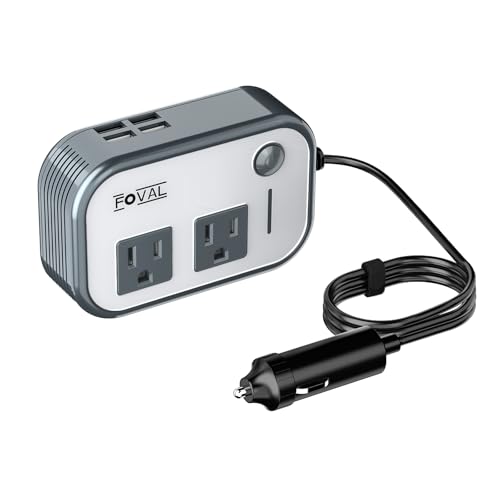
Best for multi-device households or travelers with several gadgets. It provides up to 180W continuous power (200W peak) across two AC outlets and four USB ports, enabling simultaneous charging of laptops, tablets, phones, and more. Its travel-kit size and built-in smart cooling fan support longer use without overheating. Choose this if you need more simultaneous charging and a compact footprint. Caution: higher watt draw may drain your vehicle’s battery faster on idle or extended stands.
BESTEK Power Inverter DC 12V to 110V 300W
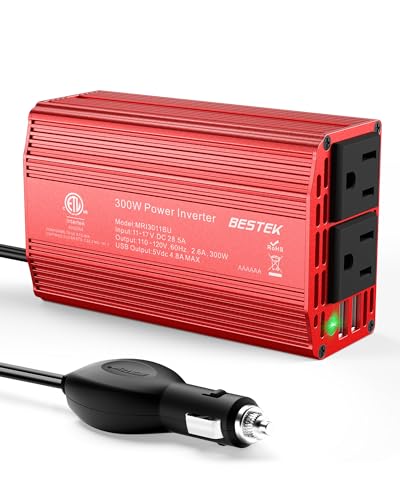
Best for heavy-duty road trips and work-on-the-go. The BESTEK model provides 300 watts continuous power with 700 watts peak, two AC outlets, and two USB ports. Its aluminum housing layout and compact, iPhone-sized form factor make it a strong all-around choice for users who frequently run laptops and larger devices. Best for: travelers who need reliable, higher-watt power. Limitation: larger footprint than ultra-compact models.
FOVAL 150W Car Power Inverter (Classic Red)
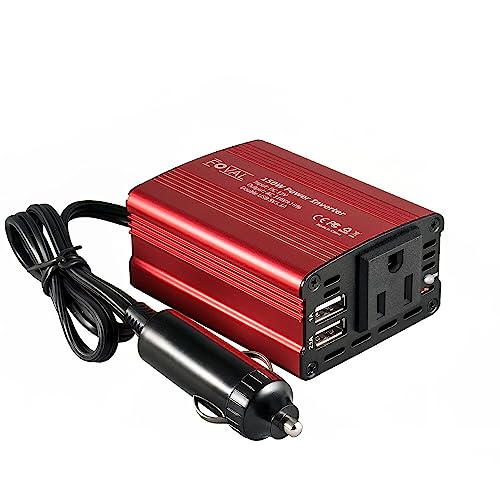
Best for budget-conscious travelers who still need a capable inverter. This 150W model includes two USB ports and one AC outlet, suitable for charging multiple devices such as phones, tablets, and light laptop use. It’s compact with an aluminum shell and generous portability for road trips. Choose this if you want an affordable, travel-friendly option and don’t require heavy-lift capacity. Limitation: may not handle power-hungry laptops for extended periods.
YSOLX 200W Car Power Inverter

Best for longer trips and camping, this 200W inverter offers four USB ports plus dual 110V outlets for charging multiple devices. Its compact footprint, quick-charge USB-C and USB-A ports, and advanced cooling system support extended use, maintaining performance on the road. Choose this if you need the most versatility for several devices at once. Caution: keep an eye on total watt usage to avoid overloading the unit.
Buying Guide: Key Considerations For Car Inverters
- Power needs: Match continuous wattage to the devices you plan to power. Laptops and CPAP machines usually require higher wattage.
- Number of outlets: Decide how many AC outlets and USB ports you need to charge simultaneously.
- Protection features: Look for over-voltage, over-current, short-circuit protection, and an auto-shutoff to protect devices and the vehicle.
- Portability: For frequent travelers, a compact, lightweight unit is easier to store in a glove box or trunk.
- Cooling: A built-in cooling fan helps prevent overheating during longer sessions.
- Durability and build: Aluminum housings tend to be robust and dissipate heat effectively.
- Cable quality and length: Ensure cords and plugs fit your vehicle’s cigarette lighter socket and do not add excessive bulk.
- Usage scenarios: Consider whether you need one for occasional use, daily commuting, or extended road trips.
Frequently Asked Questions
- What is a car power inverter used for?
– It converts 12V DC from a vehicle into 110V AC to power or charge devices like laptops, tablets, and small appliances while driving or parked. - How many devices can I power at once?
– It depends on the inverter’s total wattage and outlet count. Higher-watt units with multiple USB ports can support several devices simultaneously. - Is it safe to run a laptop on a car inverter?
– Yes, if you choose a model that provides adequate continuous wattage for the laptop and uses built-in protection features. - What should I consider before buying?
– Assess your power needs, the number of outlets, protection features, portability, and how often you will use it. - Can inverters drain a car battery?
– Yes, especially if the engine is off. Use models with automatic shutoff after low voltage to minimize battery drain. - Do all inverters require a separate fuse?
– Many include built-in fuses and smart protection, reducing the need for a separate fuse in typical setups.