If you’re outfitting an RV for reliable off-grid power, a dual‑fuel or inverter generator can deliver clean, quiet electricity for appliances, devices, and essential systems. This guide spotlights five top options that balance portability, fuel flexibility, and RV readiness. Best for full-time RVers, weekend campers, or vehicle owners needing backup power, these models emphasize safe power, ease of use, and compatibility with RV electrical systems.
| Product | Fuel Type | Key Feature | Best For |
|---|---|---|---|
| WEN DF480iX | Gasoline/Propane | Quiet operation; CO watchdog; inverter | Quiet sites and sensitive electronics |
| WEN DF680iX | Gasoline/Propane | High output; low‑noise; 240V bonding for EV charging | Mid‑range power with EV charging support |
| Westinghouse 6500 | Gasoline/Propane | Multiple outlets; long runtime; transfer switch ready | Home backup with transfer options |
| Champion 4500 | Gasoline | Quiet tech; parallel ready; power meter | RV use with expandability |
| WEN DF8000X | Gasoline/Propane | Large dual‑fuel; electric start; CO watchdog | High power for larger rigs or tools |
WEN 4800‑Watt Dual Fuel Inverter (DF480iX)

Fuel flexibility and quiet operation make the WEN DF480iX ideal for RV users who value campground courtesy and electronics safety. The 224cc dual‑fuel engine runs on gasoline with 4800 surge watts and 4000 watts rated, or propane with 4320 surge and 4000 rated. Its inverter design delivers clean power suitable for smartphones, tablets, and laptops. Best for weekend campers or RVers who need low noise and reliable power at moderate loads. Caution: Propane fuel availability can affect running time and performance in extreme temperatures.
WEN 6800‑Watt Dual Fuel Inverter (DF680iX)

The DF680iX doubles the wattage with gasoline (6800 surge / 5100 running) and propane (6000 surge / 4500 running) and adds a bonded‑neutral 240V configuration for Level 2 EV/battery charging. It includes a CO watchdog sensor for automatic shutdown at dangerous CO levels. Best for RVers who need substantial power for appliances or external devices while maintaining safety. Limitations: Heavier unit; may require a larger storage space and heavier transport.
Westinghouse 6500 Watt Dual Fuel (6500/5800 Surges)
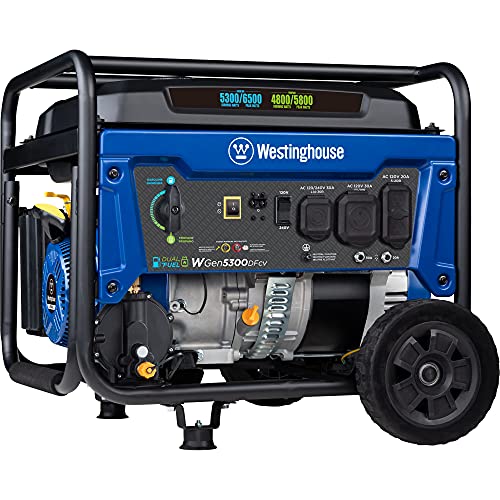
Westinghouse combines robust output with practical features: gasoline running watts up to 5300/6500 peak and propane 4800/5800, a 4.7‑gallon tank, and up to 14.5 hours runtime. It offers multiple outlets including an RV‑ready TT‑30R and transfer switch readiness. Best for home backup or RV setups that require sustained power and easy transfer to a manual or automatic transfer switch. Caution: Requires more space and heavier handling compared to smaller inverters.
Champion 4500‑Watt Inverter (Quiet Technology)

Champion’s 4500‑W inverter is designed for RV use with 61 dBA quiet operation, up to 14 hours on 2.3 gallons, and optional parallel kit for doubling output. It features an intelligauge power meter, CO shield auto shutoff, and an EZ Start dial. Best for RV travelers aiming for a quiet, portable, and expandable power source. Limitation: Parallel kit sold separately, so total output may require additional investment.
WEN 8000‑Watt Dual Fuel Portable Generator (DF8000X)

The DF8000X offers a high‑power, dual‑fuel solution with 8000 surge / 6500 running watts on gasoline and 7200 surge / 5850 running watts on propane, plus electric start and CO watchdog. Best for larger RVs or job setups where substantial continuous power is required. Caution: Higher noise and weight compared to smaller inverter models.
Evernexta 4000 Watts Inverter (RV Ready)

Evernexta’s 4000‑watt inverter is compact and RV‑ready with 208cc engine, 60 Hz output, and a 2‑gallon tank for up to 9 hours at 25% load. It provides essential outlets for RVs and camping, including a 30A RV outlet and USB/12V ports. Best for lightweight setups, weekend trips, and campers prioritizing portability. Limitation: Smaller fuel capacity means shorter runtime under heavier loads.
DuroMax XP13000EH Dual Fuel

With 13,000 watts of power, the XP13000EH provides heavy‑duty backup for larger homes, RVs, or work sites. DuroMax is recognized for dual‑fuel versatility and a broad product range. Best for serious power needs or emergency readiness where high output is essential. Limitation: Large size and weight demand extensive storage and transport planning.
Cummins Onan P4500I Inverter

The Cummins Onan P4500I combines portability with RV compatibility and a 7.3 HP, 224cc OHV engine. It offers a push‑button start, RV inverter power, and parallel capability with another P4500 for up to 50A. Best for RVers seeking reliable, scalable power with RV‑specific features. Caution: Parallel operation requires compatible accessories for maximum output.
Buying Guide: How To Choose The Right Onboard RV Generator
- Fuel type: Dual‑fuel units offer flexibility (gasoline and propane) but consider availability at your typical use location and weight differences.
- Power needs: Estimate your essential loads (fridge, water heater, HVAC, outlets). Choose a unit with enough surge and running watts for your RV’s appliances.
- RV compatibility: Look for RV‑ready outlets (TT‑30R, 30A/50A options), transfer switch readiness, and proper grounding considerations.
- Noise and wake impact: Inverter generators typically run quieter and produce cleaner power; consider campground etiquette and noise restrictions.
- Portability and storage: Weigh the unit against available storage space and how often you’ll move it. Lighter models are easier for seasonal campers.
- Safety features: CO shutdown sensors, low/oil shutdown, and easy starts improve reliability in remote settings.
- Maintenance: Check fuel stabilizers, oil type, and service intervals to ensure longevity and smooth operation.
Frequently Asked Questions
- What is the difference between an inverter generator and a traditional portable generator?
– Inverter generators regulate output to provide clean, stable power suitable for sensitive electronics, and are typically quieter and more fuel efficient than traditional generators. - Do I need a transfer switch for RV power?
– A transfer switch can automatically switch your RV between shore power and generator power, improving safety and convenience. - Should I choose a dual‑fuel generator for RV use?
– Dual‑fuel models offer flexibility if you anticipate propane availability or wish to diversify fuel sources, but ensure weight and space fit your needs. - What size generator is best for a typical RV?
– For modest loads (fridge, lights, charge stations), 3000–4500 watts inverter generators work well. For larger rigs with AC or multiple devices, 6000–8000+ watts may be desirable. - Is battery charging supported by all these generators?
– Some models offer 240V/EV charging options or 120V outlets suitable for charging devices; verify your vehicle’s charging requirements before purchase. - What maintenance steps are essential after purchase?
– Regular oil changes, air filter checks, spark plug inspection, and fuel system maintenance help sustain performance and longevity.