If you’re shopping for compact, efficient solar panels, you want options that maximize space and reliability. This guide highlights five small solar panels ideal for RVs, boats, cameras, and DIY projects. Each selection emphasizes portability, ease of installation, and real-world applicability for specific buyers like campers, homeowners with limited roof space, and hobbyists building off-grid solutions.
Summary table of selected products:
| Product | Best For | Key Benefit |
|---|---|---|
| Renogy ShadowFlux 120W | Spaces with shading concerns | Anti-shading technology for stable output |
| Paodekua 4W Solar Charger | Ring camera setups | Direct USB-C compatibility and weatherproofing |
| SOLPERK 20W Solar Panel Kit | 12V battery maintainers | High efficiency with smart MPPT controller |
| KEJNYT 5-Pack 1W Panels | DIY projects and battery charging | Compact, versatile, easy to wire in parallel/series |
| LMDTYN 5W Ring Camera Panel | Outdoor Ring cameras | Monocrystalline efficiency with USB-C compatibility |
Renogy ShadowFlux 120W Anti-Shading Panel
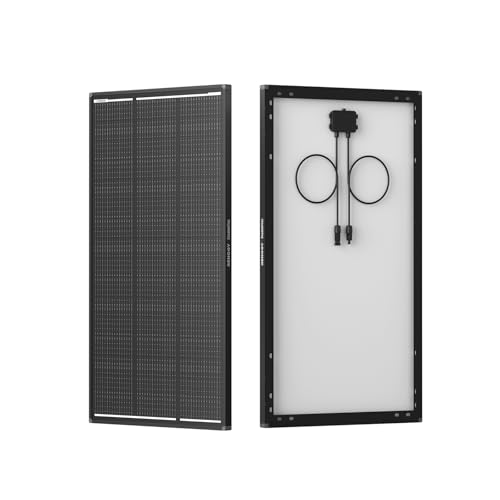
Best for: Small-to-mid-sized installations where shading is unavoidable, such as rooftop spots near trees or buildings. This panel uses ShadowFlux anti-shading technology to keep power output steady when parts of the panel are shaded, reducing hot spots and enhancing longevity.
Why selected: It employs N-Type cells with 16BB busbars, achieving 25% efficiency. The higher efficiency translates to more usable power in a compact footprint, which is valuable for space-limited setups.
Limitation: The technology helps under partial shading but may still underperform in fully shaded conditions compared with larger panels.
Paodekua 4W Solar Charger For Ring Cameras

Best for: Ring Stick Up Cam and Spotlight Cam users seeking a compact, plug-and-play solar solution. This unit includes USB-C and a Ring-compatible barrel plug for straightforward setup.
Why selected: Weatherproof design (IP65) and a long 10-foot cable offer flexible mounting and reliable year-round operation. It’s a practical fit for small security camera deployments where clearing in-roof space is limited.
Limitation: It’s a 4W panel, so it’s best for cameras with modest power draw and sunny conditions; extended cloud cover reduces performance.
SOLPERK 20W Solar Kit With Smart Controller
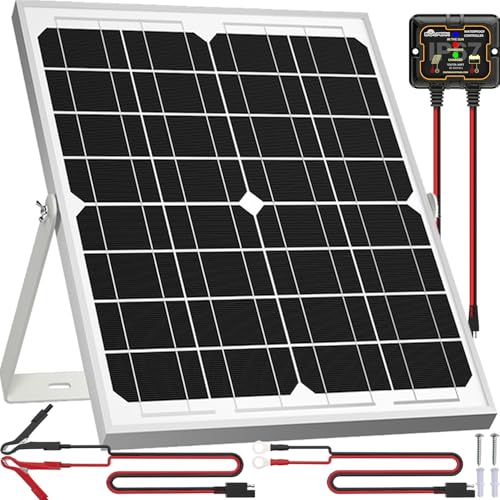
Best for: Battery maintainers in boats, RVs, and trailers where a more robust 12V charging solution is desired. It includes a smart MPPT controller for improved charging efficiency.
Why selected: The kit claims high conversion with a 20–30% efficiency edge over comparable controllers, and it supports a wide range of 12V battery chemistries. The weatherproof construction adds reliability for all 12V outdoor needs.
Limitation: As a larger small-panel option, it requires more mounting space than single 5W or 4W units.
KEJNYT 5 Pack Small Solar Panels

Best for: DIY electronics, hobby projects, and educational kits where multiple small cells are useful. Panels are 1W each with 5V output and can be wired in series or parallel to adjust voltage or current.
Why selected: The 18–21% conversion efficiency range makes them effective for their size, and the clips make parallel/series wiring simple without soldering.
Limitation: Very small individual output means you’ll need multiple units to power larger devices; overall energy depends on total area exposed to sun.
TACTACAM Reveal Solar Panel For Trail Cameras

Best for: REVEAL cellular trail cameras requiring steady field power. This panel offers compatibility with multiple REVEAL models and an included mounting bracket for field use.
Why selected: It simplifies power management in the field by providing continuous solar charging and an integrated battery option, which helps keep cameras running between deployments.
Limitation: It’s designed for REVEAL cameras and may not be ideal for other camera brands without adapters or custom wiring.
Buying Guide: How To Choose The Right Small Solar Panel
- Output needs vs. space: Compare panel wattage to your device’s draw and available installation area. Higher efficiency panels deliver more power in a smaller footprint, but overall space still matters.
- Shading and mounting: If partial shading is likely, anti-shading or bifacial designs can preserve output. For flat, unobstructed installations, standard panels can be sufficient.
- Battery compatibility: Match panel output with your battery bank type (12V lead-acid, LiFePO4, etc.) and consider whether an MPPT controller improves charging efficiency for your setup.
- Weather resilience: Outdoor use requires weatherproofing, corrosion-resistant framing, and secure mounting hardware. IP ratings and wind/snow load specs are practical checks.
- Ease of installation: Look for plug-and-play connections, included brackets, and long cables when you want a fast setup or frequent relocation (RV, boat, or camera systems).
- Future-proofing: If you anticipate expanding your solar array, consider panels with scalable wiring options (series/parallel) to maintain voltage and current balance.
Frequently Asked Questions
- What is the advantage of N-Type solar cells in small panels? N-Type cells generally offer higher efficiency, better performance at higher temperatures, and reduced light-induced degradation, which helps small panels maintain output longer in varied conditions.
- Do small solar panels require a charge controller? Most 12V systems benefit from a charge controller to prevent overcharging, regulate voltage, and protect batteries, especially when connected to varied light conditions.
- Can I use multiple small panels together? Yes, panels can be wired in series to raise voltage or in parallel to increase current. Ensure your controller and battery bank can handle the resulting electrical characteristics.
- Are small panels weatherproof enough for outdoor use? Look for IP ratings, tempered glass, and corrosion-resistant frames. Panels designed for exterior use are built to endure sun, rain, and wind.
- What apps or indicators help monitor solar charging? Many MPPT controllers provide status indicators, charge stages, and battery health data, making it easier to optimize daily charging cycles.