In plain terms, the best NEMA 6-50 EV charger options are portable, Level 2 charging stations that plug into a 50-amp circuit and deliver faster charging for all compatible electric vehicles. This guide highlights five well-suited models for American buyers, focusing on safety, portability, and ease of use. Ideal buyers include homeowners with dedicated 50A circuits, renters seeking flexible charging, and EV owners who want reliable, outdoor-ready units. The summary table below helps you compare at-a-glance capabilities and suitability.
| Product | Best For | Cable Length | |
|---|---|---|---|
| Grizzl-E Classic | All EVs, outdoor use | 24 ft | UL certified, IP67, GFCI, adjustable 40/32/24/16 A |
| Morec Level 2 | Home and travel use | 25 ft | ETL/UL certified, IP66, 40 A, simple plug-and-play |
| ChargePoint Home Flex | Home charging with network access | varies | Smart app, large network, 274k+ stations |
| PRIMECOM Level 2 | DIY installers and safety-conscious users | 30–50 ft options | UL listed, IP65, intelligent charging |
| SubSun Universal Portable | Fast charging on the go | 33 ft | 50 A max, IP67, J1772 compatibility |
Grizzl-E Classic Level 2 Charger

The Grizzl-E Classic uses a NEMA 6-50 plug and a 24-foot premium cable. It supports 40A, 32A, 24A, or 16A output, enabling flexible charging on compatible circuits. It is IP67 water resistant, fire resistant, and includes built-in GFCI and safety protections such as overcurrent, overvoltage, undervoltage, and ground fault. Built for indoor or outdoor use, the unit is designed for self-monitoring with recovery after outages. Best for: EV owners who want a rugged, outdoor-ready charger that can operate on a 50A circuit. Caution: ensure your circuit wiring supports maximum 40A output to use the highest setting.
Morec Level 2 EV Charger

Morec offers ETL and UL safety certifications with protection against overcurrent, overvoltage, undervoltage, short circuit, grounding, and overheating. It delivers up to 40A (9.6kW) when connected to a 50A circuit breaker, providing roughly 37 miles of range per hour for many EVs. It is a plug-and-play unit with a 25-foot cable, suitable for home use, rentals, and travel. Best for: users who want a compact, certified charger that’s easy to deploy without complex installation. Caution: confirm your vehicle’s charging rate and circuit capacity to avoid underutilization or tripping a breaker.
ChargePoint Home Flex Level 2

The ChargePoint Home Flex provides Level 2 charging with a NEMA 6-50 plug, backed by ChargePoint’s network. The charger emphasizes smart control via the ChargePoint app, reminders, and home integration. It also benefits from a vast North American network for roaming and station access. Best for: homeowners who want smart features, reliable connectivity, and access to a broad charging network. Caution: network features require app use and may depend on service availability.
PRIMECOM Level 2 EV Charger

PRIMECOMTECH emphasizes smart charging with an intelligent chip that adjusts current based on ambient and battery data. The charger is UL listed, IP65 waterproof, and designed for outdoor use, with options for 30–50 foot cables. Best for: buyers who want a versatile, safety-forward charger with intelligent management. Caution: data-driven charging requires correct setup and adherence to safety guidelines.
SubSun Universal Portable Level 2 EV Charger
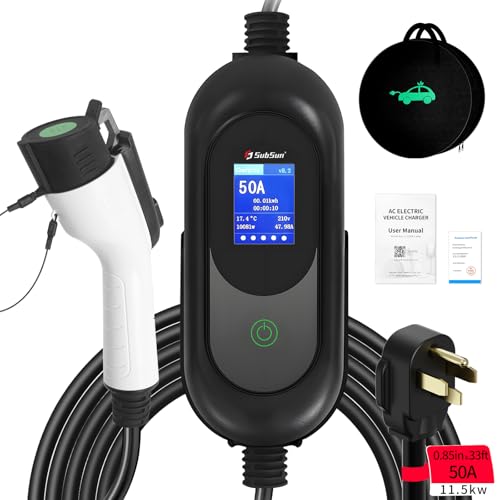
SubSun’s portable charger claims 50A Level 2 charging with a 33-foot cable, compatible with all North American EVs via J1772 connectors. It emphasizes safety with FCC certification and an IP67 rating for outdoor use. Best for: EV owners who need fast charging while traveling or away from a fixed station. Caution: performance varies by vehicle, and full 50A output may require a matching circuit breaker and vehicle capability.
Buying Guide: Key Purchase Considerations
- Power needs: Choose a charger that can deliver up to 40A (9.6kW) if your circuit allows. Higher amperage reduces charging time for most EVs.
- Installation: Determine whether you prefer plug-in units (easier setup) or hardwired installations (potentially more permanent and tidy).
- Portability vs. permanence: Portable chargers are ideal for renters or travelers; fixed units suit homeowners wanting a dedicated charging station.
- Safety features: Look for IP ratings, weather sealing, GFCI protection, short-circuit and over-temperature protection, and UL/ETL certification.
- Smart features: Apps, network roaming, reminders, and compatibility with home automation can add value for daily use.
- Cable length: Longer cables offer flexibility but add weight and cost. Match length to your parking area layout and reach.
- Vehicle compatibility: Ensure the unit supports your EV’s charging standard and plug type (J1772 is common in North America; some vehicles use Tesla-specific adapters).
Frequently Asked Questions
- Do I need a professional electrician to install a NEMA 6-50 charger?
– In many cases yes, especially if new 50A circuits are required. Check local codes and the charger’s installation manual. - What does “NEMA 6-50P” mean?
– It refers to the plug type used on the charger, compatible with 50-amp sockets commonly found in workshops and garages. - Can I use a 40-amp charger on a 50-amp circuit?
– Yes, many units offer adjustable amperage; you can set a lower current to match your circuit safety margin. - Are portable Level 2 chargers safe for outdoor use?
– If rated IP67 or similar and UL/ETL certified, they are designed for weather resistance; always follow manufacturer guidelines. - Will a smart charger work with my home network?
– Smart chargers require app support and, sometimes, subscription features; verify compatibility with your devices and connectivity.