When power reliability matters, natural gas powered generators offer a convenient, fuel-flexible option for home backup, RV use, and job sites. The following selections leverage tri-fuel capability (gasoline, propane, and natural gas) to maximize uptime during outages, storms, or remote work. Below are five top choices with strong run times, smart starting options, and safety features designed for American households and outdoor enthusiasts.
| Product | Brand | Fuel Options | Peak / Running Watts | Key Benefit |
|---|---|---|---|---|
| Westinghouse 14500 Peak Watt Tri-Fuel | Westinghouse | Gas, Propane, Natural Gas | 14,500 / 11,500 (Gas); 13,500 / 10,500 (Propane); 12,000 / 9,500 (Natural Gas) | Large home backup with long runtimes |
| Westinghouse 12500 Peak Watt Tri-Fuel | Westinghouse | Gas, Propane, Natural Gas | 12,500 / 9,500 (Gas); 11,200 / 8,500 (Propane); 9,500 / 7,500 (Natural Gas) | Balanced power and runtime with remote start |
| DuroStar DS13000MXT | DuroStar | Gas, Propane, Natural Gas | 13,000 (oil-free) | High tri-fuel capacity with home backup readiness |
| Generac 12,500 Starting Watt Tri-Fuel | Generac | Gas, Propane, Natural Gas | 12,500 starting / 9,500 running (Gas); 12,000 / 8,500 (Propane); 9,500 / 7,500 (Natural Gas) | Coordinated safety and COsense detection |
| Westinghouse 13500 Peak Watt Tri-Fuel | Westinghouse | Gas, Propane, Natural Gas | 13,500 / 10,500 (Gas); 12,500 / 9,500 (Propane); 10,000 / 8,500 (Natural Gas) | High power and extended runtime with safety features |
Note: All models include remote or electric start options and transfer switch readiness, making them suitable for integrated home backup or parallel operation with compatible systems.
Westinghouse 14500 Peak Watt Tri-Fuel Generator
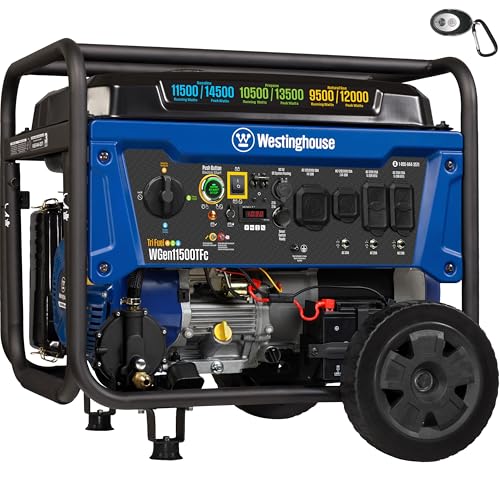
Largest capacity in the selection, featuring a 550cc four-stroke Westinghouse OHV engine with a durable cast iron sleeve. It runs up to 19 hours on a 9.5 gallon tank and provides up to 7 hours on a 20 lb propane tank. Remote electric start and transfer switch readiness simplify integration with home electrical systems. The generator supports multiple fueling options, ensuring power continuity during extended outages and Severe weather events.
Westinghouse 12500 Peak Watt Tri-Fuel Generator

Mid-range tri-fuel power with a 457cc Westinghouse engine and a long runtime on a 6.6 gallon tank. Features remote start with a key fob and a variety of outlets, including a transfer switch-ready 120V outlet and RV-ready configurations. Automatic low oil shutdown and CO detection add essential safety for home environments and outdoor use.
DuroStar DS13000MXT Tri Fuel Portable Generator

The DS13000MXT delivers 13,000 watts of tri-fuel power for whole-home coverage during outages. It includes a push-button start, a fuel selection knob, and a robust power panel with transfer switch-ready options. This unit emphasizes portability and convenience for emergency preparedness and job-site reliability, with CO alert features to protect occupants and equipment.
Generac 12,500 Starting Watt Tri-Fuel

Generac combines high starting and running wattage with tri-fuel versatility and a 500cc OHV engine. A large 7.5-gallon steel tank provides extended runtime on gasoline, while propane and natural gas sources expand fueling options during extended emergencies. The unit is designed with a compact footprint for home garages or sheds and includes safety features such as CO detection and automatic shutdown.
Westinghouse 13500 Peak Watt Tri-Fuel Generator

This model provides substantial power with a 500cc Westinghouse engine and a 9.5 gallon fuel tank for up to 19 hours of runtime. Remote start, multiple transfer switch-ready outlets, and natural gas compatibility help maintain critical loads such as refrigeration, sump pumps, and home security systems during outages. Outlets feature rubber covers for added weather and safety protection.
Westinghouse 11000 Peak Watt Tri-Fuel Inverter Generator

The iGen11000TFc combines inverter efficiency with tri-fuel flexibility and home backup capability. It delivers up to 11,000 peak watts and 9,000–8,000 watt running ranges across fuel types, while maintaining low total harmonic distortion for sensitive electronics. Safe for electronics and parallel capable, it suits modern households needing both power stability and convenience.
Buying Guide
Key considerations when selecting a natural gas powered generator:
- Fuel flexibility: Tri-fuel models let you switch between natural gas, propane, or gasoline. This is valuable during fuel shortages or price fluctuations.
- Power needs: Calculate your essential loads (refrigerator, furnace, sump pump, lighting) and select a unit with sufficient peak and running watts. For larger homes, models in the 12,000–14,000 watt range offer headroom for essential circuits and basic comfort.
- Runtime and tank size: Look for runtime at a practical load and the capacity of your fuel tank. Fuel gauge and ease of refueling are practical perks during outages.
- Starting and controls: Remote electric start or push-button start improves ease of use, especially in cold weather or during storms. A digital hour meter helps track maintenance needs.
- Safety features: CO shutdown, low oil protection, and enclosed or muffled designs reduce risk and noise. Rubber outlet covers and weatherized components improve durability.
- Transfer switch readiness: A transfer switch-ready outlet simplifies connection to home electrical panels, enabling safe, code-compliant automatic or manual switching during outages.
- Noise and fuel efficiency: Inverter-based models can be quieter and more fuel-efficient, though they may come at a higher initial cost. Consider noise tolerance for residential use and nearby neighbors.
- Future needs: If you anticipate expanding loads (HVAC, water heating), plan for a generator with extra capacity or the option to parallel with another unit.
Safety note: Always follow manufacturer guidelines for installation, venting, and CO monitoring. Use proper extension cables and transfer switches installed by a licensed professional when required by local codes.