Power outages and off‑grid needs demand reliable, high‑capacity indoor generators. This article selects five top Amazon models offering substantial output, fast charging, and robust safety features. Each entry includes core specs, performance notes, and practical considerations to help you choose the right unit for home backup, camping, or remote work setups.
Summary table of chosen products:
| Product | Brand | Output (W) | Capacity (Wh) | Key Strength |
|---|---|---|---|---|
| Anker SOLIX C1000 Gen 2 | Anker Store | 2,000 (3,000 peak) | 1,024 | Ultra-fast recharge; compact; multiple ports |
| Jackery Explorer 1000 v2 | Jackery Store | 1,500 (3,000 surge) | 1,070 | Fast one‑hour charging; durable LiFePO4; long lifespan |
| Apowking Solar Powered Generator | Apowking Store | 200 (AC 110V) | 146 | Includes solar panel; light and portable |
| Anker SOLIX C2000 Gen 2 | Anker Store | 2,400 (4,000 peak) | 2,048 | High output; expandable with battery expansion |
| OUPES Mega 1 Portable Power Station | OUPES Store | 2,000 (4,500 surge) | 1,024 | Fast charging; modular expansion to 5kWh |
Anker SOLIX C1000 Gen 2 Portable Power Station
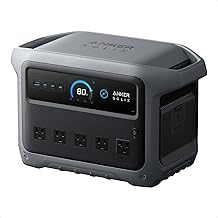
The Anker SOLIX C1000 Gen 2 delivers 2,000W continuous output with a 3,000W peak and a 1,024Wh LiFePO4 battery. Its HyperFlash fast recharge recharges to full in about 49 minutes at up to 1,600W, enabling rapid outage prep or weekend trips. Multiple ports support up to 10 devices, making it suitable for home backups, small offices, or off‑grid living. The unit is designed to be portable, with size and weight reductions compared with similar models, easing handling and storage in confined spaces.
Key points to consider: fast recharging enhances readiness for outages; LiFePO4 chemistry improves cycle life and safety. With a robust 2,000W continuous rating, you can run essentials like routers, medical devices, lights, and small appliances concurrently during a power cut. The product supports optional solar panels, though the listing emphasizes its versatility as a portable powerhouse for various scenarios.
Jackery Explorer 1000 v2 Portable Power Station

The Jackery Explorer 1000 v2 provides 1,500W continuous AC output with a 3,000W surge and a 1,070Wh LiFePO4 battery. It emphasizes fast charging, achieving a 0–100% recharge in about one hour with emergency charging via the Jackery app. Despite the high performance, it remains portable at roughly 23.8 lbs and features a durable design with a foldable handle for on‑the‑go use. An expanded runtime is possible with the optional solar panel, enabling off‑grid camping or emergency preparedness.
Important considerations include its long‑term lifespan: LiFePO4 chemistry supports prolonged cycles while preserving capacity. The one‑hour recharge feature aims to minimize downtime, but may depend on input and temperature. This model is well suited for running refrigerators, fans, lights, and a variety of small household devices during outages or outdoor adventures.
Apowking Solar Powered Generator With Panels Included

Apowking bundles a portable solar generator with a 146Wh capacity and a 40W solar panel. The system supports seven outputs, including two 110V AC outlets (200W peak), USB ports, and a dedicated DC 12V output. Weighing around 3.3 pounds, it emphasizes portability for camping, travel, or quick power needs during emergencies. The included solar panel boosts off‑grid utility and reduces reliance on grid power, especially in sunny conditions.
Strengths to weigh: compact weight and panel inclusion maximize outdoor usefulness. The device is best for charging laptops, phones, cameras, drones, and small devices rather than heavy appliances. Its solar panel efficiency and the ability to operate multiple USB devices make it a practical emergency kit or travel companion in areas with intermittent electricity.
Anker SOLIX C2000 Gen 2 Portable Power Station

The Anker SOLIX C2000 Gen 2 pushes higher with 2,400W continuous output and a 4,000W peak, coupled with 2,048Wh LiFePO4 capacity. It markets ultra‑efficient standby power and is expandable to 4kWh using an expansion battery, enabling longer runtimes for a dual‑door fridge or other critical loads. Fast recharging is highlighted with a 58‑minute full charge using both AC and solar inputs. This model is ideal for larger home backups, workshops, or RV setups where power demand exceeds average portable units.
Consider the plan for expansion and redundancy: expansion options support scaling as needs grow. The unit’s higher wattage and capacity help manage power loads during outages while keeping devices protected by sine‑wave output. This makes it a strong choice for users who anticipate ongoing power requirements or future capacity upgrades without adding additional inverters.
OUPES Mega 1 Portable Power Station

The OUPES Mega 1 offers 2,000W continuous output with a surge of 4,500W and a 1,024Wh LiFePO4 battery. It stands out for modular expansion, allowing the user to connect up to two B2 Extra Batteries to scale capacity to as much as 5,120Wh with no extra inverters. It supports rapid charging, achieving 0–80% in about 36 minutes via AC and even faster when combining AC and solar. This model is suitable for both heavy‑duty home backup and demanding outdoor use, providing a flexible power ecosystem for evolving power needs.
Key deployment notes include the balance between speed, capacity, and expansion potential. For households seeking a future‑proof system, OUPES Mega 1 offers a straightforward path to higher capacity without changing core components. Its pure sine wave output ensures safe operation for sensitive electronics and professional gear, while expansion options reduce the need for multiple separate power sources.
Buying Guide: Key Purchase Considerations
- Power needs and peak demand: Match continuous wattage and surge capacity to your essential appliances. If you routinely run refrigerators, sump pumps, or air fans, prioritize higher continuous watts and a robust surge rating.
- Battery chemistry and lifespan: LiFePO4 batteries offer longer cycle life and stability in fluctuating temps. Consider units with proven cycle endurance for long‑term backups.
- Recharge speed and inputs: Fast charging reduces downtime during outages. Look for models with multiple recharge paths (AC, solar, car) and app‑controlled settings to optimize charging efficiency.
- Portability vs. capacity: Heavier, higher‑capacity units deliver more power but are less portable. Balance weight, handle design, and size with your typical use case (home, RV, camping).
- Expandability: Some systems support modular expansion. If you anticipate increasing power needs, choose models that can scale without replacing the core unit.
- Outlets and connectivity: Ensure the unit has the necessary outlets (AC, USB‑C, USB A, 12V DC) and enough ports for simultaneous device charging or operation.
- Safety and certifications: Look for built‑in protections (short‑circuit, overcurrent, temperature monitoring) and reputable certifications to ensure safe operation indoors.
In choosing the best option, compare your priorities—fast charging for outage readiness, raw power for appliances, portability for outdoor use, or expandability for future growth. The listed models cover a spectrum from compact, travel‑friendly packs to high‑capacity systems suitable for whole‑home backups or professional setups, all designed to operate indoors with careful handling and ventilation considerations.