The buyer intent here is clear: identify high-end, high-performance solar panels that deliver top-tier energy output and durability for premium rooftop, off-grid, or mobile setups. The top picks below emphasize advanced cell technology, bifacial designs, and robust construction. They are best for homeowners and long-haul travelers who want maximum energy yield and long-term reliability. This guide highlights who each product suits best and why it was selected, with practical considerations to compare at a glance.
| Product | Key Benefit | Best For |
|---|---|---|
| Callsun 450W Bifacial 2-Pack | High power per panel; bifacial capture; anti-shade design | Large rooftop arrays and off-grid installs |
| SUNGOLDPOWER 560W Bifacial (10pcs) | Very high efficiency potential; bifacial energy gain | Residential or commercial setups seeking top-end efficiency |
| Callsun N-Type 400W Bifacial (2Pcs) | N-Type 16BB cells; dual-module anti-shade | RV, van, marine, and off-grid installations |
| STAR 860W Bifacial Panels | High wattage with robust durability and half-cell design | Limited-space roofs needing maximum output |
| Renogy 200W Portable Foldable | Portable backup power with high efficiency | Travel, camping, emergencies, and small off-grid needs |
860W Bifacial Panels by STAR

Best for: installations needing the highest single-panel output in compact space. The 860W rating and half-cell design maximize energy harvest and reduce land use. Suitable for residential farms or large off-grid setups where space is constrained.
Why selected: High power density with durable construction and strong performance in various weather conditions. Designed to meet long-term outdoor use while delivering substantial daily energy.
Caution: Very high output panels require appropriate mounting hardware and wiring designed for 24V/48V systems and safe handling during installation.
SUNGOLDPOWER 560W Bifacial Panels
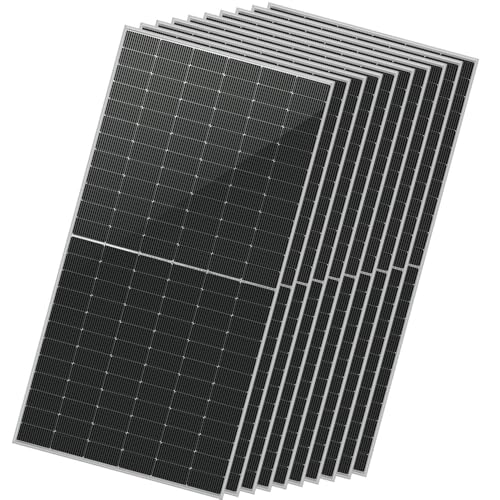
Best for: large residential or commercial rooftops where maximizing energy yield per module is essential. Bifacial design adds rear-side energy capture for higher total output.
Why selected: High efficiency potential and strong tolerance to environmental conditions. The design supports flexible installation angles and multiple mounting options.
Caution: Their higher wattage may require stronger inverters and mounting structures to safely handle peak output.
Callsun 450W Bifacial 2-Pack

Best for: high-output rooftop arrays where space is valuable, such as larger homes or commercial spaces seeking to minimize module count.
Why selected: N-Type 16BB cells, bifacial capture, and anti-shade dual-module design improve total energy yield and stability in real-world conditions.
Caution: Bifacial performance depends on reflective surroundings; performance gains are more noticeable in optimal siting with appropriate rear-face exposure.
Callsun N-Type 400W Bifacial (2Pcs)

Best for: RVs, vans, marine setups, and off-grid homes where compact, high-efficiency modules are needed.
Why selected: N-Type 16BB cells deliver strong efficiency; bifacial design boosts energy with rear-side light capture; anti-shade technology enhances reliability in shaded environments.
Caution: Requires careful mounting to maximize rear-face exposure and shading resistance for best results.
Renogy 200W Portable Foldable

Best for: travelers needing reliable backup power for camping, RVing, or emergency situations with a compact foldable design.
Why selected: Industry-leading efficiency at 25% with 16BB N-Type cells; lightweight, magnetic handle design for easy transport and quick setup.
Caution: Portable panels may have lower output in limited sun, and exposure to rough handling can affect durability over time.
Buying Guide
What should I consider when choosing high-end solar panels?
- Panel technology: N-Type vs P-Type cells, busbars, and bifacial design impact energy yield and long-term performance.
- Wattage and space: Higher wattage panels generate more power but may require stronger mounting for wind and snow loads.
- Shading tolerance: Anti-shade designs help maintain output when partial shading occurs.
- Installation context: Rooftop, ground mount, RV, or portable use affects the best panel type and form factor.
- Durability: Certifications, weather resistance, and build quality determine longevity in harsh environments.
Which configuration suits which buyer?
- Premium home installers: Look for high-wattage bifacial panels with robust warranties and advanced cell technology.
- Off-grid and remote sites: Prioritize efficiency, shading tolerance, and durable frames for outdoor conditions.
- Mobile and travel enthusiasts: Portable, foldable, and lightweight options offer practical flexibility without sacrificing efficiency.
How do bifacial panels compare to standard panels?
Bifacial panels capture light on both sides, increasing total energy under favorable conditions. They perform best in reflective surroundings and with rear-side exposure. They may require more precise mounting to maximize rear-face gains.
What installation considerations matter most?
- Mounting structure strength to handle wind and snow loads.
- Inverter compatibility and wiring for the total system voltage and current.
- Rear-face exposure and orientation to maximize bifacial gains or shading tolerance.
FAQ
- What makes N-Type cells better than P-Type? – N-Type cells typically show lower degradation, higher efficiency, and better performance in high-temperature conditions.
- Are bifacial panels worth the extra cost? – They can be, especially in installations with reflective surfaces or ample rear-side exposure, leading to higher total energy yield.
- Can portable panels power a typical power station? – Yes, many portable panels are designed to charge power stations and batteries, with connectors included for compatibility.
- Do higher-wattage panels require special mounting? – Higher wattage may necessitate sturdier mounts and proper electrical design to handle increased output safely.
- How important is panel efficiency? – Higher efficiency translates to more power per area, which matters when space is limited.
- What should I check before buying? – Inverter compatibility, mounting space, climate considerations, and total system goals.