Finding the most efficient solar panels for an RV means balancing space, weight, and output to keep your adventures powered. This guide highlights five high-efficiency RV-mount solar panels and kits, chosen for reliability, performance in varied light, and shading tolerance. Each option is best for different RV setups, from compact campers to larger motorhomes. Use the quick comparison table below to spot standout performers and then dive into detailed sections for each product.
| Product | Best For | Key Strength |
|---|---|---|
| Callsun N-Type 16BB 400W (Two 200W Panels) | RVers needing high total output from a dual-module setup | Bifacial design with 16BB N-Type cells |
| ECO-WORTHY 200W Kit with 30A PWM Controller | Budget-conscious RVs needing a complete kit | High efficiency monocrystalline cells and rugged frame |
| Renogy 100W N-Type 16BB | Smaller spaces or single-van setups | Excellent efficiency with 16BB cells |
The following sections detail each product’s suitability, notable design choices, and practical considerations for RV use. Each section notes who should choose the product, potential limitations, and why it stands out for off-grid travel.
Callsun N-Type 16BB 400W Dual Modules

The Callsun system uses N-Type 16BB solar cells with a dual-module, parallel design. The bifacial technology captures sunlight from both sides, increasing total power output by up to 30%. This setup suits larger RV roofs or vans where space allows a two-panel array to maximize daily energy, especially in sunny routes. The 25% efficiency helps offset the volume of output needed for climate-control and appliances on the road.
Best for: RVs with adequate roof area and a need for high daily energy, or when you want a modular setup that can be expanded later.
Limitation: The backsheet’s bifacial benefits rely on reflective surfaces and installation height; performance gains vary with shading and mounting angle.
ECO-WORTHY 200W Kit With PWM Controller
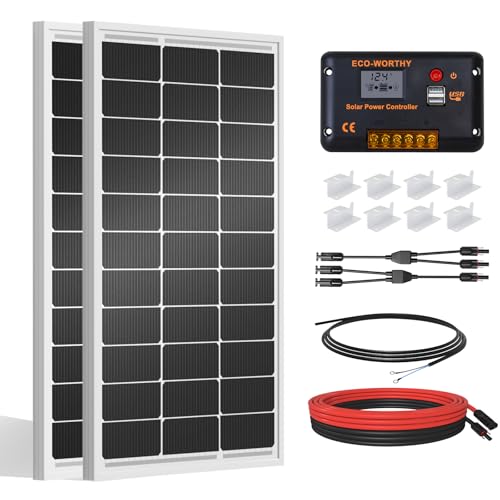
This kit provides a complete solution for RV owners who want an all-in-one package: a high-efficiency monocrystalline panel paired with a 30A PWM charge controller. The panel’s efficiency is enhanced by monocrystalline cells, and the frame is corrosion-resistant for long-term outdoor use. It’s designed to deliver up to 800Wh per day under sunny conditions, with a robust build to withstand wind and snow loads.
Best for: RVers seeking a turnkey kit that’s straightforward to install and reliable in varying weather.
Limitation: PWM controllers are generally less efficient than MPPT in partial shade or variable illumination, so users with limited sun should consider MPPT alternatives if possible.
Renogy 100W N-Type 16BB Panel

Renogy’s 100W N-Type panel uses 16BB cell technology to boost efficiency and reduce hot spots and micro-cracks. The result is a reliable 100W footprint with improved longevity. Its lower temperature coefficient supports better performance in hot climates, making it a strong choice for RVs that spend time in sunny regions.
Best for: RVs with limited roof space that still want solid daily output, particularly in hot environments.
Limitation: At 100W, total daily energy relies heavily on sun duration; plan for higher-latitude or cloudier trips with additional panels if power needs are high.
Rvpozwer 200W 18BB N-Type Panel

The Rvpozwer panel adopts 18BB technology with N-Type cells to push efficiency higher than many standard designs. It claims around 1000 watt-hours per day in bright conditions and features pre-drilled back holes for flexible mounting. This makes it a practical option for varied RV configurations where a single, higher-output panel is preferred over multiple smaller units.
Best for: RVs seeking higher energy per panel with easier installation hardware, and setups where shading is a concern due to its 18BB efficiency boost.
Limitation: Open-circuit voltage may affect compatibility with some power stations; check your equipment’s voltage tolerance before mounting.
ECOBOSS 12V 200W N-Type Panel
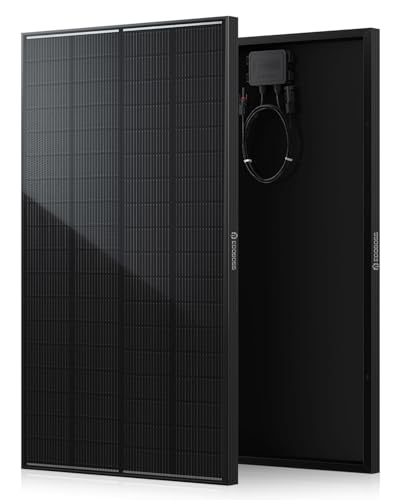
ECOBOSS brings 200W of power with N-Type cells and a 16BB busbar architecture, delivering up to 25.6% efficiency. This design emphasizes stable output with reduced long-term degradation, making it well-suited for 12V systems in RVs, vans, boats, and cabins. The panel is optimized for typical 12V charging scenarios and pairs well with common charge controllers and portable power stations.
Best for: RVers who want high efficiency and a stable, long-lasting 12V charging solution in a compact footprint.
Limitation: Long-term performance is contingent on proper airflow and mounting; ensure adequate clearance to avoid overheating in enclosed roof spaces.
Buying Guide: Key Considerations For RV Solar Panels
Roof space and mounting options
- Assess available roof area and weight limits. Consider foldable or thin-profile panels for small RVs.
- Decide between fixed installations and portable/temporary setups based on travel style and storage space.
Cell technology and efficiency
- N-Type cells with 16BB busbars improve efficiency and reduce hot spots, translating to better performance in hot climates and partial shade.
- Bifacial designs can provide extra energy when reflective surfaces exist, but gains vary with installation conditions.
System integration
- MPPT controllers generally maximize energy harvest, especially in variable conditions; PWM controllers are simpler and cheaper but less efficient in fluctuating sun.
- Match panel voltage/current with your battery system and any portable power stations to avoid compatibility issues.
Durability and weather resistance
- Look for corrosion-resistant frames and panels rated for wind, snow loads, and UV exposure.
- Protection ratings (IP) and robust junction boxes contribute to longer service life on the road.
Practical installation and maintenance
- Pre-drilled mounting holes and flexible mounting options reduce setup time on diverse RV roofs.
- Consider ease of wiring and the availability of compatible accessories for your specific rig.
Frequently Asked Questions
- What is the advantage of N-Type solar cells for RV use?
Answer: N-Type cells with 16BB busbars offer higher efficiency, improved resistance to degradation, and reduced hot spots, which helps maintain output in heat and shading conditions common on RV roofs. - Is a bifacial panel better for RVs?
Answer: Bifacial panels can add energy by capturing rear light, but effectiveness depends on installation height, surface reflectivity, and angle. Use where reflection is substantial and mounting allows back-surface exposure. - Should I choose a kit with a charge controller included?
Answer: A kit with PWM or MPPT controller simplifies installation and ensures components are tuned for stable charging; MPPT generally yields higher efficiency in varied sun. - How many watts do I need for an RV?
Answer: Wattage needs depend on appliances and usage. A higher daily energy target requires more watts or multiple panels; consider a separate power budget for AC loads, water heaters, and refrigeration. - Can I install flexible panels on curved RV surfaces?
Answer: Flexible panels exist, but most high-efficiency panels shown here are rigid. Rigid panels often deliver higher efficiency and durability for fixed RV roof installations.