Answering the search query directly: these 12V inverters are among the most efficient options for converting DC power to AC while supporting sensitive devices and high startup loads. This guide highlights five models that balance continuous power, surge capability, and efficiency, helping RV, truck, boat, and off-grid users pick the right inverter for their needs. Each product is evaluated for who it’s best for, key strengths, and practical limitations.
Buyer’s quick reference
| Product | Best For | Why It Stands Out | Limitations to Consider |
|---|---|---|---|
| LANDERPOW 3000W Pure Sine Wave | Heavy loads, continuous use | High continuous 3000W with 91%+ efficiency, 6000W surge | Higher price point, larger size |
| Cantonape 3000W Power Inverter | Multiple outlets, LCD visibility | 4 AC outlets + 4 USB ports, intelligent LCD | Modified sine wave with caveated suitability |
| POWERFUEL 1200W Peak Power Inverter | Compact trips, lighter loads | Smart cooling and LCD real-time monitoring | Lower continuous wattage |
| Pro Chaser 400W Power Inverter | Budget travel and basic devices | Compact, dual USB, portable for cars | Lower wattage ceiling |
| BELTTT 2000W Pure Sine Wave | Mid-range off-grid | High efficiency >93%, pure sine output | Higher power than some portable options |
LANDERPOW 3000W Pure Sine Wave Inverter

This 3000W continuous pure sine wave inverter can deliver up to 6000W surge with efficiency above 91%. It is designed to power sensitive electronics quietly and safely, including microwaves, laptops, CPAPs, and LEDs. It handles heavy startups like coffee machines and window air conditioners, making it suitable for RVs, homes, solar setups, and off-grid emergencies.
Best for: users needing robust continuous power for demanding loads. Better for long-term off-grid or mobile use where power interruptions must be avoided.
Limitation: higher upfront cost and larger footprint compared with smaller inverters.
Cantonape 3000W Power Inverter

Offers 3000W continuous, 6000W surge with 4 AC outlets and 4 USB ports for versatile charging. An intelligent LCD displays input/output voltage, battery status, load, and error codes. Remote control adds convenience when the inverter is hard to reach.
Best for: users who want multiple outlets and a clear status readout. Choose this if you need to power several devices simultaneously from a 12V system.
Limitation: uses a modified sine wave profile, which may be less ideal for certain sensitive electronics compared to pure sine wave units.
POWERFUEL 1200W Peak Power Inverter
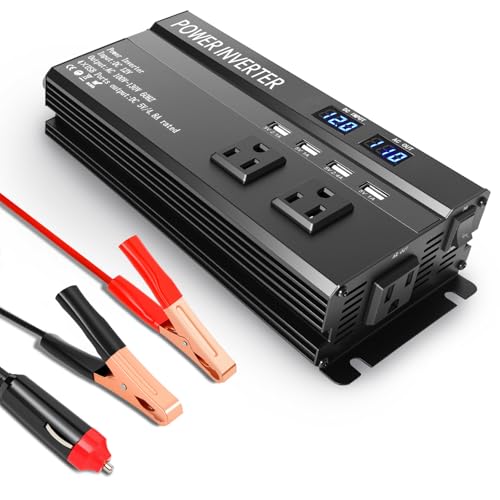
With 1200W peak and three AC outlets plus four USB ports, this model emphasizes quiet operation via smart temperature-controlled cooling and real-time LCD readouts. Suitable for road trips, camping, RVs, and light-to-moderate power needs.
Best for: users seeking a compact, budget-friendly option for travel and light devices. Better for quick, on-the-go charging rather than sustained heavy loads.
Limitation: lower continuous wattage means heavy appliances may push it beyond its comfortable range.
Pro Chaser 400W Power Inverters
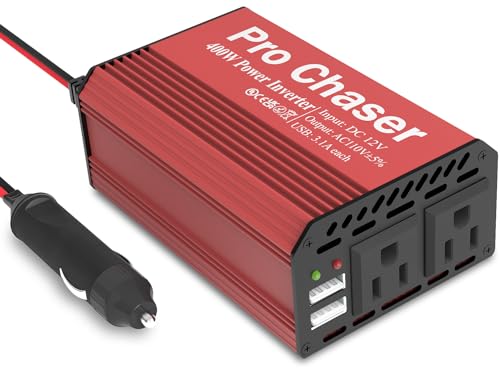
This compact inverter provides a steady 400W with a peak of 800W, featuring dual 110V outlets and two USB ports for quick charging. Its long 30-inch cord and small footprint support flexible placement in cars and small campers.
Best for: travelers who need reliable power for laptops, tablets, and small appliances on the go. Choose this if portability is a priority.
Limitation: modest continuous power ceiling; not ideal for larger tools or heating devices.
BELTTT 2000W Pure Sine Wave Inverter

Delivering 2000W continuous and up to 4000W surge, this pure sine wave inverter supports solar setups and off-grid power with high efficiency over 93%. It includes a real-time LCD display for voltages, battery status, and load.
Best for: mid-range off-grid systems needing solid continuous power with clean sine-wave output. Avoid this if you require higher wattage for heavy tools.
Limitation: not the highest wattage in this list; plan around your peak load requirements to avoid tripping or overloads.
Buying Guide: How To Choose The Best 12V Inverter
What load will you power?
Assess continuous wattage needs. For laptops, small TVs, and CPAP machines, a 1000-2000W inverter often suffices. For heavy appliances like microwaves or window AC units, 3000W or higher with a high surge rating is advantageous.
Pure sine wave or modified sine wave?
Pure sine wave inverters deliver clean, grid-like power ideal for sensitive electronics. Modified sine wave inverters can handle many devices but may cause hum or inefficiency with some equipment. When in doubt for electronics, select pure sine wave.
Outlets and connectivity
Consider how many AC outlets and USB ports you need. Some models offer multiple AC outlets plus USB-C and USB-A ports, which helps in powering laptops, phones, and small USB-powered devices simultaneously.
Efficiency and cooling
Higher efficiency reduces heat and energy loss. Look for models advertising >90% efficiency. Noise and cooling matter in confined spaces, so note whether fans operate quietly or automatically adjust with temperature.
Installation and safety features
Remote control, hardwire ports, and protective features (overload, short-circuit, overtemperature) improve usability in vehicles and off-grid huts. Ensure the unit has appropriate fusing and cable lengths to fit your setup.
Durability and warranty considerations
Choose products with robust build quality and reliable component protection for mobile use. While warranties vary, consider models with reasonable coverage and accessible service options if something goes wrong in the field.
FAQ
- Do I need a pure sine wave inverter for all devices? Pure sine wave is safer for sensitive electronics and reduces risk of hum or malfunction, especially with laptops, CPAP machines, and audio/video equipment.
- What is surge power and why does it matter? Surge power is the initial power a device draws when starting. A higher surge rating helps start motors and compressors without tripping the inverter.
- Can I run a 12V inverter in a car or RV while driving? Yes, but ensure proper wiring, a suitable fuse, and avoid draining the vehicle battery below safe levels.
- How many watts should I look for for camping or RV use? For basic camping with phones and small appliances, 1000-2000W is common; for larger loads like microwaves or air conditioners, 3000W+ is preferable.
- Is efficiency more important than wattage? Both matter. Higher efficiency reduces heat and energy loss, but you must match continuous wattage to your actual loads to avoid undersizing the inverter.
- Are remote controls necessary? Remote controls improve convenience for hard-to-reach installations, especially in vehicles or remote off-grid setups.