Monthly payment options for solar panels are a practical way to go solar without a large upfront cost. This guide focuses on five high‑efficiency bifacial and standard panels suited for homes, cabins, RVs, and off‑grid setups. It helps buyers evaluate size, efficiency, durability, and installation needs. The top picks balance cost, performance, and long‑term value, making them suitable for different budgets and spaces.
Summary table of chosen products:
| Product | Best For | Key Strength |
|---|---|---|
| JJN Bifacial 425W Panel | Rooftop homes seeking compact, high output | Bifacial design and 16BB N-type cells |
| SUNGOLDPOWER 590W Bifacial Panel (6 PCS) | Large installations needing maximum space efficiency | Front & rear energy capture up to 30% |
| STAR 860W Bifacial Panels (2 PCS) | Heavy outdoor use with space constraints | High power density and durable build |
| DOKIO 800W (2×400W) | Versatile off‑grid setups | Parallel first on 12V, easy wiring |
| Renogy 200W Portable Panel | Portability and camping/off‑grid backups | Lightweight, foldable, high efficiency |
JJN Bifacial 425W Panel

Best for: Home rooftops and off‑grid applications with limited space. Why: It uses bifacial technology to generate electricity from both sides, potentially boosting output by up to 25% compared with conventional panels. The N-Type 16BB cells resist shading effects better than older designs, sustaining higher energy production in real‑world conditions. Caution: Panel is designed to be used as a single unit; for full system impacts, overall balance of system components should be matched to achieve full gains.
SUNGOLDPOWER 590W Bifacial Panel (6 PCS)

Best for: Large roof installations or facilities seeking high total output. Why: Each 590W bifacial unit leverages 16BB N-Type cells for strong performance, with rear‑side energy capture contributing up to 30% more energy. This can shorten payback time in sunny climates. Caution: Requires adequate mounting space to realize the 590W rating per panel; installation should consider shading and orientation for optimal results.
STAR 860W Bifacial Panels (2 PCS)

Best for: Residential farms, large off‑grid setups, and space‑constrained rooftops. Why: High‑power, space‑savvy design with A+ grade components and robust weather tolerance. The 30‑year service life and strong wind/snow resistance support long‑term use in challenging conditions. Caution: The two‑panel pack requires careful layout planning to maximize rear‑side gains and overall system balance.
DOKIO 800W (2×400W)
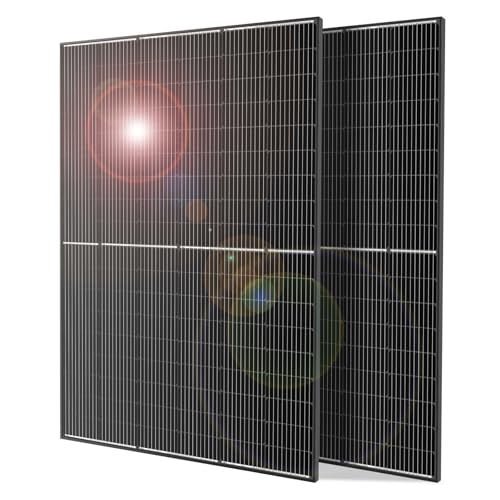
Best for: Off‑grid cabins and portable setups needing flexible wiring. Why: Two 400W panels deliver 800W total with guidance to parallel first on 12V systems for safer voltage and steadier charging. The 3 m leads per panel reduce the need for extra extensions, simplifying runs. Caution: When wiring in series, ensure your controller supports higher input voltage to avoid overloading components.
Renogy 200W Portable Panel

Best for: Campers, hikers, and emergency backups needing a compact, lightweight solution. Why: Upgraded 16BB N-Type cells deliver up to 25% efficiency, enabling more energy from limited sun exposure. The foldable design and light weight make it easy to transport and deploy. Caution: Portable panels typically have lower absolute power compared to fixed installations; plan for device charging needs accordingly.
Buying Guide: Key Considerations For Solar Panel Purchases
What matters most for monthly payments?
Monthly payment plans hinge on upfront cost, loan terms, and expected energy savings. Higher efficiency and larger wattage panels can reduce payback time but may require bigger inverters and mounting hardware. Compare total cost of ownership over 10–25 years, including maintenance and potential tax incentives.
How to choose panel type and wattage
Bifacial panels capture energy from both sides and often deliver more output under favorable conditions, making them ideal for rooftops with reflective surfaces or high sun exposure. If space is limited, higher wattage panels (like 590W and 860W packs) can maximize production per square meter. For portable or off‑grid use, lighter, foldable designs provide flexibility.
Durability and weather resistance
Look for IP ratings, wind and snow load specifications, and frame corrosion resistance. Panels rated for harsh climates reduce long‑term maintenance and replacement costs, aligning with stable monthly payments over time.
Installation considerations
Assess mounting options, roof suitability, shading, orientation, and wiring compatibility with inverters and charge controllers. Some products include integrated adapters or simple parallel wiring guidance, which can simplify installation and reduce labor costs.
Budgeting for the full system
Beyond the panel, factor in inverters, mounting hardware, wiring, and potential battery storage. Systems with higher efficiency panels may lower battery requirements and improve storage efficiency, affecting monthly payments and total cost.
FAQ
- Q: How do monthly solar panel payments work?
- A: They typically involve financing or lease options with fixed monthly payments, based on loan terms, credit, and estimated energy savings.
- Q: Do bifacial panels require special installation?
- A: They can, especially to maximize rear-side energy capture; ensure mounting surfaces are appropriate and shading is minimized.
- Q: Is higher wattage always better for my home?
- A: Not always. Consider roof space, system voltage, inverter compatibility, and sunlight exposure to optimize output.
- Q: Can portable panels be a long‑term solution?
- A: They work well for temporary needs or backup power, but fixed rooftop systems generally deliver higher total energy over time.
- Q: What is payback time?
- A: Payback depends on system size, local solar incentives, energy use, and financing terms; higher efficiency and better orientation shorten it.