Discover compact wind turbine kits that convert wind into usable electrical energy at 12V. This guide compares five beginner-friendly options, highlighting build requirements, output ranges, and ideal learning scenarios. Each product embraces hands-on assembly and practical demonstrations of wind-to-electricity principles for classrooms, hobbyists, and makers.
| Product | Type | Voltage Range | Ideal For |
|---|---|---|---|
| Uncedaran Vertical Axis Wind Turbine Generator | Vertical-axis kit | 3V–12V | Educational experiments |
| Sntieecr Mini Generator Motors | DC motor wind turbine set | 3V–12V | Beginner physics projects |
| EUDAX Mini Generator Motors | DC motor wind turbine kit | 3V–12V | DIY toys and science experiments |
| Mini Vertical Type Wind Turbine Generator | Compact vertical turbine | 12V | Small-scale charging demos |
| Keproving 2-Pack DIY Wind Kit | Dual-set wind turbine | 3V–12V | Educational exploration |
Uncedaran Vertical Axis Wind Turbine Generator

The Uncedaran kit provides a complete mini wind turbine model designed for education and experimentation. It emphasizes practical hands-on operation and serves as a teaching tool to illustrate wind energy conversion into electrical energy. Self-assembly is required, giving learners an opportunity to trace assembly steps while observing how turbine orientation and wind input influence output.
Sntieecr Mini Generator Motors Set
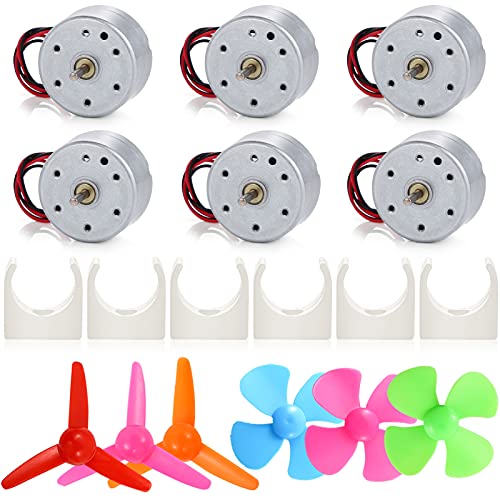
This six-piece beginner kit includes mini DC motors, mounting brackets, and propellers to demonstrate energy conversion. The kit defines voltage-speed relationships, with distinct configurations at 3V, 4.5V, and 12V. As wind drives rotation, the system shows how kinetic energy becomes electrical energy, supporting classroom demonstrations or DIY science projects.
EUDAX Mini Generator Motors 3V-12V

The EUDAX kit targets hands-on learning with metal motor holders and variable voltage ranges. It mirrors real-world wind power concepts by enabling operation across 3V to 12V configurations. The kit supports educational experiments and toy projects, highlighting the practical limits of small-scale wind energy generation and sustainable design considerations.
Mini Vertical Type Wind Turbine Generator

This compact vertical turbine offers a visually appealing, low-noise solution ideal for small spaces. Its design emphasizes anti-corrosion features, UV resistance, and a robust build that supports long-term demonstrations of wind-driven charging or educational experiments. It pairs well with simple load testing or rechargeable output demonstrations in labs or classrooms.
2-Pack Keproving DIY Wind Kit

The Keproving two-pack focuses on learning the wind power generation principle through an accessible assembly. The package includes dual sets with accessories for a thorough exploration of wind energy conversion. Its design supports independent or comparative experiments, including voltage and speed observations across different wind inputs.
EUDAX 6 Set Mini Generator Motors

This six-piece kit expands on the basic wind generator concept with multiple motors, propellers, LEDs, and connectors. It supports more complex experiments, including LED lighting under wind, and demonstrates how varying voltages correlate with rotational speeds. The set is suitable for classroom demonstrations and student-led projects alike.
Hydroelectric Micro Generator (related kit)

Although primarily a hydroelectric project, this micro generator illustrates energy conversion principles that are transferable when comparing wind and water power. It can supplement wind-focused experiments by providing a broader perspective on renewable energy systems, including flow-driven generation and efficiency considerations.
Buying Guide: Key Considerations For Mini Wind Generator Kits
- Voltage and speed ranges: Look for kits that operate across 3V–12V to match typical small-load demonstrations and battery charging experiments.
- Build difficulty: Choose sets labeled beginner-friendly if the goal is classroom use or first-time assembly. Complex kits may require more time and tools.
- Educational value: Favor kits with clear explanations or manuals that cover wind-to-electric energy concepts, efficiency factors, and safety notes.
- Materials and durability: Metal components typically offer better longevity than plastic parts in educational demonstrations. Check for corrosion resistance in outdoor or long-term setups.
- Expandability: Some kits support additional motors, propellers, LEDs, or solar/battery integration, enabling multi-scenario experiments.
- Size and portability: For classroom use, compact kits with simple mounting options help minimize space requirements and setup time.
- Safety and supervision: Ensure parts are age-appropriate and that sharp edges or small components are handled under supervision if used in classrooms or labs.
- Learning outcomes: Consider what you want to measure—voltage output, RPM, or energy conversion efficiency—and choose kits that provide measurable data or recommended experiments.
- Compatibility: Verify that the kit’s connectors, propellers, and holders align with your intended loads (LEDs, small motors, or batteries) and any existing equipment.
- Budget and value: Compare the number of motors, propellers, and accessories across kits to gauge long-term value versus initial cost.
Across these options, the core lesson remains consistent: wind converts kinetic energy to rotational motion, which can be harnessed to generate electrical energy. The kits vary in complexity, component quality, and the range of experimental possibilities, allowing learners to progress from simple demonstrations to more integrated power-generation projects.