Mini hand crank generators offer portable, pedal-free power for experiments, STEM learning, and emergency setups. They convert manual cranking into electrical energy suitable for low-power devices and educational demonstrations. This guide highlights five compact, easy-to-use options from reputable brands, summarizing key specs and practical uses to help you choose the right model for classroom activities, hobby projects, or small-scale prototyping.
| Product | Brand | Output Range | Best For |
|---|---|---|---|
| Mini Hand Crank Generator for DIY Toys and Wind Turbines | Garosa | 5V/24V | STEM projects, small toy power |
| Hand Held DC Generator, DC Crank Generator | Sci-Supply | DC power, two replacement gears | Educational demonstrations, repairs |
| Deluxe Hand Crank DC Generator with High/Low Output Switch | Genius Factory | Up to 15V | Classroom experiments with current limiting |
| Hand Crank Generator High Power Charger | HUABAN | 0-28V, 30W | Outdoors, portable charging |
| CrocSee Micro 3 Phase AC Mini Hand Brushless Motor Generator | CrocSee | 3V-24V | Starter AC generation experiments |
Garosa Mini Hand Crank Generator For DIY Toys

The Garosa model is designed for small-scale power generation with an emphasis on educational usefulness. It lists a maximum load power of 20W, advising operation within that limit. The device features a robust structure and low noise during operation. Built from premium materials, it aims for a longer service life, making it suitable for classroom demonstrations and DIY toy projects. It provides a practical entry point for students exploring energy conversion and hand-cranked power.
Sci-Supply Hand Held DC Generator

This hand-held DC generator includes two replacement gear sets and a wire lead pair, enabling straightforward setup for powering external DC devices. Sci-Supply emphasizes supporting American customers and small-business values. The product is positioned for education and hobbyists who want reliable, replaceable parts, as well as a simple, hands-on demonstration of electrical generation and gearing. It’s suitable for STEM classrooms and DIY experiments requiring basic DC output.
Deluxe Hand Crank DC Generator With High/Low Output Switch

The Genius Factory Deluxe model focuses on user-friendly operation with a high/low output switch to limit current. This feature helps protect LEDs and small bulbs from overcurrent during experiments. The device uses high-performance POM plastic gears noted for strength and low friction, contributing to stable and durable classroom use. It’s well-suited for educators seeking a portable generator that supports controlled power delivery in experiments.
HUABAN Hand Crank Generator High Power Charger

The HUABAN model targets portability with a compact form and a power specification of up to 30W, delivering 0-28V across a range of currents. It’s described for outdoor mobile charging needs, enabling users to power small devices in field experiments or camping scenarios. The compact design makes it a practical tool for quick demonstrations of power generation and energy conversion in a handheld format, with straightforward cranking action.
CrocSee Micro 3 Phase AC Mini Hand Generator
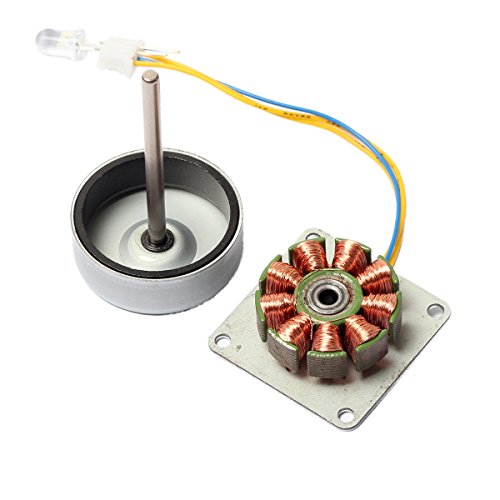
This CrocSee offering is a micro 3-phase brushless AC generator intended for teaching and experimentation. It provides an output range of 3V-24V with a current of 0.1A-1A, enabling educators to demonstrate three-phase AC generation concepts on a compact scale. It serves as an accessible entry point for students exploring electrical theory, synchronization, and the basics of AC generation in a safe, classroom-friendly package.
Buying Guide
Key considerations when choosing a mini hand crank generator include output type, voltage range, and intended use. For classroom demonstrations, prioritize models with clear voltage options and safe current limits, such as those offering high/low output switches or well-documented gearing. Durability and materials matter for repeated school use, so select devices described as robust with long service life. If portability is essential, look for compact designs with light weight and simple crank mechanisms. For outdoor or emergency scenarios, prioritize higher output potential and multiple charging options, including adapters or compatibility with USB-powered devices. Finally, consider the availability of replacement parts or gears, which can extend the lifespan of the generator in ongoing teaching or hobby projects.
Product diversity supports multiple learning perspectives: basic demonstration of energy conversion, hands-on experimentation with gearing and resistance, and the practical application of generated power to small devices. When evaluating options, balance simplicity with capability. For students new to electronics, a lower-voltage device with clear documentation may reduce friction. For advanced projects, higher voltage and current options—and compatibility with common DC and USB devices—can broaden curriculum possibilities. The right mini hand crank generator thus serves as a versatile, reusable tool for education, tinkering, and off-grid learning experiences.