When choosing a metal cutting saw blade, you want durability, cooler cuts, and fast results. This guide highlights blades built for metal, including cermet and carbide-tipped options, to help buyers pick the right blade for steel studs, angle iron, pipes, and other ferrous materials. The top picks below suit different needs—from high-heat tolerance and long life to low-heat, fast cuts. Use this as a quick reference to match blade type with project requirements.
| Product | Best For | Key Benefit |
|---|---|---|
| Diablo Steel Demon D0748CF | General metal cutting with long blade life | Up to 25x longer life vs standard discs; cooler, faster cuts |
| FOXBC 70 Teeth 7-1/4″ | Thin-walled steel studs and channels | Ceramic carbide with 70 teeth for smooth cuts |
| FOXBC 48 Teeth Replacement for D0748CF | Replacement for D0748CF users | Cermet carbide tipped with 48 teeth for versatile metal work |
| FOCSTOL 6-1/2″ 48T | Ferrous and non-ferrous metals including pipes | 48 tungsten carbide teeth; durable and versatile |
| HARDWIN 48T 7-1/4″ | Structural steels and threaded rod cutting | Thin-kerf, low heat and low spark cuts |
Note: The table above summarizes the most relevant blades for metal cutting. Each blade has its own strengths, depending on material, thickness, and whether you prioritize heat management, speed, or blade life. Read the product sections below for detailed comparisons and practical buyer guidance.
Diablo Steel Demon Cermet II Saw Blade
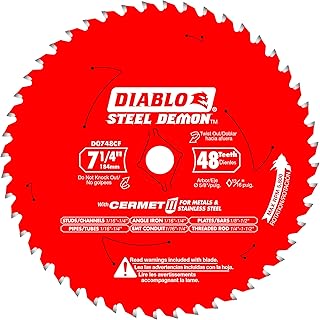
The Diablo D0748CF is designed for high heat tolerance and long life. Its Cermet II teeth provide improved wear resistance and efficiency, delivering up to 25 times longer life than standard grinding discs. This blade is best for shop users who need fewer blade changes and reliable performance on medium metal cutting tasks, such as mild steel plates and channel framing. Expect cooler operation and reduced discoloration compared with grinding discs.
Best for: Professionals needing durable, long-life performance in repetitive metal-cutting work. Choose this if you value extended blade life and cooler operation.
Caution: While extremely durable, performance depends on proper alignment and feed rate to preserve the Cermet II teeth.
FOXBC 70 Teeth 7-1/4″ Metal Cutting Blade

This 7-1/4″ ceramic carbide blade features 70 teeth and a 5/8″ arbor, designed for precise cuts in steel studs, angle iron, EMT conduit, and related materials. Its thin kerf supports faster cutting with less material waste, making it well-suited for projects requiring clean, accurate cuts in structural metals. It is compatible with both cordless and corded circular saws.
Best for: Builders cutting studs, channels, and metal framing where clean, precise cuts and a narrower kerf are beneficial.
Caution: The blade’s high tooth count means it’s optimized for clean cuts rather than aggressive, rapid material removal in very thick stock.
FOXBC 48 Teeth Metal Cutting Blade

This replacement blade for Diablo D0748CF uses 48 teeth and cermet carbide tips to deliver reliable cutting of steel studs, channels, angle iron, and EMT conduit. The 0.075″ kerf supports efficient material removal with good control, and the 5/8″ arbor ensures broad compatibility with many saws.
Best for: Users who already rely on D0748CF or want a compatible, consistent 48-tooth option for metal cutting tasks.
Caution: As with other carbide-tipped blades, avoid forcing the blade; let the teeth do the work to maximize life and performance.
FOCSTOL 6-1/2″ Tungsten Carbide Blade

The FOCSTOL blade measures 6-1/2 inches with a 4/5″ to 5/8″ arbor, 48 teeth, and a 1.4 mm blade thickness. Its tungsten carbide teeth offer wear resistance and higher cutting efficiency across ferrous and non-ferrous metals, including steel plates, pipes, and bars, as well as stainless steel in thinner sections. It’s designed for versatile metal cutting and longer service life in challenging materials.
Best for: Multi-material shops needing a single blade that handles steel, stainless, and some non-ferrous metals with reliable performance.
Caution: The blade’s versatility comes with a trade-off; for ultra-thick steel cuts, specialized blades may outperform it on pure speed or heat management.
HARDWIN 7-1/4″ 48T Cermet Blade

The HARDWIN 48T Cermet blade features an ultra-thin kerf and 48 teeth designed to cut steel, angle iron, and threaded rod with fast, low-heat, low-spark performance. Its ceramic alloy tooth technology reduces temperatures and sparks, contributing to cleaner cuts and safer operation. The laser-cut steel core and anti-rust coating boost durability for demanding, continuous-use jobs.
Best for: Pros performing repetitive metal cutting in structural steel or threaded components who need cooler cuts and reduced discoloration.
Caution: The ultra-thin kerf requires careful feed to prevent blade deflection on very hard or long cuts.
Buying Guide
- Material compatibility: For ferrous metals like steel and stainless steel, look for carbide-tipped or cermet teeth designed for metal. Avoid blades marketed for wood or non-metal tasks.
- Tooth design and kerf: Higher tooth counts (e.g., 70T) yield smoother, precise cuts but remove material more slowly. Thin kerf blades reduce waste and require less power, ideal for finishing work.
- Arbor size: Common arbors are 5/8″ and 1/2″. Confirm your saw’s arbor compatibility before purchase to avoid gaps or poor seating.
- Heat management: Blades with cermet or ceramic-tooth technology are designed to cut cooler, reducing discoloration and warping in heat-sensitive metals.
- Durability vs. speed: Carbide-tipped blades last longer in tough metals, while some cermet blades optimize speed with a trade-off in edge life. Choose based on whether you prioritize longevity or cutting speed.
- Application scope: For studs, channels, pipes, and angle iron, ensure the blade is rated for metal cutting and can handle the stock thickness you encounter.
Frequently Asked Questions
- What blade is best for cutting steel studs quickly? A carbide-tipped or cermet blade with a medium to high tooth count typically offers fast cuts with manageable heat.
- Do I need a special blade for stainless steel? Yes. Stainless steel often requires blades with heat resistance and low heat generation to minimize discoloration and work-hardening.
- Can I use these blades on a standard circular saw? Most are designed for standard 5/8″ arbors and common 7-1/4″ saws, but always verify arbor size and saw compatibility before use.
- How do I maximize blade life? Use proper feed rate, avoid twisting or binding, and ensure the blade is sharp and clean. Let the teeth do the cutting rather than applying excessive force.
- Is a thin-kerf blade better for cutting metal? Yes, thin-kerf blades require less power and produce less waste, but they can be more sensitive to deflection in very hard cuts.
- Which blade should I choose for mixed metals? A versatile blade like the FOCSTOL 6-1/2″ 48T can handle both steel and certain non-ferrous metals, but for heavy stainless or thick stock you may want a dedicated stainless blade.