If you need uninterrupted power for medical devices, choose a UPS with enough VA/W, multiple outlets, and reliable runtime. The top picks below are selected for different medical-ready scenarios: home use with essential router and equipment, workstations with networking gear, and compact setups that require space efficiency. Each product notes who it’s best for and a current limitation to consider.
Buyer summary table
| Product | VA / W | Outlets | Best For |
|---|---|---|---|
| CyberPower ST425 Standby UPS | 425VA / 260W | 8 (4 battery backup + 4 surge) | Compact home office with essential devices |
| APC BE600M1 | 600VA / 330W | 5 (4 with battery, 2 surge-only) | Home routers, modems, and small desks |
| CyberPower CP1500PFCLCD | 1500VA / 1000W | 12 (6 backup + surge protected; 6 surge-only) | Small office with multiple devices |
| APC BE425M | 425VA / 255W | 6 (4 backup + surge, 2 surge-only) | Compact home setup for essential devices |
| APC BX1500M | 1500VA / 900W | Ten (5 backup + 5 surge-only) | Wideset home office or small clinic setup |
CyberPower ST425 Standby UPS Battery Backup

The CyberPower ST425 offers 425VA / 260W of standby UPS power with simulated sine wave output. It uses 8 NEMA 5-15R outlets, split between battery-backed and surge-protected outlets. This unit is best for a compact home office or small media setup that requires reliable power for a computer, router, or gaming console during short outages. It is ideal for buyers who prioritize a compact footprint and multiple outlets in a single device. A potential limitation is that it uses a simulated sine wave, which may not be ideal for certain sensitive medical equipment that requires pure sine wave power.
- Best for: Small home office with a few essential devices
- Why selected: Compact design, multiple outlets, clear status indicators
- Caution: Not all medical devices tolerate simulated sine wave power well
APC UPS 600VA/330W (BE600M1)
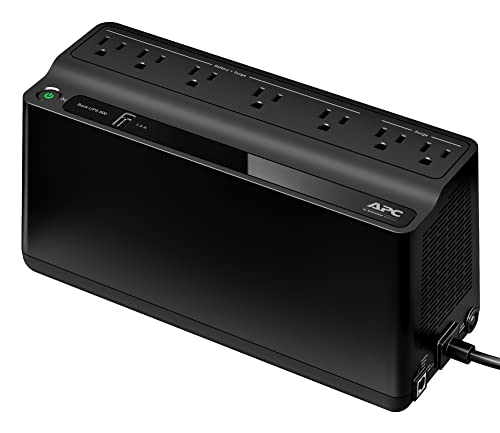
APC BE600M1 is a compact UPS that provides short-term battery power to maintain essential connectivity. It features five outlets—four with battery backup and surge protection, plus two surge-only outlets for less-critical devices. It is well-suited for keeping a router, modem, and basic desk equipment online during brief outages. A limitation is its modest runtime at higher loads, which may not cover longer outages or power-hungry devices.
- Best for: Home router and modem during outages
- Why selected: Small footprint, clear battery status, surge protection for critical gear
- Caution: Short runtime if adding high-power devices
CyberPower CP1500PFCLCD PFC Sinewave UPS

The CP1500PFCLCD provides 1500VA / 1000W with PFC Sine Wave output, supporting active PFC and conventional power supplies. It offers 12 outlets (six battery backup, six surge protected) plus two USB charging ports and a multifunction color LCD panel that displays real-time battery and power information. This model is best for small offices or home setups with multiple devices that require clean, regulated power. A potential limitation is its larger size relative to basic models, which may be a consideration in tight spaces.
- Best for: Small office or multi-device home setup
- Why selected: Clean sine wave, multiple outlets, informative LCD display
- Caution: Bulky footprint for very compact desks
APC Back-UPS 425VA / 255W (BE425M)

APC BE425M offers 425VA / 255W of power with six outlets (four battery backup with surge protection and two surge-only). It is ideal for protecting a small home office setup, including a router/modem, a VoIP phone, and a compact computer. It enables up to about 15 minutes of runtime at a 100W load, supporting safe shutdown during short outages. The limitation is the relatively modest runtime for higher-power devices or longer outages.
- Best for: Small home offices with essential devices
- Why selected: Compact, reliable protection, easy setup
- Caution: Limited runtime for higher-power equipment
APC UPS 1500VA/900W Pro (BX1500M)

The BX1500M provides 1500VA / 900W with ten outlets (five battery backup and five surge-only) plus built-in coaxial and Ethernet surge protection. It is suitable for a more extended home office or small clinic setup needing backup power for computers, routers, NAS devices, and other essential electronics. The model is best for buyers who require a larger array of outlets and broader protection. A drawback could be its higher capacity and footprint compared to compact models.
- Best for: Wider home office or small clinic setup
- Why selected: Higher capacity, multiple protected outlets, expanded surge protection
- Caution: Bigger footprint; ensure space fits
Buying Guide
What to prioritize for medical needs
Key metrics include VA/W rating, battery runtime at realistic loads, and the availability of pure sine wave power. For sensitive medical devices, consider units offering true sine wave or high-quality simulated sine wave, plus clear LCD panels showing power conditions.
How much runtime do you need?
Estimate the runtime based on the load you expect during an outage. For essential devices such as routers, modems, and critical computers, 5–20 minutes can be enough for safe shutdown and device protection. If you rely on a medical device for continuous operation, seek higher VA/W ratings and longer runtimes.
Outlets and protection
Choose models with a mix of battery-backed and surge-only outlets to prioritize critical devices. Ensure there are enough outlets to cover the desk, router, communication devices, and any connected peripherals.
Form factor and placement
Compact models suit tight desks and nightstands, while larger units provide more outlets and longer runtimes. Verify the unit’s dimensions and weight to fit your space and prevent tipping, especially in rooms with children or pets.
Smart features and monitoring
Color LCD panels, user-friendly interfaces, and USB charging ports add practicality. Some models display immediate battery health and input/output conditions, helping anticipate issues before downtime occurs.
Maintenance and lifespan
Modern UPS systems use different battery chemistries. Lithium-based UPS solutions offer longer lifespans but can come at a higher upfront cost. Factor total cost of ownership and replacement cycles into your decision.
Safety and compliance
Look for UL certification and compatibility with your region’s electrical standards. In medical contexts, ensure the device is tested for reliability and safety in home environments.
FAQ
- Do all UPS units provide clean power for medical devices? Not always. Some use simulated sine wave; higher-end models offer true sine wave or high-quality simulated sine wave that better suits sensitive equipment.
- What runtime is typical for a router during an outage? Many entry-level models provide 5–15 minutes at 10–20W, sufficient for a safe shutdown.
- Can I use a UPS for a medical device directly? Only if the device supports UPS power and the output is within the device’s input requirements. Check device manuals for power compatibility.
- How many outlets should I expect? This depends on your setup. A larger office UPS may offer 10–12 outlets, including a mix of backup and surge-only options.
- Is longer battery life always better? Generally yes for reliability, but weight, size, and cost increase with longer runtimes. Choose based on your outage risk and device needs.
- Should I consider lithium-based UPS for medical use? Lithium-based UPS can offer longer lifespans and reduced weight, but verify compatibility with your devices and safety requirements.