LP (propane) gas powered generators offer clean burning fuel, readily available backup power, and flexible operation during outages, campsites, or remote work sites. This guide reviews top choices that support residential, RV, and job-site needs, focusing on dual or tri-fuel designs for extended runtime. Each model combines portability with safety features like CO sensors and transfer-switch readiness. Below, you’ll find essential specifications, standout features, and practical considerations to help you choose the right LP gas powered generator for your power needs.
Summary of Selected Models
- DuroStar DS13000MX – 13,000 Watts; Gas or Propane; CO alert; remote start; transfer switch ready
- Westinghouse 13500 Peak Watt Tri-Fuel – up to 19 hours runtime; multiple outlets; remote start; CO safety
- PowerSmart 4400-Watt Dual Fuel Inverter – compact, quiet, EPA compliant; 11-hour runtime
- Westinghouse 14500 Peak Watt Tri-Fuel – high output; all-fluids management; long runtime
- Westinghouse 12500 Watt Dual Fuel – balanced power and portability; VFT display
DuroStar DS13000MX: Dual Fuel Power For Home Or Job Site

The DuroStar DS13000MX delivers robust power with 13,000 watts for full-home backup, plus a 500cc engine designed for heavy-duty performance. Its dual fuel capability lets you run on gasoline for maximum power or propane for longer runtimes and cleaner emissions. A built-in CO alert protects occupants by automatically shutting down the unit if dangerous fumes are detected. Remote electric start adds convenience, and its transfer switch readiness makes it compatible with home standby installations. This model is built for storms, outages, or off-grid work, offering dependable, flexible energy on demand.
Westinghouse 13500 Peak Watt Tri-Fuel Backup Generator

Westinghouse pairs power and versatility in the 13500 Peak Watt Tri-Fuel model. It can run on gasoline, propane, or natural gas, with running watts ranging from 10500 on gas to 9500 on propane. A remote start with a key fob provides quick access, while the unit includes a comprehensive set of outlets and a transfer switch-ready configuration. The engine features a long-life cast iron sleeve and an automatic CO shutdown, with a digital hour meter to monitor maintenance intervals. Plan for up to 19 hours of operation on a large fuel tank for extended outages.
PowerSmart 4400-Watt Dual Fuel Portable Inverter

The PowerSmart inverter offers a lighter, quieter option with dual fuel capability and a starting wattage of 4400W (3600W running). Its 1.6-gallon tank provides up to 11 hours of runtime at a 25% load, making it suitable for essential circuits during outages or remote camping. The unit emphasizes quiet operation in residential settings with a sound level of about 76 dB at 23 feet. It’s EPA compliant and designed for reliability in everyday backup scenarios where noise and fuel efficiency matter.
Westinghouse 14500 Peak Watt Dual Fuel Backup Generator

This 14500 peak watt tri-fuel model targets larger homes or job sites needing high power with dual fuel flexibility. Gasoline mode yields 11,500 running watts, propane delivers 13,500 peak watts and 10,500 running watts, and natural gas provides 12,000 peak watts with 9,500 running watts. A heavy-duty 550cc Westinghouse engine powers long operation on a 9.5-gallon tank, and a built-in fuel gauge helps with planning. It’s transfer switch ready and designed for easy integration into backup power systems.
Westinghouse 12500 Watt Dual Fuel Home Backup Generator

With 12500 peak watts and 9500 running watts on gasoline (and 11200 peak / 8500 running on propane), this Westinghouse model balances power and versatility. Remote start with an included key fob, plus electric and recoil options, provide flexible starting methods. A 6.6-gallon fuel tank supports up to 12 hours of runtime, while outlets include GFCI 120V receptacles, a transfer switch-ready outlet, and RV readiness. The VFT (Voltage/Frequency/Hours) display delivers real-time operational data for better management of power output and maintenance needs.
Westinghouse 6500 Watt Dual Fuel Home Backup
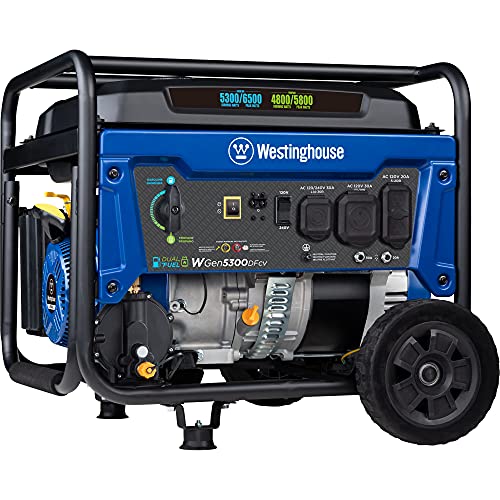
Designed for mid-size homes and RVs, this 6500-watt generator provides a practical balance of capacity and portability. Gasoline mode delivers 5300 running watts and 6500 peak watts; propane mode offers 4800 running watts and 5800 peak watts. A 4.7-gallon tank supports up to 14.5 hours of runtime, and multiple outlets—including an RV-ready receptacle and a transfer switch-ready port—facilitate straightforward integration into a home backup setup. It ships with essential accessories such as an oil funnel and wheel kit for easy setup and use.
Westinghouse 14500 Peak Watt Tri-Fuel With Extra Capacity

This tri-fuel option emphasizes high output for demanding setups. Gasoline mode yields 11,500 running watts, propane 13,500 peak / 10,500 running, and natural gas 12,000 peak / 9,500 running. A durable 550cc engine powers a long runtime on a sizable 9.5-gallon fuel tank, with an emphasis on durability and safety. As with other Westinghouse models in this guide, it includes a transfer switch capability and remote start compatibility for seamless emergency power restoration.
Buying Guide: Key Purchase Considerations For LP Gas Powered Generators
When selecting an LP gas powered generator, consider total power needs, fuel availability, and installation requirements. The following points help compare different models and make an informed choice:
- Power capacity and demand: Assess peak versus running watts for your essential circuits. For larger homes or tools on a job site, tri-fuel units offer greater flexibility but come at higher upfront costs.
- Fuel flexibility: Dual fuel or tri-fuel designs let you switch between gasoline, propane, and sometimes natural gas, extending runtime and reliability during supply disruptions.
- Runtime and fuel tank size: Higher tank capacity provides longer operation between refuels. Consider typical outage durations and whether you’ll rely on propane tanks or gasoline storage.
- Outlets and compatibility: Ensure the generator provides the needed outlets (GFCI, 120V, 240V, RV receptacles) and is transfer switch ready for seamless home integration.
- Safety features: CO sensors, automatic shutdowns, and proper muffling characteristics protect households and neighbors during operation.
- Portability vs. stationary use: Inverter-based units are quieter and more fuel-efficient but may have lower peak outputs; traditional generators handle higher surge loads but can be louder.
- Maintenance and monitoring: Models with digital hour meters and voltage/frequency displays help with routine maintenance planning and reliability.
- Warranty and support: Check manufacturer warranties and service networks for peace of mind during extended use.
In choosing an LP gas powered generator, balance the initial investment with long-term reliability, fuel accessibility, and the ease of integrating with home electrical panels or RV setups. For emergency readiness, prioritize models with CO protection, remote start, and transfer-switch compatibility. For camping or remote jobsites, consider quieter inverter-based options that still meet essential power requirements.