Choosing an LP gas portable generator offers a flexible solution for home backup, RV adventures, and remote camping. LP fuel often provides cleaner burns and stable performance, especially in cold starts. The following overview spotlights five top options, each with dual-fuel or LP-focused capabilities, to help you compare run times, outlets, noise levels, and ease of use. This guide emphasizes practicality, safety, and compatibility with common transfer switches and RV power needs.
Summary Of Chosen Products
| Product | Fuel Type | Peak / Running Watts | RV Ready | Key Feature |
|---|---|---|---|---|
| WEN DF475T | Dual Fuel (Gas/Propane) | 4750 / 3800 (Gas) | Yes | Electric start with 120/240V transfer switch readiness |
| Westinghouse 4650 | Dual Fuel | 4650 / 3600 (Gas) | Yes | Built-in outlets including 30A RV outlet |
| PowerSmart 3800 | Dual Fuel | 3800 / 3300 (Gas) | Yes | Quiet operation with ECO / RV-ready outlet |
| Oxseryn 4400 Inverter | Gas Powered | 4400 / 3400 | RV Ready | Inverter technology with clean power |
| Aceup Energy 4000 | Dual Fuel | 4000 / 3200 (Gas) | Yes | Low-noise inverter with THD < 1.5% |
WEN 4,750-Watt Dual Fuel Portable Generator

The WEN DF475T combines gasoline power with propane compatibility, delivering 4750 surge watts and 3800 running watts on gasoline, then 4350 surge and 3500 running watts on propane. A simple dial switch toggles fuel type, and the unit supports 120V and 240V outputs—ideal for transfer switches and emergency backup. The 224cc OHV engine powers up with an electric start for quick ignition. This versatility makes it suitable for home power outages, job sites, and remote setups where fuel availability may vary.
Key practical points include easy fuel switching, a 120/240V configuration, and an electric start for fast recovery after outages. The wheel kit enhances mobility, and its dual-fuel capability can help manage fuel costs. Users should consider noise levels, fuel storage, and any local regulations when deploying during quiet hours or in urban environments.
Oxseryn 4400-Watts Inverter Generator
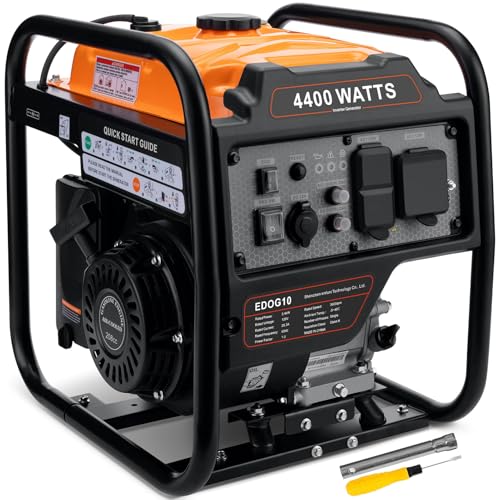
This model provides 4400 peak watts and 3400 running watts with multi-output versatility: two 120V outlets, a 30A RV port, and a 12V DC port. It features ECO mode for efficiency and an inverter system that delivers clean power suitable for sensitive electronics. The EPA-compliant design and extended runtime of up to 14 hours at 25% load enhance reliability for camping or home backup. It’s a compact option with open-frame construction suitable for portability and quick deployment.
Considerations include fuel capacity and runtime, the balance between noise levels and output, and how the RV-ready outlet aligns with your existing hookups. As with any inverter generator, maintaining proper ventilation and following startup procedures helps maximize efficiency and safety.
Westinghouse 4650 Peak Watt Dual Fuel Generator
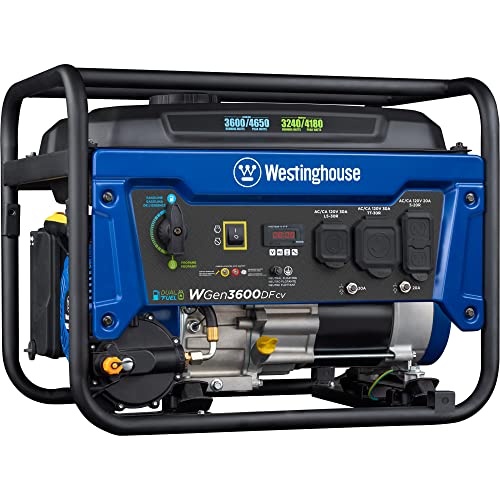
The Westinghouse model offers 4650 peak watts and 3600 running watts on gasoline, with 3240 running watts on propane. It features a 4-gallon fuel tank with a fuel gauge and run times up to 14 hours per tank, making it well-suited for extended outages or remote work sites. It includes essential outlets: a 5-20R 120V receptacle, an RV TT-30R 30A outlet, and an L5-30R 30A outlet, all protected by rubber covers for weather safety. The package typically includes starter tools and a user manual for straightforward setup.
Key considerations include fuel flexibility, the availability of propane in emergencies, and the ability to run higher-demand appliances through the 120V/240V capability. The built-in safety features and comprehensive outlets provide convenience for RV hookups and home use alike, though users should assess weight, noise, and the need for routine maintenance checks.
Oxseryn 4400 Watts Inverter Generator (Alternative Model)

This Oxseryn inverter variant delivers 4400 peak watts and 3400 running watts with multiple outlets including 2x120V, 12V DC, RV port, and ECO mode for low fuel consumption. It emphasizes a long runtime of up to 14 hours at low load and a 2-gallon tank, making it suitable for camping or emergency home backup. The unit’s parallel capability and clean power output make it compatible with sensitive devices and power stations, while its compact open-frame design supports easy transportation.
When evaluating this model, consumers should compare the runtime in ECO mode against their typical usage, assess the fuel availability, and ensure the RV-ready port aligns with their travel gear. Inverter stability is a core benefit, particularly for electronics and charging needs during outages.
Aceup Energy 4000 Watt Dual Fuel Inverter

The Aceup Energy unit delivers dual-fuel power at 4000 peak watts / 3200 running watts on gas and 3500 peak / 3000 running watts on propane. Its compact 149cc engine with recoil start supports about 5 hours at half-load on a 1.32-gallon tank and is designed for quiet operation, with noise around 60 decibels in Eco mode at 23 feet. Inverter technology provides clean power with THD below 1.5%, protecting sensitive devices such as phones and laptops while offering reliable performance for home backup, camping, or RV use.
Pros to weigh include fuel economy in Eco mode, fuel flexibility, and the balance between noise, portability, and wattage for your anticipated loads. For critical electronics, the inverter-grade output adds a safety margin against surges. Consider parallel capabilities if you plan to expand power capacity with additional units.
PowerSmart 4400-Watt Inverter Generator

This PowerSmart model provides a 11-hour runtime at 25% load with a 1.6-gallon tank, starting 4400W and running 3600W on gasoline. It emphasizes a quiet operation at 76 dB from 23 feet, making it suitable for residential areas or camping. The unit includes CO sensor features and an RV-ready outlet, aiming to balance safety and practicality for everyday use in power outages or outdoor activities. It uses inverter technology to deliver stable power with lower THD, protecting devices from irregular voltage.
Key considerations are run time versus load, noise tolerance in quiet zones, and the availability of propane as a backup fuel option. The CO sensor adds an extra safety measure in occupied spaces, while the RV-ready outlet expands compatibility for travel scenarios.
Buying Guide: Key Purchase Considerations And Comparisons
- Fuel flexibility: Dual-fuel models offer choice between gasoline and propane, which can help with fuel availability and storage. Consider how propane costs and supply in your area affect long-term use.
- Power needs: Assess your essential loads (refrigerator, sump pump, lights, HVAC, electronics). If you need to run high-wattage appliances, prioritize higher surge and running watts and 240V capability when needed.
- Outlets and RV readiness: Look for models with 120V and 240V outputs, plus dedicated RV outlets (30A or 50A compatible) if you plan to power an RV or higher-demand devices.
- Noise and runtime: Inverter generators typically run quieter and provide cleaner power (low THD), but may have smaller tanks. Compare runtime at your typical load to determine refill frequency.
- Portability and setup: Wheel kits, handles, and lightweight frames aid mobility for camping or frequent relocation. Check assembly requirements and included tools.
- Safety features: CO alarms or sensors, low-oil shutdown, and automatic idle control (ECO mode) help prevent damage and improve safety during outages or routine use.
- Maintenance: Consider oil changes, air filters, and spark plug access. Dual-fuel models may require more maintenance due to additional fuel systems.
- Warranty and support: Review manufacturer warranties and local service options to ensure long-term reliability and easy replacement parts.
- Budget and longevity: Higher wattage and inverter technology generally incur higher upfront costs but can save fuel and ensure stable power over time.