If you need substantial solar power on the go, these large portable solar panels are designed to deliver reliable energy for RVs, camping, off-grid cabins, and emergency backup. They balance high efficiency with practical portability, helping you charge power stations, batteries, and a range of devices. This guide highlights five top options, who they’re best for, and practical buy-notes you can compare at a glance.
Buyer’s quick-reference table
| Product | Best For | Key Benefit | Potential Limitation |
|---|---|---|---|
| Renogy 200W Portable Solar Panel | Small camps, tight spaces | High efficiency (25%) in a foldable package | Weighs ~13.9 lbs |
| Renogy 400W Solar Blanket | Vehicle camping, SUVs, vans | 16-fold design for ultra-compact storage | More panels to deploy vs. single panel |
| FlexSolar 100W Portable Panel | Lightweight carry, quick trips | 3-in-1 outputs, PD 45W USB-C | Lower wattage for bigger loads |
| TWELSEAVAN 400W Panel | Power stations, off-grid setups | 8-in-1 MC4 and multiple adapters | Heavier than compact foldables |
| VEVOR 400W Foldable Panel | Camping and hiking with gear | High efficiency with 24% and IP67 | May require sturdy mounting |
Renogy 200W Portable Solar Panel — Foldable Power Backup

Best for compact spaces requiring solid output. This 200W foldable panel uses upgraded 16BB N-Type cells to achieve about 25% efficiency, which helps you get more energy from limited sun. It’s ideal for charging power stations, running small appliances, and powering devices in RVs or camps where space is at a premium.
Who it’s best for: solo campers, SUV or small-trailer setups, and temporary off-grid stays needing dependable daytime charging. Why selected: the combination of higher efficiency and a lightweight foldable form makes it easier to carry and deploy in restricted areas.
Notes: the panel weighs about 13.89 pounds and folds to a compact size. Avoid relying on it for heavy, continuous high-wattage loads without a capable power bank or battery system nearby.
Renogy 400W Solar Blanket — High-Efficiency Foldable Charger
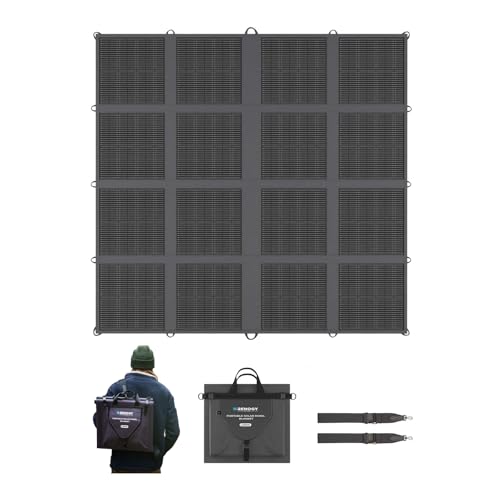
This 400W blanket emphasizes ultra-lightweight portability, weighing just over 16 pounds and folding to a compact 16.54 by 15.83 by 4.13 inches. It’s designed for tight spaces in SUVs or pickups and offers flexibility in installation, including laying across windshields or hanging vertically for shade while charging.
Who it’s best for: campers who prioritize a low-profile panel that still delivers substantial full-wace power. Why selected: the 16-fold design saves space and enables adaptable setups without sacrificing wattage. Caution: despite the light weight, it’s still a sizable panel to manage in windy outdoor conditions.
FlexSolar 100W Portable Panel with PD3.0 USB-C

Best for ultralight carry and frequent travelers who need portable power without weight. It provides PD 3.0 USB-C, USB-C, USB-A, and DC outputs, enabling simultaneous charging of phones, tablets, and small power banks. The 23%+ efficiency supports reliable charging in varied conditions.
Who it’s best for: hikers, backpackers, or road-trippers who want a compact, multi-output panel. Why selected: the 4-in-1 charging cable expands compatibility with portable stations and devices. Caution: wattage is lower, so it’s not ideal for large appliances or high-demand devices for extended periods.
TWELSEAVAN 400W Portable Solar Panel

Strong option for power stations and off-grid setups requiring broad compatibility. It delivers up to 400W with a broad 8-in-1 MC4 and DC adapter set, helping you connect to a variety of power banks and stations. It’s designed for flexible mounting with a long MC4 lead for easier placement.
Who it’s best for: users needing a robust, multi-adapter system to power multiple devices and stations. Why selected: the extensive adapter options simplify integration with popular power stations. Caution: it’s heavier (about 22+ lbs) and may require stable mounting in windy conditions.
VEVOR 400W Foldable Solar Panel

Designed for portability with high efficiency, this 400W foldable panel relies on 16BB PERC cells to achieve ≥24% conversion. It includes a MC4 cable and a 10-in-1 DC adapter, making it broadly compatible with most portable power stations and camping gear.
Who it’s best for: campers needing a flexible panel with broad adapter support. Why selected: the combination of high efficiency and multiple adapters supports diverse setups. Caution: folding and field setup can be more complex than single-panel solutions for beginners.
SOKIOVOLA N-Type 220W Portable Solar Panel
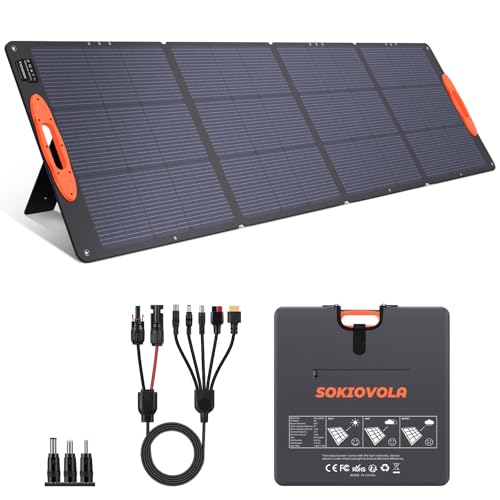
Best for larger, mid-range power needs with rugged waterproofing. Weighing around 17 pounds, it folds to a compact size and uses 25% efficiency N-Type cells for strong energy capture, even in challenging weather. It includes convenient magnetic handling for quick setup in campgrounds or RV parks.
Who it’s best for: campers who need a capable mid-size panel that’s easier to move yet still provides solid output. Why selected: IP68 waterproofing and foldable design suit harsh outdoor use. Caution: heavier than ultralight options, which may affect portability in very tight spaces.
BigBlue 35W Portable Solar Panel Charger

Best for ultra-lightweight charging on the go. It offers two Type-C ports and one USB-A port for a range of devices, including iPhones, Android devices, cameras, and power banks. It supports PD 25W via Type-C with PPS for efficient charging, though Apple device compatibility is limited for one USB-C port.
Who it’s best for: light travelers who need quick, safe charging for small devices. Why selected: its compact size and built-in fast-charging capabilities improve mobile readiness. Caution: not suited for high-wattage gear or continuous heavy loads.
Buying Guide: Key Considerations for Large Portable Solar Panels
- Power needs: Match panel wattage to the devices you plan to charge. Higher wattage panels (400W) suit power stations and multiple devices, while 100–200W units work well for phones, small tablets, and camping gear.
- Portability vs. output: Foldable blankets save space but can be heavier per watt than compact panels. Consider your typical setup ( RV, SUV, backpacking) and storage constraints.
- Cell technology: N-Type and PERC cells often deliver better efficiency and performance in low light. Look for 23–25% efficiency ranges for best results in varied conditions.
- Connectivity: MC4 adapters, multiple DC outputs, and USB-C PD support increase compatibility with power stations and devices. Ensure your power station can accept the panel’s connector.
- Durability: IP ratings (IP65, IP67, IP68) indicate weather resistance. ETFE laminates and rugged frames help in outdoor use and long-term exposure.
- Setup flexibility: Panels with multiple mounting options (ground, windshield, racks) speed deployment in campsites and off-grid locations.
FAQ
- What size solar panel should I choose for RV camping?
– For RV use and power stations, 400W panels or higher offer robust charging, while 200W can work well for smaller rigs and limited devices. - Are foldable solar panels durable for outdoor use?
– Yes, many foldable designs use ETFE laminates and robust frames, but avoid high-wind setups without secure anchoring. - Can a 100W panel charge a power station?
– It can, but charging will be slower and may require longer sun exposure or a larger array to meet demand. - Is corrosion resistance important for solar panels?
– Yes, weatherproofing and IP ratings protect against moisture, dust, and spray in camping environments. - Should I prioritize higher efficiency cells?
– Higher efficiency cells capture more energy in limited sun, which helps in shaded or crowded campsites. - What should I consider when comparing 400W panels?
– Look at weight, foldability, mounting options, and included adapters to ensure compatibility with your power setup.