Whether you’re on a road trip, camping, or setting up a mobile office, choosing the right car inverter ensures your devices stay charged and ready. This guide highlights five reliable options, each suited to different needs—from heavy laptop use to quick phone charging. Best for frequent travelers, family road trips, and compact vehicle setups, these inverters convert 12V DC from a car battery into standard 110V AC power. Compare wattage, outlets, and charging ports to pick the best fit for your activities.
Summary of selected products
- Pro Chaser 400W Power Inverter (Dual AC, USB-C PD, USB-A)
- FOVAL 150W Car Power Inverter (Dual USB, Compact)
- PiSFAU 200W Car Power Inverter (USB-C, USB-A, 2 AC outlets)
- BESTEK 300W Inverter (Dual USB, 2 AC outlets, aluminum housing)
- vansoet 400W Car Power Inverter (PD 30W USB-C, USB-A, 2 AC outlets)
Pro Chaser 400W Power Inverter (DC 12V to 110V, Dual USB)
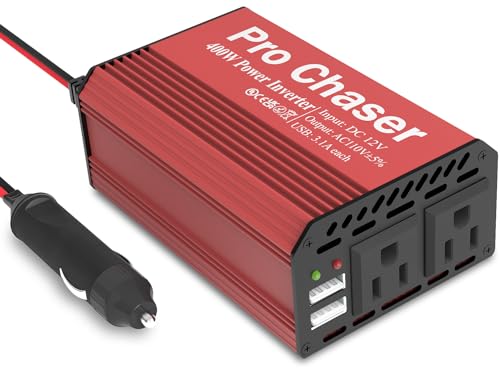
Best for road trips and family use, this inverter provides 400W of continuous DC-to-AC power with a peak of 800W. It offers two 110V outlets and two USB ports (3.1A), with a long 30-inch cord for flexible placement. The compact, cellphone-sized design makes it easy to route power from the vehicle while passengers charge devices.
Who it’s best for: travelers who need reliable high-wandage support and multiple charging options for phones, tablets, cameras, and small appliances. Why selected: strong continuous output, dual outlets, and quick USB charging in a portable package.
Caution: Avoid running high-wattage appliances close to the 400W continuous rating for extended periods.
FOVAL 150W Car Power Inverter (Dual USB, Compact)
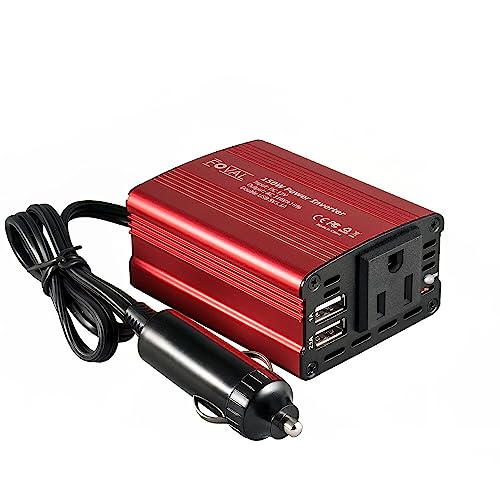
Best for lighter mobile use, this 150W inverter plugs into the cigarette lighter and provides two USB ports plus an AC outlet. Its compact, credit-card-sized footprint makes it ideal for backpacks and daily commutes.
Who it’s best for: users needing portable charging for phones, tablets, and small devices on short trips. Why selected: compact design with essential USB and AC options at a modest power level.
Caution: The 150W rating limits use with larger laptops or power-hungry appliances.
PiSFAU 200W Car Power Inverter (USB-C, USB-A, 4 Ports)

Best for multitasking travelers, this 200W inverter includes two AC outlets and four USB ports, plus a quiet, efficient design. It’s suitable for charging multiple devices such as laptops, tablets, and phones while running small household electronics in the vehicle.
Who it’s best for: users who want to power several USB devices at once and occasionally run a laptop. Why selected: higher USB port count and balanced AC output for mobile office use.
Caution: Keep total simultaneous draw within 200W to avoid tripping the circuit or overheating.
BESTEK 300W Inverter (Dual USB, 2 AC Outlets)
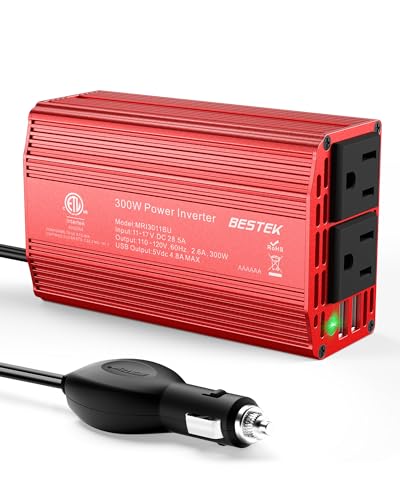
Best for extended road trips, this BESTEK inverter offers 300W continuous power with two 110V outlets and two USB ports. Its aluminum housing adds durability for vehicle use and easy portability with a compact form factor.
Who it’s best for: users needing a robust, general-purpose inverter that can handle laptops and tablets. Why selected: well-known brand with dual outlets and solid USB charging capability.
Caution: Higher-wemand devices should be weighed against the 300W continuous rating to avoid overloads.
Pro Chaser 400W With PD USB-C (Air Compressor, Laptops)

Best for power users on the move, this Pro Chaser model includes USB-C PD 65W and USB-A QC 18W alongside dual AC outlets. It supports devices like laptops, tablets, cameras, and AirPods, plus a 30-inch cord for flexible placement.
Who it’s best for: travelers who rely on USB-C fast charging and need higher-wattage support for laptops. Why selected: broad charging options, including PD and QC, in a portable unit.
Caution: PD 65W may not charge high-watage laptops at full speed in all scenarios; plan for mid-range power draw when on the road.
vansoet 400W Car Power Inverter (PD USB-C, 2 AC Outlets)

Best for multi-device travelers who want fast USB-C charging and multiple outlets, this inverter offers 400W continuous power, a 30W PD USB-C port, a 15W USB-C port, and two USB-A ports. It also includes two AC outlets for laptops and small appliances.
Who it’s best for: users needing a versatile hub for USB-C PD charging and standard AC power. Why selected: strong USB-C support and independent AC control for energy management.
Caution: Ensure total draw stays within 400W to avoid triggering protection features during extended use.
Buying Guide: How to Choose a Car Inverter
- Power needs: Match continuous wattage to the devices you plan to run. If you regularly power laptops or small appliances, aim for 300–500W continuous with a higher peak for brief surges.
- Outlets and ports: Consider how many AC outlets you need and whether USB-C PD or USB-A ports are essential for your devices. USB-C PD ports are ideal for modern laptops and phones.
- Portability vs. power: Smaller units prioritize portability, while higher-watt units offer more flexibility for multiple devices. A longer cord can help reach back-seat devices.
- Heat management and safety: Look for built-in cooling and protection features such as overheat, overvoltage, short-circuit, and undervoltage protections to protect both the inverter and your devices.
- Vehicle compatibility: Most inverters plug into the 12V cigarette lighter or use direct battery connections. Check your vehicle’s power capabilities and any fuse requirements for higher-wattage use.
- Usage scenarios: Road trips, camping, or mobile offices have different requirements. For extended use, prioritize units with robust cooling and stable output.
Frequently Asked Questions
- What wattage inverter do I need for a laptop? A typical laptop requires 45–120W. For daily use, a 200–300W inverter provides comfortable headroom for modern laptops and multiple devices.
- Can I run a refrigerator from a car inverter? Some high-wattage inverters can run small portable fridges briefly, but check the continuous wattage and surge ratings. Refrigerators often require higher startup power.
- Is it safe to leave an inverter plugged in all the time? Yes, but ensure the inverter has built-in protections and consider vehicle battery health. Avoid deep battery discharge when the engine is off.
- Do all inverters need a fuse? High-wattage inverters often require a fuse or dedicated circuit for safety, especially when connected directly to the battery. Follow manufacturer guidelines.
- What’s the advantage of USB-C PD ports? PD ports offer faster charging for compatible devices, including many laptops and newer tablets, reducing charging times significantly.
- Should I buy multiple small inverters or one larger one? A single, appropriately rated inverter is often more reliable and simpler for travel; multiple small units can complicate power management and cause more heat.