If you’re shopping for an inverter to power corded or cordless tools away from mains, you need models that deliver stable AC power, handle surge loads, and work with common battery systems. This guide highlights five inverters well suited for power tools, outdoor use, and emergency setups. Each pick targets different tool types and user needs—from heavy-duty RV setups to compact, battery-powered work sites. Read on to compare suitability, limitations, and practical buying tips for your specific toolkit.
Product Comparison Table
| Product | Continuous Power | Peak Power | Best For | Key Benefit |
|---|---|---|---|---|
| BELTTT 2000W Pure Sine Wave Inverter | 2000W | 4000W | High-demand tools; RV and off-grid setups | Pure sine wave with intelligent LCD display |
| Vansdon 2000W Pure Sine Wave Inverter | 2000W | 4000W | Off-grid homes, RVs, solar systems | Low THD, grid-like power for sensitive devices |
| HONOURLIGHT 3000W Inverter | 3000W | 6000W | Heavy tools, multiple devices | High power with dual outlets and LCD monitoring |
| Pro Chaser 400W Inverter | 400W | 800W | Compact work sites; laptops and small tools | Dual USB, portable, long cord flexibility |
| TWING Car 1000W Inverter | 750W (continuous) | 1000W | Vehicle-based tasks; camping and travel | Multiple USB ports and Type-C, compact design |
Notes: All figures come from product listings. For power tools, prioritize inverters with pure sine wave output and sufficient continuous power to avoid voltage dropouts during startup. If you regularly run heavy equipment, look for higher continuous wattage and surge capacity. The following sections explain why each pick fits different use cases.
BELTTT 2000W Pure Sine Wave Inverter

The 2000W continuous, 4000W surge inverter is designed for RVs, trucks, or off-grid setups. It uses a pure sine wave output, which is safer for motors, compressors, and sensitive electronics often found in power tools. This model is best for users needing reliable, clean power for multiple devices at once and for those who operate in environments with fluctuating input voltages. A clear LCD display helps monitor input/output and protection status. Caution: ensure battery bank and wiring meet the inverter’s current requirements to avoid overheating during peak loads.
Best for: High-demand power tools and simultaneous device charging in mobile or off-grid contexts. Choose this if you frequently power tools along with a home theater or other electronics.
Vansdon 2000W Pure Sine Wave Inverter

Vansdon’s 2000W inverter delivers grid-quality power with THD at 3%–4%, making it especially suitable for sensitive devices paired with power tools. The unit supports long operation and maintains stable voltage in situations where input may dip, aiding tools that require clean power to avoid motor hum or erratic performance. It includes a single high-efficiency output and LCD diagnostics. Caution: ensure proper ventilation and avoid extended high-load periods without adequate cooling.
Best for: Off-grid workshops and RV use where stable, clean power is critical for tools like drills, grinders, and small saws. If you value low distortion in the AC output, this is a strong pick.
HONOURLIGHT 3000W Inverter
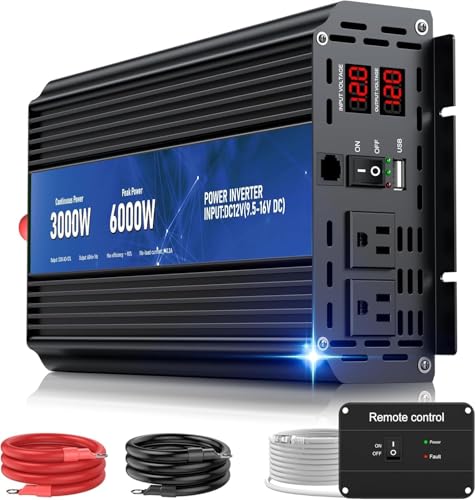
This model provides robust power with 3000W continuous and 6000W peak output, plus two AC outlets and a USB port. It’s well suited for work sites that demand more than one heavy appliance or tool running at the same time. The device is targeted toward RVs, trucks, and off-grid setups, and includes a smart LCD display for real-time monitoring. Caution: high output can demand substantial battery capacity and proper wiring; plan your setup accordingly.
Best for: Home workshops on wheels or remote job sites where multiple tools and devices run in parallel. Choose this if your workload includes power-hungry devices and you want built-in monitoring.
Pro Chaser 400W Inverter
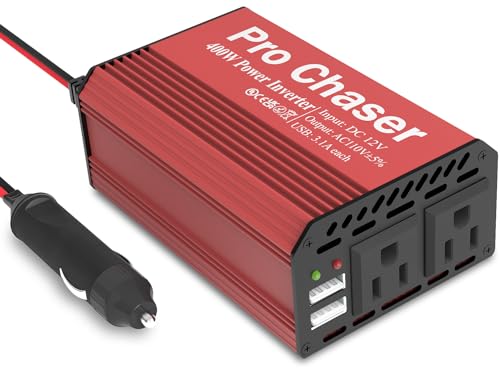
The Pro Chaser inverter is a compact, travel-friendly option offering 400W continuous power with an 800W peak. It includes dual 110V outlets and two USB ports for quick device charging, making it ideal for smaller work tools and on-the-go jobs. Its portability is the main advantage for remote site work where power needs are modest. Caution: the continuous power rating may limit operation of larger tools for extended periods.
Best for: Quick field tasks, laptops, chargers, and small tools when you need a lightweight, flexible solution. Opt for this if you frequently work out of a vehicle or in cramped spaces.
TWING Car 1000W Inverter

The TWING inverter provides 750W continuous and 1000W peak power from a 12V source, with dual AC outlets and USB/C types. It’s designed for vehicle-based tasks, camping, and light-duty power needs. Its safety features include a digital display and protections against over voltage and short circuit. Caution: modified sine wave output means it’s less ideal for sensitive electronics; prefer pure sine for precision tools and electronics.
Best for: Vehicle-based work and portable charging scenarios where you need reliable power for small to mid-size devices. Choose this if you want a compact, multi-port option for road trips or job sites.
Buying Guide: Key Purchase Considerations
What load will you power?
List the highest wattage of tools you plan to run simultaneously. Choose an inverter with continuous wattage above that total and a surge rating that can handle motor startup spikes.
Pure sine wave vs modified sine wave
Power tools with motors and electronics benefit from pure sine wave power, which minimizes motor noise and wear. If your devices are budget-oriented and tolerant of waveform, a modified sine model can be cheaper but may limit tool performance.
Battery compatibility and input source
Some inverters are designed to plug directly into specific battery platforms (Milwaukee 18V, DeWalt 20V, etc.). Confirm compatibility and note that batteries are not included in listings. Ensure your battery bank supports the inverter’s continuous load and duration needs.
Monitoring and protection features
Look for LCD displays, voltage and load indicators, and protections against over-voltage, under-voltage, overload, and short circuits. Real-time monitoring helps prevent unexpected shutdowns during tool operation.
Portability vs capacity
Compact inverters are easy to transport but may trade off continuous power. Heavy-use scenarios benefit from higher wattage units even if they are bulkier. Plan where and how you’ll use the inverter to strike the right balance.
Wiring and safety considerations
Choose models with clear mounting options and ensure wiring is rated for the inverter’s maximum current. Proper ventilation and secure mounting reduce the risk of overheating in longer work sessions.
FAQ
- Do I need a pure sine wave inverter for power tools? In most cases, yes. Power tools with motors and sensitive electronics perform better with a pure sine wave, reducing noise and wear.
- Can I run multiple tools at once? Yes, but ensure the inverter’s continuous wattage exceeds the combined load and the surge rating accommodates startup spikes.
- Are these inverters compatible with all batteries? Not every model is universal. Check the listed battery compatibility (e.g., Milwaukee 18V, DeWalt 20V) and ensure batteries are included if needed.
- What maintenance is required? Keep vents clear, monitor the LCD for load and temperature, and avoid prolonged high-load operation without adequate cooling.
- Is 12V the only input voltage? Most are 12V DC input, but verify your vehicle or battery bank’s voltage and the inverter’s requirements before purchasing.
- How do I size an inverter for a workshop? Start with your most demanding tool’s wattage, add a margin for startup surges, and choose a unit with a comfortable continuous rating plus ample surge.