When powering workshops, job sites, RV adventures, or remote cabins, reliable solar generators are essential. This guide highlights five top options that balance capacity, portability, and durability for industrial or heavy-use off-grid scenarios. Each choice supports high-wrequency loads, long runtimes, and expandable configurations to fit expanding power needs while staying resilient in harsh environments.
Summary of selected products
| Product | Brand | Battery Capacity | AC Output | Expandable | Ideal For |
|---|---|---|---|---|---|
| Jackery Solar Generator 1000 V2 | Jackery Store | 1070Wh | 1500W | No | Off-grid power, small appliances |
| Portable Solar Generator, 300W | ZeroKor Store | 280Wh | 300W | No | Camping, modest devices |
| Champion Power Equipment 4000-Watt RV Ready | Champion Power Equipment Store | — | 4000W | Yes | Worksites, backup power |
| OUPES Mega 1 Solar Generator | OUPES Store | 1024Wh | 2000W | Yes (5120Wh with extras) | RV, camping, home backup |
| Jackery Explorer 300 | Jackery Store | 293Wh | 300W | No | Outdoors, travel |
Jackery Solar Generator 1000 V2

The Jackery Solar Generator 1000 V2 combines a robust 1,070Wh LiFePO4 battery with a high 1,500W continuous AC output and a 3,000W surge capacity. Weighing 23.8 lbs, it offers portability for field operations while delivering reliable power for refrigerators, power tools, and other essentials. Its One Hour Fast Charging via emergency mode and ChargeShield 2.0 technology emphasize fast, safe recharging on remote sites. The durable LiFePO4 chemistry supports a long lifespan, helping reduce maintenance needs for sustained deployments.
ZeroKor Portable Solar Generator, 300W

This portable 300W solar generator bundles a foldable 60W solar panel with a versatile array of outputs, including two 300W AC outlets, DC, and multiple USB ports. It also features an SOS-ready flashlight and a range of charging options—from solar to AC to car power—making it a practical choice for off-grid campsites or work sites requiring reliable device recharging. It’s best for low-to-moderate power loads and quick top-ups on the go, with guidance on avoiding devices that exceed its 300W capacity.
Champion Power Equipment 4000-Watt RV Ready
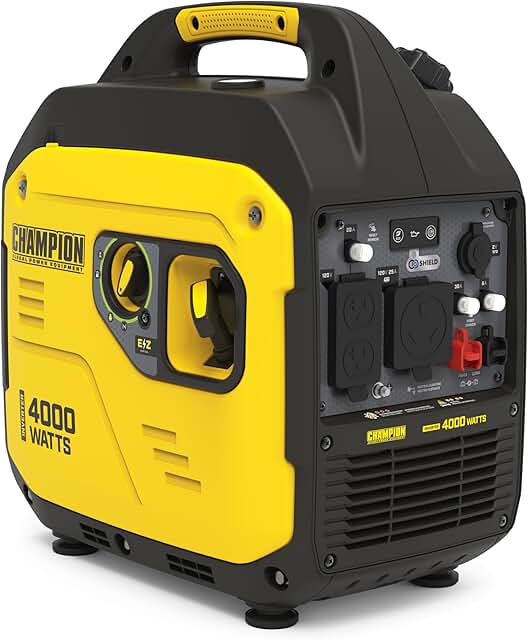
This inverter generator is notably light for its power class, under 49 pounds, and runs at a quiet 64 dBA from 23 feet. It delivers 4,000 starting watts and 3,000 running watts, with up to 10 hours of operation. The CO Shield safety feature helps protect users in enclosed spaces, and a parallel kit option allows linking with another unit for doubled output. It’s suitable for heavy-duty, continuous use in camping, tailgating, or as a home backup for essentials.
OUPES Mega 1 Solar Generator

The OUPES Mega 1 provides a robust 2,000W AC output (4,500W surge) and a 1,024Wh LiFePO4 battery, expandable to 5,120Wh with additional batteries. The system supports APP control and a fast charging pace, with a claimed 36-minute 0-80% recharge via AC. Its expandable architecture suits scenarios where increasing power capacity is anticipated, such as extended off-grid living or larger RV setups. It’s well-suited for mid-to-high demand appliances and tools when grid-free operation is required.
Jackery Portable Power Station Explorer 300

The Explorer 300 offers 293Wh of lithium power with two Pure Sine Wave AC outlets and a compact 7.1-pound design. It recharges quickly—80% in 2 hours via wall outlet and 60W PD USB-C input—supporting a portable and efficient off-grid workflow. While lighter and smaller than some industrial-grade units, it remains a reliable option for outdoor activities, charging multiple devices while conserving space.
Buying Guide
- Power capacity and output: Match the continuous (running) watts and surge wattage to the largest devices you plan to run. For longer durations, prioritize higher capacity and robust surge ratings.
- Battery chemistry and lifespan: Lithium iron phosphate (LiFePO4) offers longer life and better thermal stability, reducing replacement frequency in demanding environments.
- Recharging speed: Fast-charge capabilities save downtime at remote sites. Consider AC, solar, and vehicle charging options to maintain flexibility.
- Portability vs. ruggedness: Heavier, higher-capacity units provide more power but require sturdy transport arrangements. For field use, look for protective shells, handles, and durable casings.
- Expandability: Some systems support adding extra batteries or parallel units to scale capacity. This is valuable for evolving power needs on worksites or long trips.
- Safety features: Look for CO safety, overcharge protection, short-circuit protection, and thermal management to maintain reliability in variable conditions.
- Support and ecosystem: A strong user app, customer service, and compatibility with third-party accessories (solar panels, car charging kits) improve long-term usability.
When selecting an industrial-grade solar generator, evaluate your typical load profile, climate, and uptime requirements. Units with higher rated surge power are better for devices with motor starts, while larger battery banks deliver longer runtimes between charges. For remote sites, consider expandability that aligns with potential future power needs to minimize repeated upgrades.