Finding a reliable natural gas generator for home backup power involves considering running watts, peak watts, fuel versatility, startup features, and ease of use. This guide highlights five tri-fuel and inverter models that perform well with natural gas as a reliable power source during outages or on jobsites. Each option balances power, efficiency, and safety for American homes, with features like CO sensors, remote starts, and transfer-switch readiness.
| Product | Peak Watts | Running Watts (Gas) | Fuel Types | Key Feature |
|---|---|---|---|---|
| Westinghouse 14500 Tri-Fuel | 14,500 | 11,500 | Gas, Propane, Natural Gas | Long run times, CO sensor |
| Westinghouse 13500 Tri-Fuel | 13,500 | 10,500 | Gas, Propane, Natural Gas | Remote start; transfer switch ready |
| A-iPower 4600W Inverter | 4,600 | 3,600 | Gas | Ultra-lightweight; clean power for electronics |
| Westinghouse 18000 Tri-Fuel | 18,000 | 14,500 | Gas, Propane, Natural Gas | CO sensor; low idle; large capacity |
| Westinghouse 11000 Tri-Fuel | 11,000 | 9,000 | Gas, Propane, Natural Gas | Inverter with whole-home capability |
Westinghouse 14500 Peak Watt Tri-Fuel Generator

The Westinghouse 14500 Tri-Fuel Home Backup Portable Generator provides substantial power for larger homes or heavy-duty portable needs. It offers up to 14,500 peak watts and 11,500 running watts when using gasoline, with alternate outputs for propane and natural gas at slightly different wattage levels. A heavy-duty 550cc 4-Stroke OHV engine drives long runtime, delivering up to 19 hours on a 9.5-gallon fuel tank or around 7 hours on a 20-pound propane tank. Features include remote electric start, transfer switch readiness, and a CO sensor for enhanced safety during outages. The unit is designed for resilience and ease of use in power outage scenarios or remote job sites.
Westinghouse 13500 Peak Watt Tri-Fuel Generator

This 13500-peak-watt model covers medium to large home backup needs with strong versatility. Running watts include 10,500 on gasoline, 9,500 on propane, and 8,500 on natural gas. It features remote start with a key fob, electric and recoil start options, and a 9.5-gallon fuel tank with a fuel gauge that supports up to 19 hours of operation. Two GFCI 120V outlets, a 30A transfer switch-ready outlet, and a 50A RV-ready receptacle give flexibility for home and RV power needs. The engine is a robust 500cc Westinghouse 4-Stroke with a long-lasting cast iron sleeve, plus automatic low-oil and CO shutdown for safety and reliability.
A-iPower 4600W RV-Ready Inverter Generator
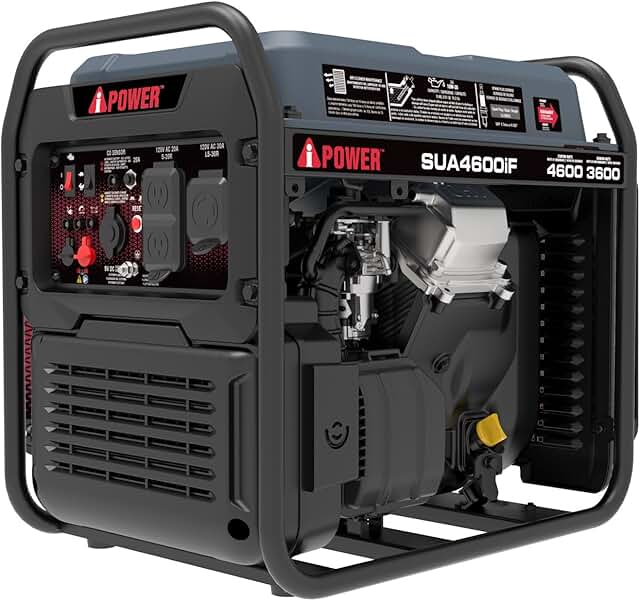
Ideal for tailgating, camping, or light home backup, the A-iPower 4600W inverter provides 4,600 starting watts and 3,600 running watts from a 149cc engine. Weighing 56 pounds, it offers portability with inverter technology delivering around 3% THD for clean power suitable for laptops, TVs, phones, and other sensitive electronics. It supports easy transport and efficient operation, making it a practical choice for smaller households seeking reliable backup power with low noise and fuel use.
Westinghouse 18000 Peak Watt Tri-Fuel Generator

The Westinghouse 18000 Tri-Fuel generator is designed for substantial backup power on larger properties or at demanding job sites. It delivers 18,000 peak watts and 14,500 running watts on gas, with 16,000 peak and 13,000 running watts on propane, and 14,400 peak and 11,600 running watts on natural gas. A 713cc V-Twin OHV engine powers a long-running unit that can operate up to 16 hours at 25% load on a 10.5-gallon tank. Features include a CO sensor, automatic low-oil shutdown, and a low idle setting to improve efficiency and reduce noise while maintaining strong output.
Westinghouse 11000 Peak Watt Tri-Fuel Inverter

The Westinghouse iGen11000TFc blends inverter efficiency with tri-fuel flexibility and whole-home backup capabilities. With 11,000 peak watts (gas), 10,000 peak watts (propane), and 8,800 peak watts (natural gas), this model balances power with fuel savings via inverter technology. It includes a 50A and a 30A outlet suitable for home transfer switch setups, plus a GFCI 20A duplex outlet. The unit emphasizes lower idle consumption, cleaner power with low THD, and safety features such as CO shutdown and rubber-covered outlets. Its parallel capability adds expandability for larger loads if needed.
Buying Guide: Key Purchase Considerations
- Fuel versatility vs. fuel availability: Tri-fuel models offer flexibility when one fuel source is scarce, but confirm compatibility with your existing supply lines and gas pressure.
- Power needs and run time: Calculate your essential loads (HVAC, refrigerators, sump pumps, lights) to determine peak and running watts, and estimate runtime based on tank size and fuel type.
- Safety features: CO sensors, automatic low-oil shutdown, and rubber-covered outlets reduce risk and improve durability during outages.
- Starter and accessibility: Remote start, key fob options, and transfer switch readiness simplify operation during emergencies; ensure weather resistance and ease of maintenance.
- Noise, efficiency, and durability: Inverter models generally run quieter and with cleaner power, but larger open-frame units may be needed for heavier loads; consider overall weight and transport ease for your property.
- Electrical system compatibility: Confirm transfer switch compatibility (manual or automatic), receptacle types, and parallel capability if you plan to scale power later.
- Warranty and service support: Look for robust warranties and easily accessible service networks to minimize downtime after outages.
These options provide a spectrum of power, portability, and reliability for homes relying on natural gas or alternate fuels. When selecting a unit, align the wattage and fuel type with your house size, typical outage duration, and available fuel infrastructure to ensure consistent, safe operation in American households.