Stable backup power is essential for American homes during outages or severe weather. The following tri-fuel and natural gas generators offer remote start, transfer switch readiness, and reliable performance. This overview highlights five top options, focusing on natural gas compatibility, run times, and safety features to help you choose the right model for your home.
| Product | Fuel Options | Peak Watts | Running Watts (Gas) | Key Feature |
|---|---|---|---|---|
| Westinghouse 14500 Peak Watt | Gas, Propane, Natural Gas | 14,500 | 11,500 | Heavy duty 550cc engine; long runtime |
| Westinghouse 13500 Peak Watt | Gas, Propane, Natural Gas | 13,500 | 10,500 | Remote start; multiple outlets |
| A-iPower 4600W Inverter | Gas | 4,600 | 3,600 | Ultra-lightweight; clean power |
| DuroStar DS13000MXT | Gas, Propane, Natural Gas | 13,000 | ~10,000 | Tri fuel versatility; CO alert |
| Westinghouse 12500 Peak Watt | Gas, Propane, Natural Gas | 12,500 | 9,500 | Remote start; transfer switch ready |
Product Overview And Buying Guide
When selecting a home backup generator, consider fuel flexibility, transfer switch compatibility, runtime, and safety features. Tri-fuel units provide the flexibility to switch fuels based on availability. Remote electric start and digital hour meters simplify daily use and monitoring. For households with larger power needs, higher peak watts ensure appliances start reliably. The following sections detail five strong choices that emphasize natural gas compatibility and overall reliability for American homes.
Westinghouse 14500 Peak Watt Tri-Fuel Backup Power

Powerful and versatile, this model delivers 14,500 peak watts (gas) and 12,000 peak watts (natural gas) with a running watt range suitable for larger homes. A heavy-duty 550cc Westinghouse engine supports long runtimes, while the design includes a 9.5-gallon fuel tank and a fuel gauge for easy monitoring. The unit is designed with transfer switch readiness in mind, allowing seamless integration with home electrical systems. Its multi-fuel capability helps homeowners adapt to fuel availability during outages.
Westinghouse 13500 Peak Watt Tri-Fuel Generator

This model offers 13,500 peak watts with 10,500 running watts on gasoline, alongside robust propane and natural gas performance. It features a remote start with a key fob, plus multiple outlets and transfer switch compatibility. The unit includes safety features like automatic low-oil shutdown and a digital hour meter, making it a practical choice for homeowners seeking reliability and ease of use during outages.
A-iPower 4600W Inverter Portable Generator
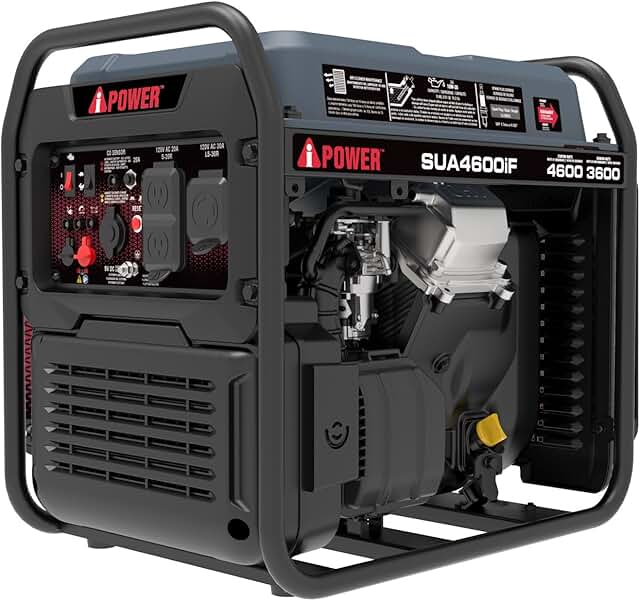
Ideal for portable needs, this inverter generator provides 4,600 starting watts and 3,600 running watts with pure power output at around 3% total harmonic distortion. Weighing just 56 lbs, it offers exceptional portability for camping or small home backup use. The inverter technology ensures clean power suitable for sensitive electronics like laptops and chargers, while maintaining a compact footprint for easy storage.
DuroStar DS13000MXT 13,000W Tri Fuel

With 13,000 watts of tri-fuel capability, the DS13000MXT is designed for whole-home power during emergencies. The unit supports fuel flexibility and includes a push-button start along with a fuel selection knob. A wide range of outlets, including a transfer switch-ready 50-amp outlet, makes it suitable for connecting to a home electrical system and enabling RV compatibility for travel needs.
Westinghouse 12500 Peak Watt Tri-Fuel Generator

Offering 12,500 peak watts with 9,500 running watts on gasoline, this unit also delivers strong propane and natural gas performance. It includes remote electric start and transfer switch readiness, with multiple outlets and rubber-covered safety features. The engine features a cast-iron sleeve and CO shutdown for enhanced safety and longevity, supported by a digital hour meter for maintenance tracking.
Buying Guide: Key Purchase Considerations And Comparisons
- Fuel flexibility: Tri-fuel models provide the option to run on gasoline, propane, or natural gas, which can be critical during fuel shortages or outages. Consider your typical fuel availability and local gas infrastructure.
- Power needs: Assess essential circuits and appliances to determine peak watts and running watts requirements. Higher peak wattage ensures start-up surges for larger loads like AC units, sump pumps, and well pumps.
- Transfer switch readiness: A transfer switch-ready generator simplifies installation and ensures seamless power transfer to your home’s electrical panel. Verify compatibility with your existing panel and local code requirements.
- Starting method: Remote electric start is convenient, especially in cold weather. Recoil start offers independence if the battery fails, but remote starts are generally easier for frequent use.
- Run time and fuel capacity: Look for fuel tank capacity and runtime at a practical load. Longer runtimes mean less frequent refueling during outages.
- Safety features: Automatic low oil shutdown, CO detectors, and protected outlets reduce risk during operation. Digital hour meters aid in scheduled maintenance.
- Portability vs. power: Heavier units deliver more power but can be harder to move. If you need frequent relocation, balance weight with power output and consider mobility aids or wheeled designs.
- Outlets and accessibility: Ensure outlets match your needs (RV, 120V, 240V, 30A/50A). Rubber-covered outlets enhance safety and weather resistance for outdoor installations.
- Maintenance and warranty: Check engine durability (cast-iron sleeves, CO shutdown features) and available warranty terms. Regular oil changes and CO sensor checks are important maintenance steps.