In a power outage, a dependable home generator system ensures essential appliances stay running. The following five models were selected for their balance of power, fuel flexibility, safety features, and ease of use. From dual‑fuel workhorses to compact inverter units and even a portable power station, this guide helps you compare options for residential backup, RV readiness, and emergency power needs.
Summary of Selected Products
| Product | Power Type | Key Watts | Fuel/Power | Special Note |
|---|---|---|---|---|
| Westinghouse 12500 Watt Dual Fuel | Gas/Propane | 12500 peak / 9500 running | Gasoline or Propane | Remote start, transfer switch ready |
| Oxseryn 4400-Watts Inverter | Gas | 4400 peak / 3400 running | Gasoline | Inverter technology, ECO mode, RV ready |
| DuroStar DS13000MX | Gas/Propane | 13000 peak / 10000+ running (est.) | Gasoline or Propane | Remote electric start, transfer switch ready |
| Westinghouse 14500 Peak Tri‑Fuel | Gas/Propane/Natural Gas | 14500 peak / 11500 running (gas) | Gas, Propane, Natural Gas | Tri‑fuel, long runtime, heavy‑duty engine |
| bailibatt Portable Power Station 266Wh | Battery | 300W AC, 266Wh | Battery powered | Compact, USB-C and multiple outputs |
Each product section below summarizes how it helps with emergencies, including typical use cases, pros, and considerations for installation or operation.
Westinghouse 12500 Watt Dual Fuel Overview

This dual‑fuel generator delivers up to 12,500 watts peak power on gasoline and 11,200 watts peak on propane, with running watts at 9,500 gasoline and 8,500 propane. Features include remote key fob start, electric and recoil start, and a large 6.6‑gallon fuel tank with a gauge. It is designed for transfer switch readiness and RV/household receptacles with reinforced outlets for safety. A VFT display provides real-time voltage, frequency, and lifetime hours to help monitor operation and maintenance.
Oxseryn 4400-Watts Inverter Generator
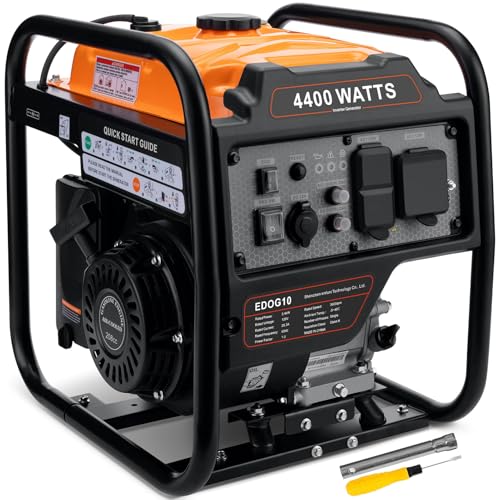
This inverter model yields 4400 peak watts and 3400 running watts, ideal for home backup and RV use. It provides multiple outputs including two 120V outlets and a 30A RV port, plus a 12V DC port for charging small devices. With up to 14 hours of runtime at 25% load, ECO mode, and low oil protection, it emphasizes efficiency and quiet operation while meeting EPA requirements. It’s a practical, portable choice for apartments or small homes needing reliable intermittent power.
DuroStar DS13000MX Dual Fuel

The DS13000MX provides 13,000 watts of power with dual‑fuel capability for flexible emergency operation. It supports gasoline or propane, allowing longer run times and better fuel availability during outages. A remote electric start adds convenience in cold or hard‑to‑reach locations, and transfer switch readiness helps integrate it with a home electrical system. CO alert safety features provide a warning and shutdown if dangerous fumes are detected, enhancing household safety in emergencies.
Westinghouse 14500 Peak Tri‑Fuel

This tri‑fuel model can run on gasoline, propane, or natural gas, delivering up to 14,500 peak watts and 11,500 running watts on gasoline. It uses a heavy‑duty 550cc engine and includes a long runtime on sizable fuel tanks, with a built‑in gauge to monitor fuel levels. The tri‑fuel flexibility makes it a strong choice for larger homes or properties with limited access to specific fuels. It’s designed for transfer switch compatibility and extended outage endurance.
PowerSmart 4400-Watt Dual Fuel Portable Inverter

This dual fuel inverter offers 4400 starting watts and 3600 running watts with a compact 1.6‑gallon tank for extended runtimes. It emphasizes quiet operation with a typical sound level around 76 dB at 23 feet and includes an efficient ECO mode. Its dual‑fuel capability improves fuel availability during power outages, whether you rely on gasoline or propane. Built for home use, camping, and emergency backup, it combines portability with steady performance for essential circuits.
PowerSmart 4400‑Watt Inverter (Another Model)

This unit mirrors the 4400‑Watt class with 3600W running capacity, lightweight design, and ECO mode for reduced fuel consumption. It’s a practical option for small homes or apartments seeking reliable backup power with low noise and simplified operation, particularly when outages are brief and essential devices require immediate power restoration.
Buying Guide for Home Emergency Power
Key considerations help determine the best generator setup for a home or small property. Below are practical factors and comparisons to guide a choice aligned with risk tolerance, budget, and space constraints.
Power Needs and Sizing
Assess the critical circuits you want to keep powered during an outage. For larger homes, prioritize models with higher peak and running watts, plus transfer switch compatibility. If you only need essential devices (refrigerator, lighting, modem), a smaller inverter or portable unit may suffice.
Fuel Type and Availability
Gasoline, propane, natural gas, and battery power each have trade‑offs. Dual‑fuel and tri‑fuel units offer flexibility when one fuel source is scarce. Fuel storage considerations and odor/safety requirements are important for household use.
Durability and Safety
Look for features such as CO detectors, automatic low‑oil shutdown, and robust engine design. Transfer switch readiness simplifies installation with a home‑backup electrical system, reducing the need to manually switch power during outages.
Portability vs. Standby Capability
Portable generators require manual setup and fuel handling, while standby or transfer‑switched models provide seamless power during outages. Inverter models offer quieter operation and cleaner power for electronics, though they typically deliver lower overall wattage than large traditional generators.
Runtime and Maintenance
Longer runtime between refuels is important for extended outages. Consider fuel tank size, engine efficiency, and maintenance needs. Modern models provide digital hour meters and fuel gauges to simplify upkeep and scheduling.
Noise, Space, and Compliance
Residential areas benefit from quieter units and compact footprints. Check local regulations regarding generator placement, exhaust routing, and indoor ventilation. Verify EPA compliance and warranty terms before purchase.
Whether choosing a high‑capacity dual‑fuel backup, a lightweight inverter for essential loads, or a compact power station for off‑grid use, selecting the right mix of power, fuel flexibility, and safety features helps ensure preparedness for emergencies.