When choosing a home backup solution, tri-fuel and natural gas generators offer dependable power with flexible fuel options. This guide reviews five top options designed to run on natural gas or switch between gasoline and propane, helping protect homes during outages. Read on to compare runtimes, starting methods, and safety features to pick a model that fits your family’s needs.
Summary of chosen products:
- Westinghouse 14500 Peak Watt Tri-Fuel — Remote Start, long runtime, natural gas capability
- Westinghouse 13500 Peak Watt Tri-Fuel — Remote Start, versatile outlets, CO shutdown
- A-iPower 4600W RV-Ready Quiet Inverter — lightweight, clean power for sensitive electronics
- Westinghouse 12500 Peak Watt Tri-Fuel — compact, efficient, robust safety features
- WEN 14500-Watt Tri-Fuel Generator — user-friendly transfer-switch readiness
Westinghouse 14500 Peak Tri-Fuel Generator

The Westinghouse 14500 Peak Watt Tri-Fuel generator is designed for larger homes or portable power needs with three fuel options: gasoline, propane, and natural gas. It delivers up to 14,500 peak watts and 11,500 running watts on gasoline, 13,500 peak and 10,500 running watts on propane, and 12,000 peak and 9,500 running watts when running on natural gas. A heavy-duty 550cc 4-stroke OHV Westinghouse engine with a cast iron sleeve supports robust performance and durability. It can run up to 19 hours on a 9.5-gallon tank, or up to 7 hours on a 20-pound propane cylinder. The unit is transfer-switch ready for easy integration with home electrical systems, and it includes a built-in fuel gauge to monitor remaining runtime.
Key features include remote electric start, a dual-wuel design for multi-fuel use, and safety protections such as automatic low oil shutdown and CO monitoring. The generator is suited to support essential loads during outages, including communications equipment, refrigerators, and lights, while offering the convenience of multiple fuel sources to ensure continuous power when gas supply is interrupted.
Westinghouse 13500 Peak Watt Tri-Fuel Generator

This model offers strong power with 13,500 peak watts and 10,500 running watts on gasoline, 12,500 peak and 9,500 running watts on propane, and 10,000 peak and 8,500 running watts on natural gas. It features remote start with a key fob and both electric and recoil start capabilities for flexibility. The 9.5-gallon tank supports up to 19 hours of runtime, and it provides a comprehensive outlet set—including 120V outlets with rubber safety covers, a transfer switch-ready 120V L14-30R, and an RV-ready 120/240V 14-50R outlet. The engine is a 500cc Westinghouse 4-stroke OHV with a cast iron sleeve and CO shutdown for safety. A digital hour meter helps track maintenance needs.
With dual GFCI outlets and robust protection, this generator balances power output with practical safety and user-friendly operation. The remote start and long runtime make it a practical choice for medium-to-large homes seeking reliable backup power with multiple fueling options.
A-iPower 4600W RV-Ready Quiet Inverter
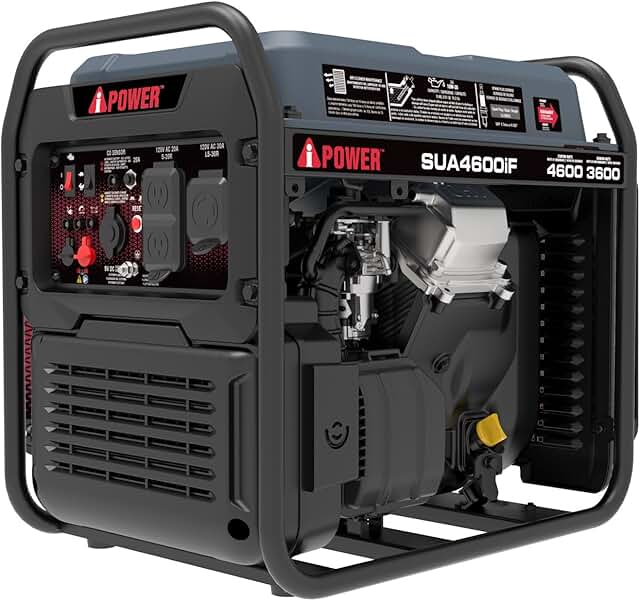
The A-iPower 4600W inverter generator is designed for portability and quiet operation. It delivers 4,600 starting watts and 3,600 running watts, suitable for RVs, camping, and home backup when light to moderate loads are needed. Despite its compact form, it provides stable AC power (120V/60Hz) with a clean 3% THD output, which is suitable for sensitive electronics like laptops and TVs. The generator is lightweight at around 56 pounds, making manual transport straightforward. The inclusion of inverter technology ensures a stable and clean power supply, reducing the risk of surges that could affect electronics during outages or travel.
Notable advantages include portability, quiet operation, and clean power output. This unit is best for smaller households or those needing portable backup power for essential devices rather than full-house energy support. Its rugged open-frame design makes it a practical option for tailgating and off-grid use while still providing reliable performance when plugged into critical appliances.
Westinghouse 12500 Peak Watt Tri-Fuel Generator

The Westinghouse 12500 Peak Watt tri-fuel model provides a balanced power profile for backup scenarios with 12,500 peak watts and 9,500 running watts on gasoline, 11,200 peak and 8,500 running watts on propane, and 9,500 peak and 7,500 running watts on natural gas. It includes remote start with a key fob and the convenience of both electric and recoil start options. The 6.6-gallon fuel tank with fuel gauge offers up to 12 hours of runtime, supporting critical loads during outages. The unit features two GFCI 120V outlets, a transfer switch-ready 120V L14-30R, and an RV-ready 120/240V 14–50R outlet. All outlets have rubber covers for safety, and the engine uses a 457cc Westinghouse 4-stroke OHV with a cast iron sleeve, plus automatic low oil shutdown and a CO detector with a digital hour meter.
This generator suits homes seeking reliable tri-fuel capability in a compact footprint, combining solid power with essential safety features. It’s well-suited for mid-sized households, offering a versatile balance of run time, outlet options, and safety measures for relief during extended outages.
WEN 14500-Watt Tri-Fuel Generator

The WEN TF1450 offers 14,500 surge watts and 11,500 running watts on gasoline, 12,500 surge and 10,300 running watts on propane, and 10,500 surge and 8,750 running watts on natural gas. It is transfer-switch ready for easy integration with home electrical systems and supports 120V and 240V outputs for versatile use during emergencies. Electric start provides convenient ignition, and a built-in switch allows quick fuel-type changes. This model is tailored to handle medium-to-large loads with a robust output suitable for essential appliances, sump pumps, and lighting during outages.
With a focus on transfer-switch compatibility, this generator is a practical option for homes seeking a straightforward, reliable tri-fuel solution. The unit’s design emphasizes ease of use and compatibility with home electrical safeguards, helping ensure a smooth transition to standby power in emergency scenarios.
Buying Guide: Key Purchase Considerations And Comparisons
Fuel flexibility and reliability are central when selecting a home natural gas generator. Consider fuel availability in your area, as tri-fuel models provide resilience against supply disruptions. Important specs include peak watts, running watts, and the ability to maintain essential loads during outages. A larger running watt rating on natural gas can be beneficial if you plan to rely primarily on natural gas, while gasoline or propane may be preferred for shorter outages or high-load events.
Engine size and durability influence long-term performance. Look for engines with cast iron sleeves and automatic shutdown features, including low oil and CO monitoring, to protect equipment and occupants. Remote or electric start adds convenience; ensure your unit supports transfer-switch connection and includes safety outlets like GFCI 120V outlets and RV-ready configurations for broader compatibility with home and recreational devices.
Runtime and tank size determine how long your home can be powered between refuels. If you experience extended outages, a larger fuel tank or more efficient fuel use becomes essential. Noise levels, portability, and weight affect installation and daily operation. In multi-user homes, prioritize models with multiple outlets and a clear digital hour meter for easier maintenance scheduling.
Outlets and transfer-switch readiness are decisive for seamless integration with home electrical systems. Ensure the generator comes with the necessary receptacles (L14-30R, 14-50R) and that your transfer switch is compatible with your utility setup. Safety features, CO detectors, and automatic shutdowns help manage risk during operation, especially in enclosed spaces or garages. Finally, consider warranty terms and after-sales support to secure long-term performance and serviceability.