Answering the question for hobbyists and professionals: the right hand plane helps you achieve precise thickness, smooth surfaces, and clean edges in woodworking. This guide highlights five standout hand planes that balance durability, adjustability, and ease of use. Best suited for DIYers, furniture makers, and detail-oriented woodworkers, these options cover mini to mid-sized planes and low-angle variants to suit different projects.
Summary of selected products:
| Product | Best For | Key Benefit |
|---|---|---|
| JORGENSEN No.101 Mini Wood Planer | Detail work, hobbyists | Adjustable depth with durable ductile iron body |
| Amazon Basics Woodworking Hand Planer No.4 | General smoothing | 2-inch steel blade and stable cast-iron body |
| JORGENSEN No.4 10″ Wood Plane | Medium to fine smoothing | Adjustable depth, robust materials |
| JORGENSEN NO.60-1/2 6-1/4″ Wood Planer | Low-angle shaping | Adjustable mouth and depth |
| JORGENSEN No.102 Wood Planer | Detail trimming | Low-angle design with ductile iron body |
JORGENSEN No.101 Mini Wood Planer

Best for precision detail work and trimming on small projects. The blade uses professional level O1 tool steel for sharp, consistent cuts with reduced wear. The body is ductile iron, offering rugged durability for repeated use. An adjustable cutting depth lets you tailor the plane to the task, making it ideal for fine edging, veneer work, and craft projects. The lever cap is zinc alloy, with stainless steel components for long service life. Choose this if you’re working on small components where accuracy matters and you want a durable, adjustable mini plane.
- Professional Level Blade: O1 tool steel, sharpened for detail planing.
- Durable Construction: Ductile iron body, zinc alloy lever cap, stainless steel parts.
- Adjustable Depth: Simple knob adjustment to set blade projection.
Best for: Detail oriented projects, hobbyists and crafters who need precise small-plane performance. Limitation: Smaller size means lower removal rate on large surfaces; best used for trimming and fine work.
Amazon Basics Woodworking Hand Planer No.4

A solid option for smoothing and trimming larger boards. It features a 2-inch steel blade paired with an adjustable mouth and depth gauge for controlled cuts. The heavy-duty cast-iron body minimizes vibration for cleaner finishes, while front and rear handles enhance grip and control during longer sessions. This plane is well suited for general smoothing tasks and is a practical choice for both serious hobbyists and professionals seeking reliable, everyday performance.
- 2-Inch Blade: High-quality steel for stable, smooth passes.
- Cast-Iron Construction: Reduces vibration for a cleaner finish.
- Ergonomic Handles: Front and rear grips for comfortable operation.
Best for: Clean smoothing across longer boards and responsible for routine woodworking tasks. Limitation: Heavier feel may require more user strength during extended sessions.
JORGENSEN No.4 10″ Wood Plane

Best for medium to fine smoothing with a traditional hand plane feel. It uses a professional level O1 blade for efficient planing and features a ductile iron body for strength. The adjustable cutting depth allows precise depth control, making it suitable for trimming and face smoothing across moderate-length boards. The aluminum alloy lever cap and stainless steel components add durability. Choose this if you want a larger, more capable plane that still offers fine depth control.
- Adjustable Depth: Precise control for varied woodworking tasks.
- Ductile Iron Body: Durable and drop-tested for rugged use.
- Sturdy Cap and Stainless Hardware: Long-lasting performance.
Caution: Ensure proper blade alignment and handle care to avoid chatter on very tough woods.
JORGENSEN NO.60-1/2 6-1/4″ Wood Planer
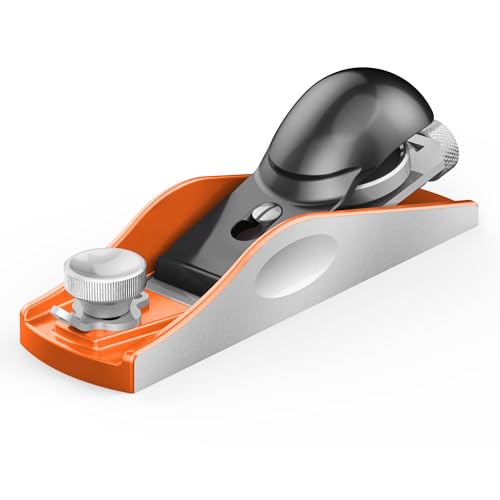
A low-angle block plane designed for trimming and detailed shaping. This model combines a ductile iron body with a low-angle design, making it better for end grain and precise edge work. The mouth width is adjustable, and the cutting depth can be tuned with a simple knob. This is a strong pick for work where tight tolerances and control of delicate edges matter. Best for: detail-focused trimming and end-grain work, or when you need a low-angle option for brittle woods.
- Low-Angle Design: Optimized for end grain and fine edges.
- Adjustable Mouth: Supports finer control over cutting width.
- Durable Materials: Ductile iron body with quality caps and hardware.
Limitation: May be less aggressive on heavy stock removal; better for finishing touches than bulk planing.
JORGENSEN No.102 Wood Planer

Best for detail trimming and precise finishing on smaller pieces. The No.102 uses a ductile iron body with a professional O1 blade for clean, accurate cuts. The blade is adjustable for depth, and the lever cap and other parts employ zinc alloy and stainless steel for durability. The low-angle feel helps with delicate woods and fine edge work. Choose this when your project calls for meticulous detail on compact parts.
- O1 Blade: Sharp, precise planing for detailed work.
- Adjustable Depth: Fine tuning for exact cuts.
- Durable Build: Ductile iron body, zinc alloy cap, stainless steel parts.
Better for: Fine edge work and small components. Caution: Not ideal for heavy stock removal on wide boards.
Buying Guide: How To Pick A Hand Plane For Woodworking
What size should you choose? For beginners and hobbyists, a No. 4 or a compact No. 101 mini provides manageable weight and good control. Larger planes (8–12 inches) can remove material faster and handle larger boards, but require more technique. Consider a low-angle variant if you frequently work with end grain or brittle woods.
What materials matter most? Look for a ductile iron body for durability and drop resistance. A sturdy lever cap and stainless steel components extend life in damp or workshop environments. A good blade material—O1 tool steel in most options—offers a sharp edge and long service life if properly sharpened and maintained.
How important is adjustability? Depth adjustment and mouth opening control cut quality and planing aggressiveness. A plane with an easy-to-use knob and accessible adjustment mechanisms helps maintain consistent results across different wood species and moisture contents.
What about ergonomics and handling? Handles and grip comfort matter for longer planing sessions. Planes with front and rear handles or ergonomic grips reduce fatigue and improve control, especially on dense hardwoods.
Choosing between traditional and low-angle planes? Low-angle planes excel at end grain and delicate woods, offering improved control and reduced burnish. If you frequently trim edges or work with narrow boards, this can influence your selection.
FAQ
- What is the main difference between a No. 4 and a No. 5 plane?
The No. 4 is a smoothing plane used for fine finishing on boards, while the No. 5 is a jack plane used for initial flattening and rough shaping. The No. 5 removes material more quickly and is better for prep work. - Why choose a low-angle block plane?
Low-angle planes excel at end grain, fine edge work, and delicate woods where a traditional angle might cause tear-out. They offer better control for detailed trimming. - Is an adjustable mouth important?
Yes. An adjustable mouth allows you to control the size of the opening, which affects how the plane handles different wood hardness and grain. It helps prevent tear-out and improves surface finish. - What blade material should I look for?
O1 tool steel blades are common for hand planes, offering a sharp edge and good wear resistance when properly sharpened. Higher-end blades may use different alloys, but sharpening practice remains essential. - Are hand planes suitable for beginners?
Yes. Starting with a mid-sized No. 4 and practicing sharpening, setting depth, and planing technique builds fundamentals that transfer to more complex planes. - What maintenance is needed for hand planes?
Regular cleaning to remove chips, dry storage to prevent rust, periodic blade sharpening, and checking the alignment and mouth adjustment keep planes performing well.