When power isn’t available, hand crank generators provide a reliable, human-powered solution for 12V DC charging, small lights, and emergency electronics. This guide highlights five practical hand crank options, summarizing how each model converts mechanical energy into electrical energy, and what to consider before buying. Whether for camping, classroom demonstrations, or home emergencies, these devices offer portable, dependency-free power when fuel and batteries aren’t an option.
| Product | Brand | 12V/DC Output | Key Use | Where It Excels |
|---|---|---|---|---|
| 20W Portable Generator Manual Power Supply for Camping Off-grid Emergency Backup Hand Crank USB Charger | N/P | 12V DC / USB | Camping, emergencies | Lightweight, multiple interfaces |
| EISCO Hand Crank Generator, 12V DC | EISCO | 12V DC | Educational demonstrations | Integrated light and binding posts |
| Hand Crank Driven Electricity Generator, 12v Power Emergency Charger | Bewinner | 12V DC | Outdoor survival, emergency charging | Includes jumper cables and LED lighting concept |
| Nightbreeze DIY Hand Crank Generator | nightbreeze | 1-12V DC | Science education, home experiments | Ball bearings and LED kit |
| Hand Held DC Generator, DC Crank Generator | Sci-Supply | DC power (custom outputs) | Small projects, education | Two replacement gear sets included |
These selections emphasize reliable manual power generation, compact design, educational value, and practical outputs for 12V systems. All five options provide a way to turn cranks into usable electricity, making them suitable for learners, hobbyists, and emergency preparedness kits alike.
20W Portable Generator Manual Power Supply

This lightweight, hand-operated generator delivers up to 20W of electrical power when cranked. It’s designed for camping, travel, field operations, and emergency power during outages or natural disasters. Power production scales with cranking speed, so faster cranking yields higher voltage and current. The device offers a variety of interfaces, allowing flexible connections to USB-powered devices or small 12V loads. The design prioritizes portability and ease of use, enabling quick access to power where none exists.
Use case scenarios include sheltering in place during storms, powering emergency lights, or charging essential devices while off-grid. Because output is proportional to cranking rate, users can tailor energy generation to their needs, balancing effort with required electrical load. The product emphasizes practical, hands-on power without relying on modern fuel or batteries.
EISCO Hand Crank Generator, 12V DC

The EISCO unit generates 12V DC and includes a front-mounted light bulb for immediate illumination. Binding posts allow straightforward connections to simple circuits or experiments. This makes it well-suited for classrooms and lab demonstrations, where students can observe how mechanical rotation translates into electrical energy. The integrated lamp doubles as a portable flashlight, offering a tangible demonstration of electrical conversion in action.
Educational value stands out, as the device supports practical experiments requiring up to 12V DC. Binding posts enable easy circuit construction for students exploring series and parallel configurations. While compact, the generator provides a functional, hands-on example of energy transfer, reinforcing core physics concepts in a tactile way.
Hand Crank Driven Electricity Generator, 12v Power Emergency Charger

This emergency charger includes a practical pair of jumper cables for quick connections and an educational emphasis on how mechanical energy becomes electrical energy. It’s suitable for both adults and children to explore basic generation concepts together. By connecting the generator to a resistor and LED, users can visualize light output as a direct result of cranking effort, making it a compelling introductory tool for energy and physics activities.
Designed for outdoor learning and survival practice, this model supports hands-on exploration of circuit behavior under varying crank speeds. It’s a compact, affordable way to demonstrate power generation, with a clear link between cranking activity and observable electrical output. Ideal for group demonstrations or individual projects focused on energy conversion.
Nightbreeze Hand Crank Generator
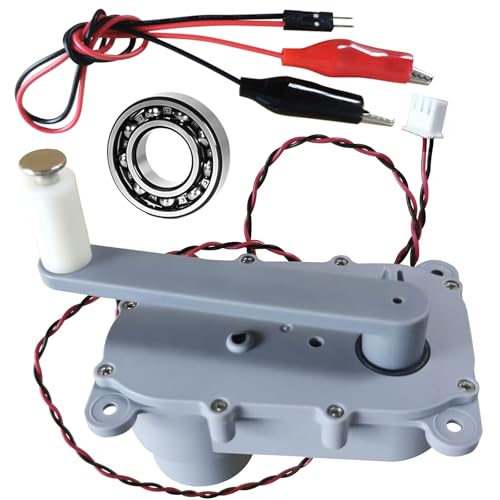
The Nightbreeze kit uses dual ball bearings and lubricating grease to enhance durability and efficiency. It includes one hand generator, three LED beads, and power wires suitable for external DC equipment. The device serves as a versatile teaching tool for physics labs and home schooling, capable of producing 1–12V DC without batteries. Turning the crank converts mechanical energy into electrical energy, with a soft gear sound that remains unobtrusive during demonstrations.
Educators and learners can leverage this generator for a range of experiments, from simple LED lighting to power supply demonstrations. The compact assembly makes it easy to incorporate into science fairs or classroom activities, providing a tangible experience of energy conversion and circuit behavior in a low-cost, reusable package.
Hand Held DC Generator, DC Crank Generator

Sci-Supply offers a compact DC crank generator with two replacement gear sets included and a wire lead pair to power external DC devices. The brand highlights its American origin and customer care, emphasizing reliability for educational and hobbyist use. The dual gear sets provide options for adjusting crank feel and performance, while the included wire leads facilitate quick connection to simple 12V loads or LED circuits.
Designed for classroom demonstrations and DIY projects, this generator emphasizes practical adaptability and serviceable design. It’s useful for teaching energy conversion concepts, allowing students to experiment with different gear ratios and observe resulting changes in voltage and current output. The product supports ongoing exploration of basic electronics and off-grid power ideas.
Buying Guide: Key Purchase Considerations And Comparisons
- Output range and voltage stability: Look for units that reliably provide 12V DC across a range of crank speeds. Some products offer adjustable or multi-output configurations (USB and 12V), which can expand compatibility with different devices.
- Durability and materials: For outdoor and emergency use, prioritize rugged construction, corrosion resistance, and heat dissipation. Aluminum and high-strength plastics tend to offer better durability than cheap plastics.
- Ease of use and ergonomics: A smooth crank, comfortable handle, and clear wiring posts simplify learning and usage, especially for educational settings or kids’ projects.
- Educational value: Some models include integrated lights, binding posts, or LED kits that help illustrate energy conversion concepts, making them ideal for classrooms and science fairs.
- Portability and weight: If you plan to carry the device in a backpack or bug-out kit, consider lighter, compact options. Heavier units may offer more power but reduce mobility.
- Safety features: Protective components, such as overcurrent and short-circuit protection, help safeguard both the device and users during experiments or field use.
- Accessories and expandability: Additional gear sets, jumper cables, and LED kits can enhance versatility. Check whether replacement parts are readily available from the manufacturer or retailers.
- Educational vs. practical balance: Classroom demonstrations benefit from built-in lighting or simple circuit connections, while survival-focused models prioritize ruggedness and reliable 12V output for small devices.
Overall, choosing a hand crank generator depends on your primary goal—education, camp use, or emergency charging. For classrooms, models with integrated lighting and clear binding posts offer immediate demonstrations. For outdoor or emergency scenarios, prioritize durability, multi-output options, and ease of cranking. By matching product design to your intended use, you can select a hand-cranked generator that reliably converts mechanical energy into usable electrical power when the grid is down or when you’re miles from an outlet.