Answer: Grid-tie solar panel setups help you feed solar energy directly into your home grid, reducing reliance on utility power. This guide highlights five top grid-tie solar products that suit homeowners, small businesses, cabins, and sheds seeking reliable, easy-to-install options. Each pick focuses on clear MPPT control, robust wiring, and practical monitoring features to optimize energy harvest and grid interaction. The buyer’s notes below explain who benefits most from each product and why they were selected.
| Product | Type | Best For |
|---|---|---|
| ECO-WORTHY 9.36KWH Off-Grid Kit | Grid-tie capable / Off-grid hybrid | Homes needing robust daily output and backup power |
| Solar Micro Grid Tie Inverter WVC-1200W | Grid-tie micro inverter | Small to mid-size homes with shaded or varied roof layouts |
| Y&H 600W Grid Tie Micro Inverter | Grid-tie micro inverter | Small residences or cabins requiring reliable monitoring |
| AUECOOR 600W Grid Tie Kit | Grid-tie inverter kit | Budget-friendly, easy-to-install residential setups |
| Sunseatop 800W Grid Tie Micro Inverter | Grid-tie micro inverter | Homes needing real-time monitoring and shade resilience |
ECO-WORTHY 9.36KWH 2340W Off-Grid Solar Kit
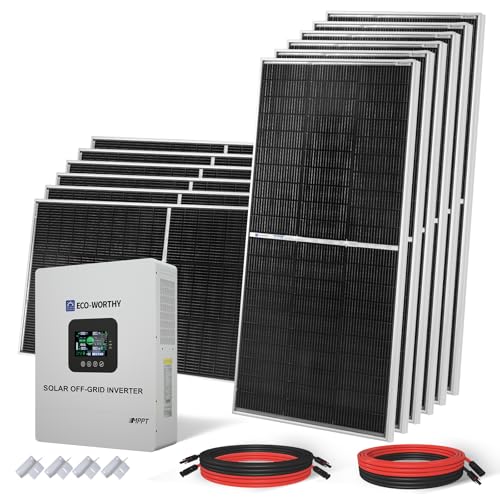
The ECO-WORTHY kit combines a 2340W solar array with a 5000W 48V inverter and MPPT control, designed for reliable output up to 9.36 kWh per day under four hours of peak sun. This is best for home or cabin setups that want a strong daily energy yield and a capable all-in-one solution for AC 110V devices. Consider this when you need robust orchestration of solar and mains backup in one package.
Best for: Homes, cottages, or small farms needing substantial daily power and a straightforward plug-and-play system.
Why selected: High daily output potential, integrated inverter, and durable 195W mono panels with a long lifespan support consistent energy delivery.
Caution: Off-grid capability means planning for battery storage or mains interconnection to manage evening demand; check local installation rules for grid interaction.
Solar Micro Grid Tie Inverter, WVC-1200W MPPT

The WVC-1200W MPPT grid-tie inverter emphasizes durable aluminum construction and high-precision MPPT to optimize solar harvesting. It reports improved power generation and features an LCD for monitoring voltage, power, and frequency. With a 99.9% transmission efficiency, it is well-suited for small residences where real-time visibility and reliable grid integration matter.
Best for: Small homes or guest spaces where a dedicated grid-tie inverter with clear LCD monitoring is valued.
Why selected: High MPPT precision and robust data display aid quick diagnosis and energy planning.
Caution: Installation requires careful wiring to avoid miswiring; ensure proper grounding and adherence to local electrical codes.
Y&H 600W Grid Tie Micro Inverter

The Y&H WVC series micro inverter uses IP65-rated durability and dual-channel MPPT to maximize energy from two panels, even in partial shade. It emphasizes safety and simple setup, with DC inputs designed to minimize wiring mistakes and prevent misconnection to the grid. It’s a compact, versatile option for smaller roof footprints.
Best for: Small homes or rooftops with partial shade where independent panel optimization is advantageous.
Why selected: Shade resilience and real-time panel-level optimization improve overall system yield.
Caution: Requires careful lightning and weatherproofing considerations in exposed locations.
AUECOOR 600W Grid Tie Kit

The AUECOOR kit focuses on cost-effective residential grid-tie installation, including the inverter and mounting hardware. It emphasizes protection features against overload, low/over voltage, and reverse polarity, along with weather-ready panel framing for outdoor use. This package is targeted at budget-conscious buyers who want a straightforward grid-tie solution.
Best for: Budget-minded homeowners looking for a complete, easy-to-install grid-tie package.
Why selected: Balanced feature set with essential protective controls and weatherized components for outdoor use.
Caution: Delivered in multiple packages; verify all components are accounted for during installation.
Sunseatop Solar Grid Tie Micro Inverter 800W

The Sunseatop 800W micro inverter features 96% peak efficiency and an app-based monitoring suite with an integrated antenna for real-time insights. Its dual-channel MPPT helps maximize energy harvest from two panels, supporting a stable 120V output. The device emphasizes smart control and remote visibility for family residences and small businesses.
Best for: Homes needing real-time monitoring and good performance under partial shading.
Why selected: High efficiency and cloud/app monitoring provide ongoing visibility for energy optimization.
Caution: Ensure compatibility with existing panel configurations and electrical code requirements for micro-inverter systems.
Buying Guide: Grid-Tie Solar System Considerations
- System type choice: Choose grid-tie micro inverters for shade tolerance and modular installation, or a central grid-tie inverter if you have a simple, larger roof layout and want fewer boxes.
- MPPT and efficiency: Look for units with MPPT to maximize conversion efficiency, especially in variable sunlight. Higher efficiency improves daily harvest and reduces roof-area requirements.
- Monitoring features: Real-time LCD or app-based monitoring helps you track production, voltage, and energy flow. This is valuable for maintenance and optimizing usage.
- Safety and protection: Ensure protections for overload, reverse polarity, and voltage surges. Weatherproofing (IP ratings) matters for outdoor installations.
- Shade and layout considerations: Micro inverters excel where shading or panel orientation varies. Central inverters perform well on uniform roof planes.
- Wiring and codes: Adhere to local electrical codes and permit requirements. Some kits require professional installation if you’re unsure about wiring between panels and the grid.
- Durability and warranties: Check component durability, frame strength, and warranty terms for panels and inverters to ensure long-term performance in your climate.
- System goals: If you want backup in outages, consider a hybrid or battery-ready approach; grid-tied systems may require additional storage solutions for full outage resilience.
Frequently Asked Questions
- What is a grid-tie solar inverter? A device that converts DC from solar panels to AC and synchronizes with the utility grid to feed excess power back for credit or reduction in electricity use.
- Do I need batteries with grid-tie systems? Batteries are not required for standard grid-tie setups; they are needed for off-grid or hybrid systems that require backup power during outages.
- Can grid-tie systems operate in partial shade? Yes, micro inverters with dual MPPT or shaded-friendly configurations help maintain energy harvest when some panels are shaded.
- Are micro inverters easier to install than central inverters? Micro inverters are typically modular and simpler to install on rooftops, but may require more hardware overall in large installations.
- What maintenance is typical for grid-tie inverters? Routine inspection of wiring, cleanliness of panels, and monitoring data checks are common; most inverters have long service lives with minimal moving parts.
- Can I install a grid-tie system myself? It depends on local codes and electrical knowledge. Some jurisdictions require a licensed electrician for grid interconnection and permitting.