Propane-powered generators offer clean, reliable backup power with multi-fuel flexibility. This guide highlights five top propane-capable models, comparing runtime, wattage, and safety features to help American homeowners prepare for outages, camping, or RV trips. Each option prioritizes ease of use, noise control, and compatibility with transfer switches and sensitive electronics.
The following summary table highlights key specs for quick comparison.
| Product | Fuel Options | Peak Watts | Running Watts | Key Feature |
|---|---|---|---|---|
| Westinghouse 12500 Dual Fuel | Gas, Propane | 12500 | 9500 (gas); 8500 (propane) | |
| WEN DF360iX | Gas, Propane | 3600 | 2900 (gas); 2600 (propane) | Very quiet operation; CO watchdog |
| WEN DF475T | Gas, Propane | 4750 | 3800 (gas); 3500 (propane) | Wheel kit; 120/240V capability |
| Westinghouse 14500 Tri-Fuel | Gas, Propane, Natural Gas | 14500 | 11500 (gas); 10500 (propane); 9500 (natural gas) | High-capacity, long runtime |
| PowerSmart 3800 Dual Fuel | Gas, Propane | 3800 | 3300 (gas); 3100 (propane) | Quiet inverter, RFU sensor with RV outlet |
Westinghouse 12500 Dual Fuel Generator

The Westinghouse 12500 Watt Dual Fuel model powers with gasoline or propane, delivering 9500 running watts on gas and 8500 running watts on propane. It features remote start with a key fob, and multiple outlets including GFCI 120V outlets, plus a transfer switch-ready 120V/L14-30R and an RV-ready 14-50R. A 457cc Westinghouse OHV engine with a cast iron sleeve ensures durability, while a digital hour meter and VFT display provide real-time voltage and frequency information. Runtime can reach up to 12 hours on a 6.6-gallon tank, with a fuel gauge for monitoring. Safety is enhanced by rubber outlet covers and automatic low oil shutdown.
Ideal for mid- to large-home backup or job-site power, this generator supports extended outages and rainier weather scenarios where dependable power is essential. The dual-fuel design gives flexibility in fuel availability, helping households tailor power usage without sacrificing readiness.
WEN DF360iX Quiet Dual Fuel Inverter

The WEN DF360iX is a compact, inverter-style generator designed for quiet operation and clean power. It runs on gasoline (3600 surge, 2900 running) or propane (3500 surge, 2600 running). This unit is positioned for sensitive electronics thanks to its clean power output, reducing the risk of voltage spikes. It’s described as extremely quiet, suitable for camping, RVs, or neighborhoods where noise is a concern. The inverter technology helps maintain stable voltage, beneficial for laptops and phones while running essential devices during outages.
Despite its smaller footprint, the DF360iX offers practical portability with dual-fuel flexibility, making it a versatile choice for light to moderate power needs, such as a few home circuits or essential appliances during outages. CO watchdog protection adds an extra layer of safety for indoor or semi-outdoor operation in low-ventilation spaces.
WEN DF475T Dual Fuel Portable Generator

The WEN DF475T combines 4750 surge watts and 3800 running watts on gasoline, with 4350 surge and 3500 running watts on propane. It supports both 120V and 240V configurations, which is beneficial for transfer switches and certain RV connections. An electric start via a 224cc 4-stroke OHV engine enhances usability, enabling quick power restoration after outages. The unit’s dual-fuel capability provides operational flexibility when fuel availability or price fluctuates. This model is well-suited for mid-sized homes, workshops, and remote work trailers requiring dependable, portable power.
Its wheel kit enhances portability, while the dual voltage output broadens compatibility with common household circuits. The DF475T is a practical balance of power, portability, and fuel flexibility for users who need reliable power without a large, stationary generator footprint.
Westinghouse 14500 Peak Watt Tri-Fuel

This tri-fuel model delivers substantial power, with 11,500 running watts on gasoline, 13,500 peak watts and 10,500 running watts on propane, and 12,000 peak watts and 9,500 running watts on natural gas. It is powered by a heavy-duty 550cc Westinghouse engine with a durable cast iron sleeve. With a long runtime on a large 9.5-gallon tank (up to 19 hours) and the option for a 20 lb propane tank for shorter runs (about 7 hours), it caters to extended outages or larger homes. The unit includes a remote start with a key fob, plus a digital hour meter and CO monitoring as safety supports.
Designed for large-scale backup needs, this generator suits homes that require sustained power for multiple high-load circuits, including HVAC systems, well pumps, and refrigeration. Its gas, propane, and natural gas compatibility provides unmatched fuel adaptability for long-term outages or job-site reliability.
PowerSmart 3800 Dual Fuel Inverter
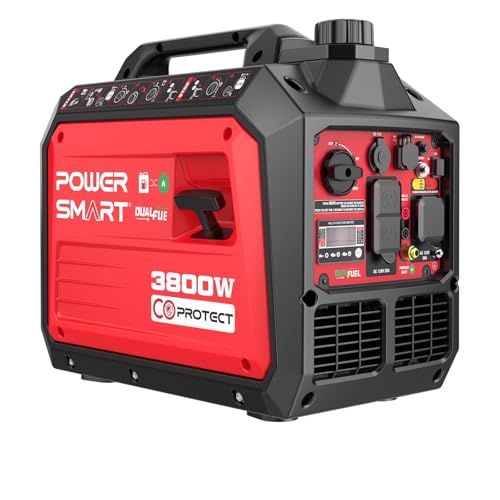
The PowerSmart 3800 Dual Fuel inverter generator offers a balanced mix of power and portability. It provides 3800 surge watts and 3300 running watts on gasoline, and 3500 surge watts with 3100 running watts on propane. The unit emphasizes quiet operation with an inverter system delivering clean power suitable for charging modern electronics and running RV gear. It also features an RV-ready outlet, expanding its utility for campers and tailgaters. The dual-fuel capability gives flexibility for longer outages where fuel options may shift, and the compact design supports easy transport to campsites or off-grid locations.
For homeowners seeking a portable solution that can power essential circuits, small appliances, and electronics without high noise, this model is a practical option. It also suits RV enthusiasts who demand reliable power while on the road.
Buying Guide: Key Purchase Considerations And Comparisons
- Fuel flexibility: Dual fuel or tri-fuel engines provide options if one fuel source becomes scarce or expensive. Consider the local fuel availability and storage concerns.
- Power needs: Assess your peak wattage requirements and the running watts needed for essential appliances. Oversizing can increase cost and noise, while undersizing risks insufficient power.
- Portability vs. capacity: Inverter generators offer clean power with lower noise, ideal for sensitive electronics, but larger models provide more runtime and higher wattage. Choose based on how you will use the unit (home backup vs. camping).
- Run time and fuel capacity: Look at tank capacity and efficiency to estimate how long the generator can run between refuels, especially during prolonged outages.
- Outlets and safety: Ensure the unit has the correct outlets for your transfer switch, RV, and home circuits. Features like CO detectors, automatic low-oil shutdown, and rubber outlet covers improve safety.
- Starting method: Electric start with a recoil backup is convenient for frequent use. Remote start can save time during outages but may add cost.
- Noise level: Inverter generators commonly operate quieter than traditional models. If you live in a neighborhood or near campsites, this matters for comfort and compliance with local noise rules.
- Maintenance and warranty: Check service support, maintenance intervals, and warranty coverage to maximize long-term value and uptime.
In summary, propane-capable generators offer flexibility for backup power, outdoor recreation, and RV life. When selecting a model, balance fuel availability, required power, and noise preferences. For homes facing frequent outages or needing a versatile travel backup, a tri-fuel or dual-fuel unit with remote start and transfer-switch compatibility can provide robust, adaptable performance across a range of scenarios.