Whether facing power outages, camping trips, or remote work in South Africa, reliable generators are essential. This guide highlights five top generators suitable for home backup, RV use, and on-the-go power. Each product is chosen for solid output, portability, efficiency, and ease of use in diverse environments. Read on to compare features, runtime, and safety considerations to help you pick a model that fits your needs and budget.
Summary of Selected Products
- Power Equipment 4400 Watts Inverter Generator – Oxseryn Store
- 4400-Watts Inverter Generator – Oxseryn Store
- Jackery HomePower 3600 Plus Portable Power Station – Jackery Store
- Solar Powered Generator 200W Peak – Apowking Store
- 4400 Watt Portable Inverter Generator – Mutaomay Store
Power Equipment 4400 Watts Inverter Generator

The Oxseryn Store generator delivers 4400 peak watts and 3400 running watts, making it suitable for RV camping, home backup, and essential appliances during outages. It features multi-output options including 2x120V AC ports, 1x12V DC, and an RV port, giving flexibility for different devices. A 2-gallon fuel tank with a fuel gauge allows quick checks and extended operation, while ECO mode supports up to 14 hours of runtime at 25% load. This model appeals to homeowners and travelers who need dependable, moderate-power capacity in a compact frame.
4400-Watts Inverter Generator With RV Port
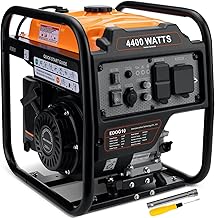
This 4400-watt inverter generator provides robust power and portability for emergencies and travel. It includes 2x120V AC outlets, a 30A RV outlet, and a 1x12V DC port, enabling smooth operation of home electronics and RV systems. With a 2-gallon tank and up to 14 hours of runtime at 25% load, the unit balances efficiency and endurance. Inverter technology with ECO mode improves fuel economy and reduces noise, which is advantageous for residential areas and quiet campsites in South Africa’s diverse landscapes.
Jackery HomePower 3600 Plus Portable Power Station

The Jackery HomePower 3600 Plus is a portable power station designed for essential home backup, emergencies, and RV use. It provides 3600W AC output and 3584Wh capacity, expandable up to 21kWh per unit and potentially 43kWh with multiple units in parallel. The system emphasizes safety with high-temperature resistant battery cells and a long lifespan. It supports simple plug-and-play operation, enabling rapid power delivery during outages without complex installation. This option is ideal for users prioritizing modular expansion and safe, long-term energy storage for homes and small households.
Solar Powered Generator 200W Peak with Panels

Apowking’s solar-powered generator kit includes 40W solar panels and a 146Wh portable station. It delivers up to 200W peak, with seven output options (two AC outlets, USB ports, and a DC 12V outlet). The compact, lightweight design makes it well-suited for camping, short outages, and travel. The solar panels improve sustainability and reduce the need for fuel, offering a practical solution for off-grid use and emergency preparedness in regions with variable power reliability.
4400 Watt Portable Inverter Generator With ECO Mode

This model delivers a 4400 starting wattage and 3400 running watts, adequate for home, RV, or job-site use. It offers up to 14 hours of runtime at 25% load with a 2-gallon tank and features low oil shutdown and ECO mode for efficient operation. Its quiet performance and compact footprint make it a practical option for suburban homes, light-duty construction, and camping across South Africa’s varied environments.
Buying Guide: Key Purchase Considerations
- Power needs: Evaluate running watts for essential appliances and devices; consider future expansion when choosing a generator with inverter technology for stable power.
- Fuel and runtime: Gasoline models with a 2–4 gallon tank often deliver 8–14 hours at modest loads; plan for fuel availability and storage in your area.
- Portability vs. capacity: Open-frame units are versatile and budget-friendly but heavier; consider a compact inverter for travel and a larger unit for home backup.
- Output options: Look for multiple outlets (AC, DC, USB) and RV-ready ports if you have motorhomes or camping needs.
- Noise and emissions: Inverter generators with ECO mode run quieter and cleaner, an important factor in residential zones and parks.
- Durability and safety: Features like low-oil shutdown, overload protection, and spark arrestors improve reliability in varying climates.
- Scalability: For larger homes or recurring outages, consider expandable power systems (parallel capable units) to increase capacity as needed.
- Local availability: Check South Africa-based retailers or import options for warranty support, service centers, and parts availability.
Choosing the right generator involves balancing power needs, fuel availability, and site conditions. For rural areas, a robust inverter model with RV compatibility can power essential appliances during outages. For urban homes, a quiet, fuel-efficient unit reduces noise complaints and emissions. RV owners should prioritize outlets and a reliable start-up mechanism. For emergencies, consider portable solar options to supplement fuel-based units and improve resilience during grid failures.