Finding reliable backup power for a small home means balancing quiet operation, fuel efficiency, and the ability to power essentials during outages. The following handpicked generators offer inverter technology, multiple wattage options, and RV or home backup features designed for compact spaces. Below you’ll find concise product summaries, a quick comparison, and practical buying guidance to help you choose the right model for your needs.
| Product | Brand | Watt Range | Type | Best For |
|---|---|---|---|---|
| Oxseryn 4400/3400 | Oxseryn | 3400 running / 4400 peak | Inverter | Home backup, RV, ECO mode |
| PowerSmart 4400 | PowerSmart | 3600 running / 4400 peak | Inverter | Residential use, quiet operation |
| WEN GN5602X | WEN | 4500 running / 5600 peak | Inverter | Home transfer switch, RV-ready |
| Westinghouse 12500 | Westinghouse | 11200-12500 peak depending on fuel | Dual fuel | Remote start, heavy-duty backup |
| ERAYAK 4500W | ERAYAK | 3500 running / 4500 peak | Inverter | Quiet, compact power |
Oxseryn 4400W Inverter Generator
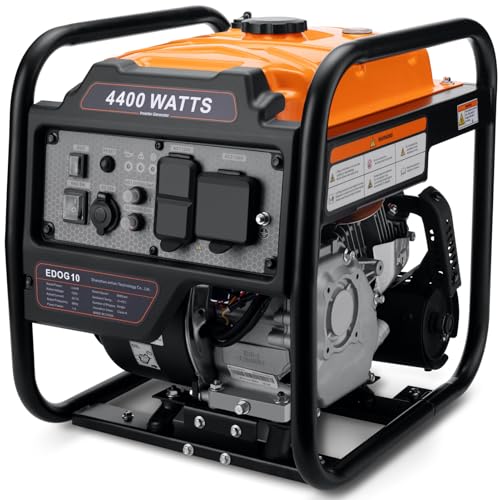
Oxseryn’s 4400 peak watts and 3400 running watts deliver solid power for essential home circuits or RV use. The unit includes multiple outlets: two 120V AC ports, one 12V DC port, and an RV connection, providing flexible hookup options for camping gear or backup loads. ECO mode extends runtime, enabling up to 14 hours at 25% load on a compact fuel tank, which helps minimize refueling during outages. Its open-frame design aims for straightforward servicing and portability for a small footprint generator setup.
PowerSmart 4400-Watt Portable Inverter

PowerSmart blends strong output with quiet operation, featuring 3600 running watts and 4400 starting watts. A 1.6-gallon tank provides meaningful runtime, especially at lower loads, enabling around 11 hours at 25% load. The unit is designed with residential and emergency use in mind, including EPA compliance and a CO sensor that helps monitor air quality during operation. It’s well-suited for small homes that require reliable power without intrusive noise in living spaces or outdoor camping scenarios.
WEN GN5602X 5600-Watt Portable Generator

WEN’s GN5602X brings substantial power with 5600 starting watts and 4500 running watts. Electric start simplifies cold starts, and the unit’s design supports transfer-switch compatibility and RV readiness. The integrated CO shutdown sensor adds a safety layer by automatically turning off operation if carbon monoxide is detected. This model suits homeowners who want a robust, easy-to-start backup that can handle larger loads during outages.
WEN 4,750-Watt Dual Fuel Portable Generator

This WEN model offers dual-fuel versatility with gasoline surge 4750 watts and propane 4350 watts, plus 3800 running watts on gasoline and 3500 on propane. A simple dial switches fuel types, and 120V/240V output supports transfer switches for home backup. The 224cc OHV engine with electric start provides reliable operation, making it a flexible option for households seeking fuel choice without sacrificing performance.
Westinghouse 12500 Watt Dual Fuel Power

Westinghouse delivers a heavy-duty dual-fuel option with 11200 peak watts on propane and 12500 peak watts on gasoline, plus long run times on a sizable 6.6-gallon tank. It features remote electric start and a full suite of transfer switch-ready outlets, including RV and standard 120V outlets. The engine design includes automatic low oil shutdown, a digital hour meter, and a VFT display that tracks voltage, frequency, and runtime, making it a strong candidate for whole-house backup with extended needs.
ERAYAK 4500W Portable Inverter Generator

ERAYAK offers a compact, lightweight inverter with 4500 peak watts and 3500 running watts, designed for quiet operation at about 60.5 dB(A). ECO Mode optimizes fuel efficiency, making it suitable for camping, small home backups, and outdoor work. Its portability and EPA compliance provide a balanced choice for users prioritizing a smaller footprint without sacrificing essential power for electronics and appliances.
Buying Guide: Key Considerations For Small Home Generators
- Power needs and transfer readiness: Assess your essential circuits and whether you require a transfer switch or RV-ready outlets. Dual-fuel options add flexibility when gasoline supply is limited.
- Fuel capacity and runtime: Larger tanks and efficient ECO modes extend runtime during outages. For small homes, aim for a balance between peak watts and continuous running watts that cover your critical loads.
- Noise and comfort: Inverter generators tend to run quieter and produce cleaner power suitable for sensitive electronics. Look for models rated around 60–76 dB at typical distances to minimize disruption.
- Portability and storage: If space is tight, prefer lighter, compact units with handle kits and wheel options. Consider a dedicated storage plan to keep fuel safely away from living areas.
- Safety features: CO sensors, automatic low-oil shutdown, and robust rubber outlet covers reduce risk during operation. Always follow local regulations for outdoor use and grounding requirements.
- Fuel options and emissions: EPA-compliant models ensure cleaner operation. Propane or dual-fuel options can reduce fuel costs and improve storage flexibility for emergencies.
- Maintenance and warranty: Check access to parts, ease of service, and warranty terms. A simple maintenance routine helps ensure reliability during critical times.
Selecting a generator for a small home involves weighing power needs, noise tolerance, and convenience against fuel availability and maintenance. The models listed here cover a range of capacities, from compact inverter units suitable for essential electronics to higher-output options capable of partial-home backup. Consider whether you prefer a gasoline-only unit or a dual-fuel setup, and verify compatibility with any existing transfer switches or RV equipment you may plan to connect during outages.