When planning home backup power, a transfer-switch ready generator ensures a seamless shift during outages. This guide highlights five top options that pair ready transfer switches with dependable performance, suitable for American homes and generators of varying sizes. Read on to compare features, fuel options, and ease of use to help you pick the right unit for your needs.
| Product | Fuel Type | Transfer Switch Ready | Approx. Running Watts |
|---|---|---|---|
| Westinghouse 12500W Dual Fuel | Gasoline / Propane | Yes (L14-30R, 50A RV Outlet) | 8500-12500 |
| WEN 14500-Watt TF1450 | Gasoline / Propane / Natural Gas | Yes | 8750-11500 |
| DuroMax XP5500HX | Gasoline / Propane | Yes (Transfer-ready model) | 5500 |
| Champion 4500-Watt RV Ready | Gasoline | Yes | 4500 |
| GENMAX 3500W | Gasoline / Propane | Yes | 3500 |
Note: Specifications vary by model, including starting watts, running watts, and transfer-switch compatibility. This overview focuses on units that explicitly offer transfer-switch readiness or configurations commonly used with transfer switches, for reliable home backup during outages.
Westinghouse 12500W Dual Fuel Generator

The Westinghouse 12500 Watt dual-fuel generator combines high power with flexible fuel options. It runs gasoline or propane, delivering up to 9500 running watts on gas and 8500 running watts on propane, with peak outputs up to 12500 and 11200 respectively. A remote start via included key fob simplifies operation, while an electric and recoil start offer backup. A large 6.6-gallon fuel tank provides extended run-time, with a fuel gauge for monitoring. It includes a transfer switch-ready outlet arrangement, including a 30A L14-30R and a 50A RV-style receptacle, plus standard 120V outlets with ground fault protection. The engine is a robust 457cc Westinghouse 4-stroke OHV with auto-low-oil shutdown and a digital hour meter. The unit features a VFT display for real-time voltage, frequency, and lifetime hours.
Key transfer-switch compatibility: the model offers outlets and configurations commonly paired with home transfer switches, helping ensure a clean, safe energy handoff during outages. The unit’s heavy-duty construction and safety features are designed for long-term use, making it suitable for essential circuits and emergency loads in a typical American home.
WEN TF1450 Tri-Fuel Generator

The WEN TF1450 offers versatile fuel options with tri-fuel capability: gasoline, propane, and natural gas. It provides 14500 surge watts and 11500 running watts on gasoline, 12500 surge and 10300 running watts on propane, and 10500 surge with 8750 running watts on natural gas. This model is transfer-switch ready, supporting 120V and 240V operation to cover home circuits and critical loads. An electric start simplifies activation, and the included wheel kit aids mobility. With multi-fuel flexibility and a switch-ready design, it’s a solid option for residents seeking reliable performance during outages without frequent refueling.
Considerations include fuel availability and conversion options, noise levels, and the compatibility of your home transfer switch with 240V needs. For households with higher power demands or longer outages, the TF1450’s versatility reduces fuel stress while maintaining essential circuit coverage.
DuroMax XP5500HX

The XP5500HX from DuroMax is a classic dual-fuel option that supports portability and versatility. At 5500 watts on gasoline, it provides reliable power for essential circuits and appliances during outages. Its propane capability adds flexibility if fuel availability is limited. The unit is commonly configured with transfer switches for home backup, and its design emphasizes ease of use, with a straightforward backup power workflow. Users should note the built-in auto-shutdown for low oil and the general requirement for a proper transfer switch connection to isolate household circuits safely.
Considerations include fuel availability and efficiency, noise levels, and the compatibility of your transfer switch with the generator’s 120V/240V output. For moderate loads, this model offers a practical balance of power, portability, and switch-ready integration for reliable home backup.
Champion 4500-Watt RV Ready

The Champion 4500-Watt RV Ready inverter generator offers a quieter operation with safety features focused on CO detection and compact inverter technology. While not the largest unit in this list, it serves well for essential circuits, RV hookups, and compact homes. It is designed for transfer switch compatibility, enabling a smooth transfer of power to home circuits during outages. The CO Shield feature helps mitigate safety concerns by monitoring carbon monoxide levels, providing a safer backup option for longer outages or extended camping scenarios where RV power is in use.
Key considerations for this unit include noise levels, inverter efficiency, and the balance between portability and power. For households needing a reliable, quieter source of backup power for critical loads, the Champion model provides a practical blend of efficiency and switch-ready functionality for everyday use during outages.
GENMAX Portable Generator
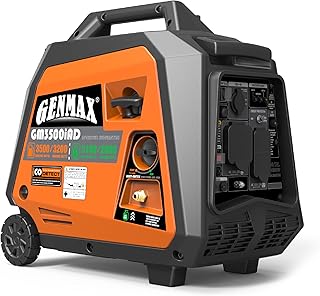
The GENMAX portable generator offers a compact, EPA-compliant option for those who need a reliable backup power source with transfer-switch compatibility. While not the largest on this list, its 3500W output (scaled as needed depending on fuel type) provides enough power for essential circuits, lighting, and small appliances during outages. Its portability makes it suitable for camping or travel, while its parallel capability expands potential power if more capacity is required with an additional unit. The unit supports gas or propane fueling, offering flexibility where fuel choices are limited.
Key considerations include efficiency, noise level, and compatibility with your home transfer switch. For smaller homes or RV setups, the GENMAX provides a practical balance of portable power, fuel flexibility, and transfer-switch readiness for dependable temporary power during outages or outdoor activities.
Buying Guide: Key Purchase Considerations
- Transfer-switch readiness: Ensure the generator supports the exact transfer switch configuration you plan to use (outlet type and amperage, 120/240V capability, and proper NEMA receptacles).
- Fuel type and availability: Gasoline, propane, or natural gas each have trade-offs in price, storage, and convenience. Dual-fuel or tri-fuel options offer flexibility during extended outages.
- Power needs and run time: Assess essential circuit wattage (refrigerator, lights, sump pump, furnace) and match running watts. Consider peak watts for startup surges.
- Safety and features: Look for automatic low-oil shutdown, CO sensors (for inverter models), GFCI outlets, rubber outlet covers, and digital displays for voltage, frequency, and hours.
- Noise and portability: Inverter models tend to be quieter and produce cleaner power, but heavier units may require wheels or a trailer setup for mobility.
- Maintenance: Check oil changes, filter availability, and ease of service in your region. A digital hour meter helps schedule maintenance before outages.
- Long-term cost and availability: Consider parts availability, warranty terms, and the supplier’s reputation for spare parts and service.