Power outages and off-grid adventures demand reliable energy storage. This guide highlights five top generators with battery backup, focusing on capacity, recharge speed, portability, and ready-to-use practicality for homes, campsites, and remote work setups. Each option balances robust output with user-friendly features to keep essential devices running when you need them most.
Product Overview
- Anker SOLIX C1000 Gen 2 Portable Power Station
- Jackery Portable Power Station Explorer 300
- ALLPOWERS R2500 Portable Power Station
- VEVOR Portable Power Station
- Portable Solar Generator with LED Lights (Budget/Compact option)
Product Comparison Summary
| Product | Battery Type | Capacity | Max Output | Rechargeability |
|---|---|---|---|---|
| Anker SOLIX C1000 Gen 2 | LiFePO4 | 1,024Wh | 2,000W (3,000W peak) | UltraFast 1,600W charging |
| Jackery Explorer 300 | Lithium-ion | 293Wh | 300W continuous | 2 hours to 80% via wall; 60W PD USB-C |
| ALLPOWERS R2500 | LiFePO4 | 2016Wh | 4x 2500W AC outputs | 1-hour fast charge |
| VEVOR Portable Power Station | LiFePO4 | 2160Wh | ≥ 2400W | Expandable with solar |
| Budget Compact Generator | Unknown | Low to mid | Low to mid | Basic charging |
Anker SOLIX C1000 Gen 2 Portable Power Station
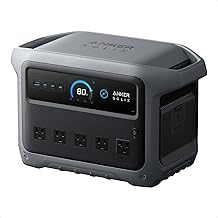
The Anker SOLIX C1000 Gen 2 delivers a strong balance of energy density and fast recharge. With a 1,024Wh LiFePO4 battery, it supports up to 2,000W continuous power across 10 ports, including essential devices during outages or off-grid operations. Its HyperFlash recharge tops up the unit to full in about 49 minutes when connected to a high-widelity 1,600W input, enabling rapid turnaround after a blackout or for last-minute outdoor trips. The system is designed to be compact and portable, making it suitable for rooms, RVs, or beach outings. The Anker app helps optimize charging schedules and device power distribution.
Key features in context:
– 2,000W output (3,000W peak) supports multi-device operation.
– 1,024Wh capacity offers a reliable power reserve.
– Recharges quickly, reducing downtime between uses.
– LiFePO4 chemistry improves longevity and safety, ideal for frequent use.
Jackery Portable Power Station Explorer 300

The Explorer 300 emphasizes lightness and simplicity for outdoor or travel use. It features a 293Wh lithium-ion battery and two pure sine wave AC outlets to provide stable 300W power for cameras, drones, laptops, and small electronics. Weighing about 7.1 pounds, it’s highly portable for hiking trips or car camping. Recharge options include a fast 60W USB-C input and wall or car charging, with an optional solar panel to extend off-grid capability. It supports multiple ports including USB-C and USB-A for diverse device charging needs.
Operational highlights:
– Fast recharge to 80% in about 2 hours via wall and PD USB-C.
– Lightweight design enhances portability.
– Multiple ports support several devices concurrently.
– Suitable for camping, travel, and emergency backup without complexity.
ALLPOWERS R2500 Portable Power Station

The ALLPOWERS R2500 offers high-capacity LiFePO4 energy with scalable power delivery. With 2016Wh of stored energy and four AC outlets capable of up to 2,500W each, this system is designed for larger load demands across multiple devices. A one-hour fast charge makes it suitable for rapid readiness after a shutdown. Urban households, tiny homes, RVs, and outdoor crews can benefit from its robust port configuration and the durability of LiFePO4 chemistry. The unit’s portability supports mobile work sites and remote emergencies without heavy setup requirements.
VEVOR Portable Power Station

VEVOR’s portable unit targets power users who want expandability. It offers 2160Wh of LiFePO4 energy with up to 2,400W continuous output, and multiple output ports to support home, camping, and RV usage. The expandable input and robust battery chemistry provide longer cycle life and safer handling in off-grid scenarios. Though heavier than some compact models, this unit suits longer outages and larger device arrays, making it a strong candidate for emergency preparedness kits and rural homes.
Budget Compact Generator

Budget-friendly options provide essential backup at a lower upfront cost. These compact units are often designed for light-to-moderate power needs—capable of charging phones, laptops, lighting, and small appliances during short outages or outdoor days. When selecting a budget generator with battery backup, consider battery chemistry (LiFePO4 vs. lithium-ion), total capacity, peak vs. continuous output, and the availability of multiple ports for simultaneous charging. The trade-offs usually include lower energy reserves and longer recharge times compared with high-capacity models, but for basic power continuity, they remain practical.
Buying Guide: Key Considerations For Generators With Battery Backup
Choosing the right generator with battery backup involves balancing capacity, power delivery, portability, and recharge options. Here are essential factors to compare across models and use cases.
- Energy capacity and discharge power: Capacity (Wh) determines how long you can run devices, while continuous and peak output (W) define what you can run simultaneously. For homes, aim for 1,000–2,000Wh with 1,500–2,000W continuous power; for camping, 300–600Wh with 300–600W is often sufficient.
- Battery chemistry and lifecycle: LiFePO4 batteries typically offer longer life cycles and better thermal stability than standard lithium-ion, increasing long-term reliability for frequent use.
- Recharge speed: Ultra-fast charging can cut downtime between outages or trips. Look for models with high input wattage and smart charging via multiple sources (AC, solar, car).
- Portability and form factor: Heavier units provide more capacity; lighter units improve mobility. Consider handle design, weight, and how you’ll transport them in vehicles or around a property.
- Outlets and connections: Check the mix of AC outlets, USB-C, USB-A, and DC ports. Ensure you can power the devices you rely on, including routers, computers, cameras, medical devices, and appliances.
- Solar compatibility: Many units support solar charging. Confirm panel compatibility, charging efficiency under partial sun, and how the system handles solar input during peak demand or outages.
- Safety and durability: Look for certifications, battery protection features, and build quality suitable for indoor use, outdoor environments, and rough handling in campsites or RVs.
- Warranty and support: A strong warranty and accessible customer service can save time and money if issues arise after purchase.
In selecting a generator with battery backup, align the device’s capabilities with your anticipated needs—whether you’re maintaining critical electronics at home, keeping a work area functional during outages, or powering a weekend campsite. Prioritize energy density, safe charging, and the flexibility to expand or adapt as requirements evolve.