Looking for a reliable power solution for a 5000 sq ft home? This guide matches common needs with five top options, from portable inverter generators to full-home standby systems. The selections are best for home backup, RVs, remote worksites, and off-grid access. Choose based on run-time, power output, fuel type, and whether you need grid-table automation or solar recharging. The following summary table highlights each option’s core strengths and best-use scenario to help you compare quickly.
| Product | Best For | Key Power Output | Fuel Type | Notes |
|---|---|---|---|---|
| Oxseryn 5000W Inverter Generator | Storm backups, sensitive electronics | 4000 running / 5000 peak watts | Gasoline | RV ready, 30A outlet, EPA compliant |
| Oxseryn 5000-Watts Portable Inverter Generator | Home backup and RV trips | 4000 running / 5000 peak watts | Gasoline | Clean power, THD<5% |
| Jackery Solar Generator 5000 Plus | Whole-home backup, off-grid | 7200W surge / 5040Wh | Battery (LiFePO4) | Solar-ready, expandable capacity |
| Jackery Solar Generator 5000 Plus with Panels | Extended outages, RVs | 7200W surge / 5040Wh | Battery (LiFePO4) | Includes solar panels, fast recharge |
| Generac 22kW Home Standby Generator | Whole-house, unattended outages | Residential-grade backup power | Natural gas or propane (typical) | Built-in cellular connectivity |
Oxseryn 5000W Inverter Generator

Powerful and portable, this generator delivers 4000 running watts with 5000 peak watts. It includes 1*12V DC port, 2*120V AC outlets, and a 30A RV port, making it suitable for RVs, tool usage, and emergency home backup. The 223cc 4-stroke OHV engine provides steady output with inverter technology for clean power suitable for laptops and devices with sensitive electronics. It runs up to 10 hours at 25% load on a 2-gallon tank with a built-in fuel gauge for easy monitoring.
Best for: Home backup during short outages, RV enthusiasts, and DIY projects where stable power is essential. This model is a solid pick when you need portable, reliable power with RV-ready outlets and fuel visibility. A potential limitation is its relatively small fuel tank for longer sessions; plan for refueling in extended events.
Oxseryn 5000-Watts Portable Inverter Generator

Designed as a dependable home backup and RV companion, this inverter generator provides 4000 running watts and 5000 peak watts to support essential appliances. Its THD<5% clean power makes it suitable for sensitive electronics. It includes ECO mode for fuel efficiency and a 2-gallon tank with a built-in gauge to prevent unexpected stalls. The trade-off is a compact fuel capacity; expect more frequent refueling at higher loads.
Best for: Users needing clean, stable power during outages or trips with sensitive devices. Choose this if you want an efficient, portable unit with clear fuel monitoring and RV compatibility. Avoid if you require extended runtime on larger loads without frequent refueling.
Jackery Solar Generator 5000 Plus
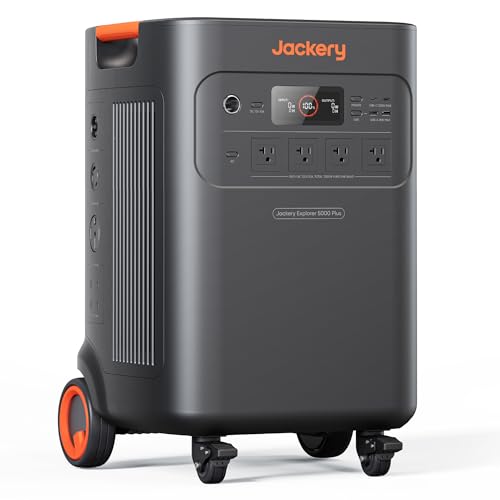
This portable power station delivers 5040Wh of LiFePO4 energy with a 7200W AC output capacity, enabling major appliances and even high-demand devices. It supports 120V and 240V outputs, making it suitable for whole-home backup scenarios or serious off-grid use. With solar compatibility, it can recharge rapidly from solar input, expanding independence during outages. A limitation is the higher initial cost compared to traditional gas units and the need for solar panels for optimum solar recharge timing.
Best for: Homeowners seeking a robust, quiet backup that can also run large loads, and who plan to integrate solar charging for extended outages. If you must stay off-grid, this model provides substantial storage and versatility. Consider weather and panel availability when relying on solar charging.
Jackery Solar Generator 5000 Plus With Panels

This bundle combines the 5000 Plus power station with two 200W solar panels to accelerate recharge and expand off-grid capability. It mirrors the same 7200W surge and 5040Wh capacity, making it ideal for extended outages or remote work off the grid. The solar panels help reduce generator use over time, but solar charging performance depends on sun exposure and weather conditions. The setup is more complex and costlier upfront than standalone units.
Best for: households planning frequent solar charging and longer outages, or those who require rapid recovery after events. If solar priority is lower, consider a standalone unit to simplify purchase and setup.
Generac 22kW Home Standby Generator

Designed for whole-house protection, this standby generator automatically detects outages and restores power to critical systems, including refrigeration, heating/cooling, lights, and connectivity. It features remote monitoring through cellular connectivity and is optimized for cost efficiency with advanced fuel management. It is typically connected to a home’s natural gas or propane supply and provides automatic transfer during outages. A possible limitation is higher installation complexity and upfront cost compared to portable options.
Best for: families needing continuous, hands-off power for a 5000 sq ft home and beyond. Choose this if you want seamless automatic operation and centralized backup without manual startup. If you only need occasional backup or live in an area with reliable grid power, a portable option may suffice.
Buying Guide: Key Considerations For A 5000 Sq Ft Home
- Power needs: Assess essential loads (refrigeration, heating/cooling, water heater, sump pump) and total watts. For 5000 sq ft homes, plan on a backup capable of handling HVAC and major appliances during outages.
- Type: Decide between portable inverter generators for mobility and standby generators for automatic, hands-off operation.
- Fuel and emissions: Gasoline units are widely available but require refueling. Propane and natural gas options offer longer-term reliability in some setups. Consider noise and emissions for indoor or close-quarter usage.
- Runtime and fuel capacity: Look at gallons, tank size, and efficiency mode. Longer runtimes are better for extended outages, but weigh fuel storage considerations.
- Power quality: Inverter generators provide clean, stable power ideal for electronics. If you have many sensitive devices, prioritize THD specs and inverter technology.
- Automation: Standby generators offer auto-start during outages and advanced monitoring. Portable units require manual startup and connection to transfer switches in some setups.
- Solar integration: If off-grid living is a priority, solar-compatible power stations can reduce fuel dependence, especially with high solar input and expandable capacity.
- Installation and space: Standby systems require professional installation and dedicated space. Portable units require safe fueling and venting, particularly in garages or near living spaces.
Frequently Asked Questions
- What size generator do I need for a 5000 sq ft house?
– A typical 5000 sq ft home benefits from a generator capable of powering high-demand loads (HVAC, fridge, sump pump) simultaneously. Standby options around 20-22 kW and portable inverter models offering 4-5 kW running watts cover essential needs for many households. - Should I choose a portable inverter or a standby generator?
– Portable inverters provide mobility and lower upfront cost, with manual operation. Standby generators offer automatic startup, seamless transfer, and home integration, which is ideal for frequent outages or larger homes. - Are solar-powered generators suitable for a 5000 sq ft home?
– Yes, particularly with a higher-capacity battery system. They offer quiet operation and reduced fuel use, but depend on sun for recharging and may require larger solar arrays for continuous loads. - Is it safe to run generators indoors or in garages?
– No. Generators should be placed outdoors in ventilated spaces to avoid carbon monoxide buildup. Always follow manufacturer guidelines and local code requirements. - What maintenance should I expect?
– Regular oil changes, air filter checks, spark plug inspection, and battery maintenance for inverter systems. Standby generators require annual service and seasonal testing. - Can I connect these to my existing home panels?
– Some portable units use transfer switches or generators interlocks. Always consult a licensed electrician to ensure safe integration with your electrical system.