When choosing a gasoline portable generator for home backup, prioritize reliability, fuel flexibility, and practical run time. This guide focuses on five top options that balance power, portability, and safety for American households facing outages, storms, or RV-ready needs. The best picks serve different buyers: homeowners seeking whole-home capability, RV and camping users, and those needing quick, easy electric starts. Below is a quick summary of the featured products and what they’re best for.
| Product | Best For | Key Benefit |
|---|---|---|
| Westinghouse 12500 Watt Dual Fuel | Home backup with transfer switch | Gas/Propane dual fuel and remote start |
| Generac 12,500 Starting Watt Tri-Fuel | Maximum fuel flexibility | Gas, propane, natural gas with CO sensor |
| DuroMax XP13000EH | Whole-home backup | High power dual fuel with electric start |
| Westinghouse 6500 Watt Dual Fuel | Mid-range home backup | Dual fuel, transfer switch ready |
| WEN DF8000X | Balanced power and safety | Dual fuel, CO watchdog, transfer-switch ready |
Westinghouse 12500 Watt Dual Fuel: Power For The Whole Home

This dual-fuel generator delivers up to 12500 peak watts on gasoline and 11200 peak watts on propane, making it a strong choice for whole-home backup. It features remote electric start with a key fob, and is transfer switch ready for easy integration with a home panel. With a long-lasting 457cc engine, automatic low oil shutdown, and a digital hour meter, it offers real-time output data and maintenance reminders. Best for homeowners seeking robust power and convenience during outages.
Best for: homeowners who need reliable, high-output power with flexible fuel options. The dual-fuel design helps adapt to fuel availability, and the remote start adds quick access during emergencies. Caution: heavier unit; plan for storage and transport. Not ideal if you need ultra-compact portability.
Generac 12,500 Starting Watt Tri-Fuel: Maximum Fuel Flexibility

Generac offers tri-fuel versatility, allowing operation on gasoline, propane, or natural gas. It provides 9500 running watts and 12500 starting watts, with an electric start system for quick power activation. A 500cc Generac OHV engine and a 7.5-gallon fuel tank support extended runtimes, making it a strong choice for prolonged outages. Best for: households needing multi-fuel operation and straightforward electric start. Caution: higher initial investment and heavier footprint.
DuroMax XP13000EH 13,000-Watt Dual Fuel

The XP13000EH combines substantial output with dual-fuel capability for emergency home backup. It’s designed for high-demand scenarios with electric start and a robust main engine. This model is best for larger homes or locations where a strong, dependable power source is required during outages. Choose this if you anticipate frequent outages and need extended runtime on either gasoline or propane. Limitation: heavier and louder than smaller portable options.
Westinghouse 6500 Watt Dual Fuel: Safe, Moderate Power
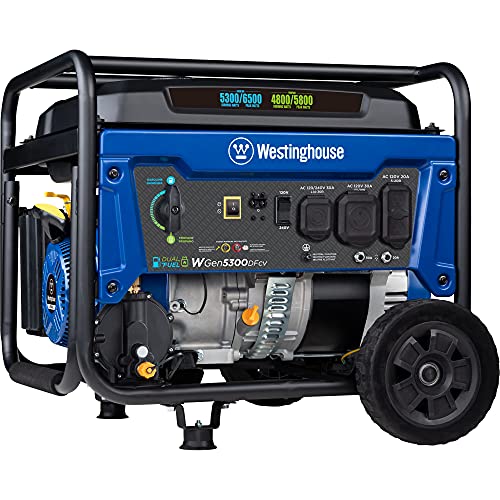
This 6500-watt dual-fuel generator offers a practical balance of power and portability. It runs on gasoline with 5300 running watts and 6500 peak watts, or propane with 4800 running watts and 5800 peak watts. It includes multiple outlets, a 4.7-gallon tank, and transfer switch readiness. Best for: smaller homes or essential circuits, RV use, and light backup. Caution: runtime varies with load; keep an eye on fuel levels during extended outages.
WEN DF8000X 8k Dual Fuel: Safety First

The WEN DF8000X provides 8000 surge watts and 6500 running watts on gasoline, plus 7200 surge watts and 5850 running watts on propane. It includes electric start and a CO watchdog sensor to automatically shut down if carbon monoxide levels become unsafe. Best for: safe, mid-to-large outages with essential circuits. Limitation: CO watchdog is a safety feature, but it cannot replace proper ventilation and outdoor use requirements.
Buying Guide: Key Considerations For Your Backup Power
- Power needs: Assess your home’s essential circuits and total wattage requirements. Look for models with surge wattage high enough to handle starting loads of appliances and heating systems.
- Fuel flexibility: Dual- or tri-fuel units offer more options during fuel shortages or price spikes. Consider liquid propane and natural gas compatibility for convenience.
- Starting method: Electric start is convenient, especially during cold weather. A recoil backup is useful if the battery fails.
- Transfer switch readiness: If you plan to connect to a home panel, ensure the unit is transfer switch compatible and note the outlet types you’ll need.
- Runtime and fuel capacity: Larger tanks extend runtime. Compare gallons per hour at typical load to estimate outages’ duration.
- Safety features: Carbon monoxide monitoring, low oil shutdown, and covered outlets reduce risk during operation.
- Portability vs. capacity: Heavier units deliver more power but are harder to move. Consider wheel kits and handles for mobility.
- Noise level and local regulations: Some areas restrict noise levels or require placement at a certain distance from living spaces.
Frequently Asked Questions
- What is the difference between running watts and peak watts?
Running watts show continuous power draw, while peak watts indicate the startup surge a generator can handle. - Do dual-fuel generators run on natural gas?
Tri-fuel units can run on gasoline, propane, or natural gas, offering flexibility during fuel shortages. - Is a transfer switch necessary for home backup?
A transfer switch allows safe redirection of power from the generator to essential home circuits and is highly recommended. - How important is an electric start?
Electric start provides quick power, especially during emergencies; a backup recoil start is useful if the battery fails. - What maintenance is required for these generators?
Regular oil changes, air filter checks, and fuel stabilizer use help extend life; follow manufacturer guidelines for service intervals. - Can I run these indoors or in a garage?
No. Generators should be operated outdoors in a well-ventilated area to avoid carbon monoxide buildup.