Answering the top search intent: for reliable gas-fired power during outages or off-grid adventures, these five generator sets offer strong output, portability, and practical features. They’re suited for different buyers—from serious home backup planners to RV enthusiasts and DIY homeowners. The following brief table compares key specs to help you decide at a glance.
| Product | Best For | Approx. Output | Fuel Type | Key Benefit |
|---|---|---|---|---|
| Oxseryn Power Equipment 4400 Watts Inverter Generator | RV users and light home backup | Peak 4400 / Running 3400 W | Gas | Low noise, ECO mode, RV-ready |
| Westinghouse 12500 Watt Dual Fuel | Whole-home backup | Gas: 9500R / 12500P; Propane: 8500R / 11200P | Gas/Propane | Remote start, transfer switch ready |
| WEN 14,500-Watt Tri-Fuel | Emergency backup with transfer switches | Gas 11500R / 14500S; Propane 10300R / 12500S; Natural Gas 8750R / 10500S | Gas/Propane/Natural Gas | CO watchdog safety, dual 120/240V |
| DuroStar DS13000MXT Tri Fuel | Whole-home or RV backup | 13,000 W (gas/propane/natural gas) | Gas/Propane/Natural Gas | Remote start, transfer switch ready |
| Generac 12,500 Starting Watt Tri-Fuel | Versatile emergency power | Starting 12500 / Running 9500 (gas) | Gas/Propane/Natural Gas | COsense, electric start |
Oxseryn Power Equipment 4400 Watts Inverter Generator
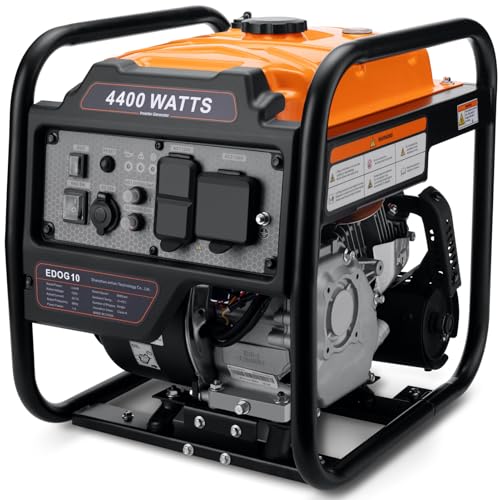
Best for RV use and light home backup, this Oxseryn model delivers 4400 peak watts and 3400 running watts with multiple outputs: two 120V AC ports, a 12V DC port, and an RV outlet. It runs up to 14 hours at 25% load with ECO mode, powered by a compact 2-gallon tank with a fuel gauge. The unit’s low noise design supports quiet operation in campgrounds and residential lots. Choose this if you need portable power for camping, tailgating, or a small emergency power supply.
Who it’s best for: RV owners, campers, and apartment-dwellers needing lightweight backup power. Why selected: balanced output, portability, and fuel-sipping ECO mode. Caution: limited runtime at higher loads; keep fuel on hand for extended outages.
Westinghouse 12500 Watt Dual Fuel Home Backup

This dual-fuel powerhouse is best for whole-home backup. It provides 9500 running and 12500 starting watts on gasoline, or 8500 running and 11200 starting watts on propane, with a remote start and a 6.6-gallon tank. The unit includes a transfer switch-ready outlet and an RV-ready 120/240V receptacle. It’s designed for longer run times and real-time status via a digital readout. Choose this if you want robust power for a full house and critical circuits during outages.
Who it’s best for: homeowners seeking reliable, scalable backup with remote start. Why selected: transfer switch compatibility and multiple outlets. Caution: larger footprint and heavier than portable models; plan for installation space and ventilation.
WEN 14,500-Watt Tri-Fuel Generator

Best for multi-fuel flexibility in emergencies, this WEN model switches among gasoline, propane, and natural gas with an easy dial. It operates at 120V and 240V, making it ideal for transfer switches and emergency backups. The CO watchdog provides automatic shutdown in dangerous conditions. Pick this if you want extended fuel options, modern safety features, and inverter-style power management to protect electronics.
Who it’s best for: households needing adaptable fuel choices and transfer-switch readiness. Why selected: broad fuel compatibility and CO safety feature. Caution: heavier and louder than compact inverter generators; ensure adequate setup space and ventilation.
DuroStar DS13000MXT Tri Fuel Portable Generator

Best for whole-home backup and RV readiness, the DS13000MXT offers 13,000 watts and tri-fuel capability (gas, propane, natural gas). It features remote electric start and a transfer switch-ready configuration. This model suits buyers who need substantial power for a large home with essential circuits and outdoor use. Caution: tri-fuel setups may require proper installation and venting, and larger fuel tanks mean more upfront space required.
Who it’s best for: homeowners and campers needing scalable, robust power. Why selected: high wattage and flexible fuel options. Caution: not as portable as smaller units; plan for mobility and storage needs.
Generac 12,500 Starting Watt Tri-Fuel

Best for versatile emergency power and electronics safety, this Generac tri-fuel unit delivers 12,500 starting watts and 9,500 running watts on gasoline, with propane and natural gas options. It offers an effortless electric start, a capable runtime on a sizable fuel tank, and a CO sensor for added protection. This model suits buyers who want dependable power with electronic-friendly capabilities and straightforward startup in outages.
Who it’s best for: households seeking reliable tri-fuel performance with modern safety features. Why selected: convenient electric start and CO sensor. Caution: higher fuel consumption on full load; use the eco-friendly setting when possible to extend runtime.
Buying Guide
Fuel flexibility, power needs, and connectivity drive selection. Consider these questions:
- What is my total wattage requirement for essential appliances and devices?
- Do I need one unit for whole-home backup or a portable model for limited use?
- Which fuels are available at my location and during outages (gasoline, propane, natural gas)?
- Is transfer switch compatibility important for seamless home integration?
- How important is noise level, startup ease, and fuel efficiency for my environment?
- What are the space and ventilation requirements for a tri-fuel or larger generator?
FAQ
- What does “tri-fuel” mean in these generators?
- Is remote start worth it for home backup?
- How long can these generators run on a full tank?
- Are these generators safe for electronics?
- What maintenance should be planned for tri-fuel units?
Tri-fuel means the generator can run on gasoline, propane, or natural gas, offering fuel flexibility during outages or when one fuel source is scarce.
Remote start provides quick power activation from inside your home, which is convenient during cold weather or emergencies, but it adds complexity and cost.
Run times vary by model, load, and fuel type. Most provide several hours at typical loads; check the product specs for precise figures.
Many offer inverter technology, low THD, and CO sensors to protect electronics and user safety. Verify THD ratings and sensor features for sensitive devices.
Regular oil changes, spark plug checks, air filter maintenance, and fuel line inspections are essential. Follow the manufacturer’s maintenance intervals for best results.