Answering the question: a fuel-injected inverter generator combines clean power for electronics with efficient fuel use and portability. This article highlights top models suited for home backup, camping, and RV life. The best picks balance quiet operation, multiple fuel options, and smart safety features. The top picks below are ideal for buyers who want reliable power with minimal noise and fuel waste.
| Product | Fuel Type | Power (W) | Best For |
|---|---|---|---|
| Westinghouse 8200 Peak Watt Tri-Fuel | Gas, Propane, Natural Gas | Gas 6600 running / 8200 peak | Home backup power with tri-fuel flexibility |
| Westinghouse 12000 Dual Fuel | Gas, Propane | Gas 9000 running / 12000 peak | Whole-home backup with parallel capability |
| Westinghouse 12000 Tri-Fuel | Gas, Propane, Natural Gas | Gas 9000 running / 12000 peak | Large load handling with multiple fuels |
| WEN 13,000-Watt Tri-Fuel (TF1300iX) | Gas, Propane, Natural Gas | Gas 10500 running / 13000 peak | Emergency backup with Level 2 EV charging readiness |
| PowerSmart 3800 Watt Dual Fuel | Gas, Propane | Gas 3300 running / 3800 surge | Compact, quiet home backup and camping |
Westinghouse 8200 Peak Watt Tri-Fuel Portable Inverter Generator

Best for serious home backup with flexible fuel options. This model runs on gasoline, propane, or natural gas, delivering a running wattage suitable for essential household devices and an outdoor-ready setup. Its inverter design reduces noise and protects sensitive electronics. The 50A outlet enables simultaneous support for appliances such as air conditioners, refrigerators, and sump pumps. It is parallel capable for even greater output when paired with another unit, making it a strong choice for larger homes or critical loads. Caution: Slightly heavier and larger than portable camping models, requiring a stable setup and adequate ventilation.
Westinghouse 12000 Peak Watt Dual Fuel Portable Inverter Generator

Best for whole-home backing with dual-fuel flexibility and parallel capability. Gasoline power provides strong peak and running watts for sustained loads, while propane offers a cleaner alternative. A 50A outlet supports running high-demand appliances concurrently, and the low THD ensures electronics remain safe. Best for larger homes or outdoor worksites. Limitation to consider: the unit’s weight and size may require a sturdy installation space and a dependable fueling plan during extended outages.
Westinghouse 12000 Peak Watt Tri-Fuel Portable Inverter Generator

Choose this if you want maximum fuel flexibility in a high-capacity, inverter-based system. It supports three fuels and offers a robust 50A outlet for home backup, plus CO sensor and low THD for sensitive electronics. Best for users who anticipate running multiple large appliances during outages. A potential limitation is similar to other high-capacity units: longer startup times and greater fuel management needs at wide load swings.
WEN 13,000-Watt Tri-Fuel Inverter Generator (TF1300iX)

Best for users seeking substantial power with three-fuel versatility in a compact package. The TF1300iX supports gasoline, propane, and natural gas, delivering strong surge and running watts while maintaining a safe, clean output suitable for electronics and Level 2 charging readiness. It includes a wheel kit for easier movement and a CO watchdog. Choose this if you want high power with flexibility and mobility. Limitation: heavier than smaller, single-fuel models, requiring space for transport and storage.
PowerSmart 3800 Watt Dual Fuel Inverter Generator
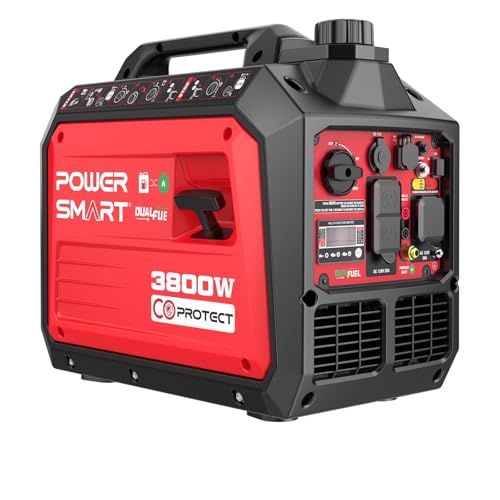
Best for compact, quiet backup with dual-fuel flexibility. The 3800-watt surge and 3300 running watts on gasoline, plus propane compatibility, make it a practical option for RV parks, camping, and small apartments where noise and footprint matter. It offers essential safety features like a CO sensor and RV-ready outlet. Caution: Lower overall power means limited simultaneous use of high-draw appliances during outages.
Buying Guide: Fuel Injected Inverter Generators
What matters most when choosing a fuel-injected inverter generator? Here are practical considerations and how they apply to the models above.
- Fuel options: Dual-fuel or tri-fuel units offer flexibility during fuel shortages or price swings. Tri-fuel units provide the broadest compatibility, but ensure you have a reliable fuel source and storage strategy.
- Power needs: Assess running watts for essential devices (refrigerator, lights, modem, sump pump). Consider peak watts for startup surges of appliances like air conditioners.
- Clean power and electronics safety: Look for THD ratings and pure sine wave output to protect sensitive devices. Inverter technology helps adjust engine speed to demand, improving efficiency.
- Noise and portability: Quieter operation is ideal for neighborhoods and campsites. Wheel kits and compact footprints aid transport and storage.
- Outlets and parallel capability: A 50A outlet supports whole-house back-up or simultaneous high-power loads. Parallel-ready units let you pair with another generator for extra capacity.
- Safety features: CO sensors, low-oil shutdown, and automatic shutoff provide protection during operation and storage.
- Run time and fuel efficiency: Larger tanks and advanced inverter control reduce refueling frequency. Eco-mode helps stretch fuel during long outages.
Quick comparison by scenario
- Home backup with large load: Westinghouse 12000 DFc or Westinghouse 12000 TFc offer robust power and fuel flexibility.
- Residential neighborhood use: Westinghouse 8200 Tri-Fuel TFc provides strong watts with noise-conscious design.
- RV and camping: WEN TF1300iX and PowerSmart 3800 DF provide portable options with essential safety features.
Frequently asked questions
- What is the advantage of tri-fuel over dual-fuel? Tri-fuel adds natural gas as a third option, useful if gas lines are convenient or propane is scarce. It also offers broader fuel availability in emergencies.
- Why does inverter technology matter for electronics? Inverter generators adjust engine speed to power demand, delivering cleaner power with typically lower THD and less risk to sensitive devices.
- Is a 50A outlet necessary for home backup? A 50A outlet supports higher loads like air conditioners and sump pumps simultaneously. It’s especially helpful for whole-home backup scenarios.
- Can these units run if I’m not nearby to refuel often? Models with larger tanks and efficient fuel use will run longer between refuels, especially those with Eco-Mode.
- Do these generators require special maintenance? Regular oil checks, air filter cleaning, and CO sensor testing are typical; inverter systems generally reduce maintenance compared with traditional open-frame models.
- What should I consider before buying for EV charging readiness? Look for bonded-neutral configurations or specific 120V/240V outputs designed for Level 2 charging, as noted in select models.