In emergencies, reliable power and clear communication can be lifesaving. Hand crank generators and multi-source emergency radios provide a backup energy source, weather alerts, and a way to stay connected when power is out. This guide highlights five top options designed for home, travel, and outdoor readiness, with practical considerations to help you choose the best fit for your needs.
Product Comparison Snapshot
| Product | Brand | Power Capacity | Power Sources | |
|---|---|---|---|---|
| FosPower NOAA Emergency Weather Radio A1 | FosPower | 7400mWh / ~2000mAh | Crumch/solar/AAA batteries | Emergency radio with charging and light |
| Hand Crank Emergency Radio 7400mWh | yesiwtc | 7400mWh / ~2000mAh | USB-C/hand crank/solar + built-in cables | All-in-one charging and NOAA weather updates |
| Solar Radio Emergency Hand Crank 12000mAh | Mesqool | 12000mAh | Solar/hand crank/USB-C | High-capacity NOAA/AM/FM radio with dual outputs |
| BROWEY Portable Power Station 153Wh | BROWEY | 153Wh | Wall, solar, hand crank | Off-grid power with AC and USB outputs |
| Emergency Crank Weather Radio MD-090P | RunningSnail | 14800mWh / ~4000mAh | Hand crank/solar/Micro USB | Powerful lifeline with reading lamp and SOS |
FosPower NOAA Emergency Weather Radio A1

The FosPower FOSPWB-2376 model combines a 7400mWh (approximately 2000mAh) power bank with an AM/FM/NOAA weather radio and a built-in SOS alarm plus a 1W flashlight. It supports three power sources: crank, solar, and battery backup (AAA). The unit is designed to regenerate power on the fly, ensuring you can recharge devices when traditional outlets are unavailable. Its dual lighting options help illuminate interiors during outages, while SOS and weather alerts keep you informed in emergencies.
Hand Crank Emergency Radio 7400mWh (2000mAh)
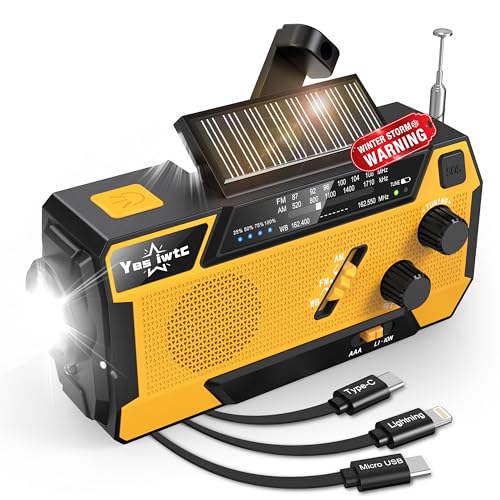
This model by yesiwtc offers 7400mWh of emergency power and three built-in charging cables (Lightning/USB-C/Micro USB), allowing simultaneous device charging. It supports USB-C charging for faster recharging and includes a hand crank and solar panel for versatile power in outages. NOAA weather information is accessible through its DSP-enhanced radio, making it a solid backup for severe weather seasons and other disruptions where power is scarce.
Solar Radio Emergency Hand Crank 12000mAh

Mesqool’s solar radio stands out with a large 8500mm² solar panel, expanding charging efficiency for outdoor use. It includes a 12,000mAh battery and multiple output options, including two USB ports and a dual-output design for simultaneous device charging. Enhanced NOAA/AM/FM reception with an extended antenna ensures reliable weather alerts, while a hand crank enables on-demand power without external sources. This model is particularly suitable for extended bug-out scenarios and off-grid camping.
BROWEY Portable Power Station 153Wh
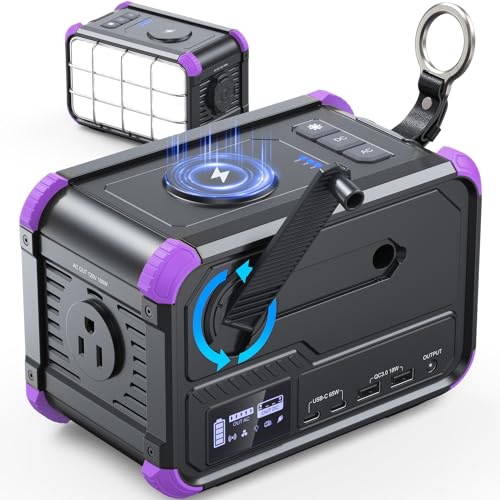
BROWEY’s 153Wh portable power station provides flexible multi-source charging, including wall outlet, solar, and hand crank for emergencies. With an 8-output port configuration—two USB-C, two USB-A, one AC outlet, and a wireless charging pad—it can run small appliances or recharge multiple devices simultaneously. The built-in LED with SOS mode offers reliable illumination, while its robust construction aims to withstand outdoor environments. The hand crank is positioned as an emergency accessory rather than the primary recharge method, making it ideal for quick power boosts during outages.
Emergency Crank Weather Radio MD-090P
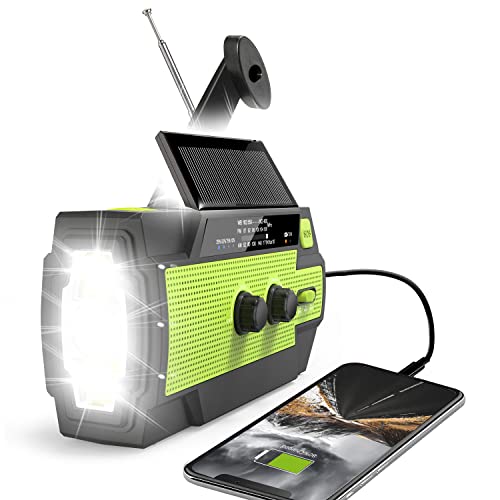
RunningSnail’s MD-090P model emphasizes a higher-capacity 14800mWh (about 4000mAh) battery packed into a durable emergency radio chassis. It features a robust LED flashlight with three modes and a motion-sensor reading lamp for hands-free lighting. It also offers flexible charging methods: hand crank, solar, and Micro USB, ensuring continued operation during extended outages. The device receives NOAA emergency weather broadcasts and AM/FM updates to keep you informed during severe weather and other emergencies.
Buying Guide: Key Purchase Considerations
- Power capacity vs. use-case: Higher mWh/mAh translates to longer device charging time. For minutes-long outages or phone top-ups, mid-range capacity is often enough; for extended outages, prioritize larger batteries (12,000mAh+ or 153Wh+).
- Power sources and reliability: Look for models offering multiple charging methods (hand crank, solar, USB-C) to ensure operation in diverse scenarios. USB-C input/output supports faster charging for modern devices.
- NOAA/AM/FM reception: If weather alerts are essential, choose devices with strong NOAA reception and extended antennas for clear, reliable broadcasts.
- Built-in lighting and SOS features: A model with a bright LED, adjustable modes, and an SOS beacon can be critical for safety during outages.
- Portability and ruggedness: For home use, a compact, rugged unit is convenient. For camping, prioritize durability, stable handling, and a robust hand crank mechanism.
- Device compatibility: Consider the number and type of USB ports (USB-C/USB-A), the availability of wireless charging, and whether the device supports charging your essential gadgets (phones, radios, tablets, CPAP machines).
- Maintenance and spare parts: Check if batteries are replaceable and if solar panels and cranks are serviceable, reducing long-term ownership costs.
- Cost vs. value: Higher-capacity units with more versatile outputs offer greater resilience, but balance features against budget and intended use.
These options provide a range of capabilities—from compact, handheld radios with basic charging to larger portable power stations suitable for home backup. When selecting, align the device’s capacity and charging methods with your typical emergency scenarios, climate conditions, and the devices you need to keep powered.